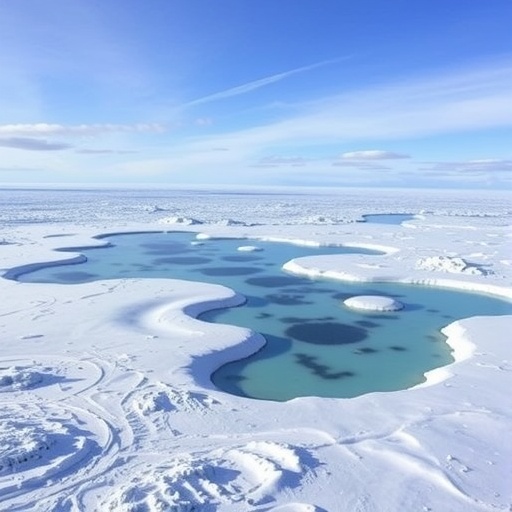
Methane emissions across Siberia have more than doubled in just over a decade, according to a new study published in Science. The research, based on satellite observations and atmospheric modelling collected between 2010 and 2023, identifies rapidly warming conditions, expanding wildfires and changing wetland activity as the main forces behind the surge. Scientists warn that the trend could become an important climate feedback, making global efforts to slow warming significantly more difficult.
The study found that Siberian methane emissions increased by approximately 5 percent each year, with emissions during the summer growing season now more than twice as high as they were in 2010. The finding is especially significant because methane is a powerful greenhouse gas. Although it remains in the atmosphere for a shorter time than carbon dioxide, methane absorbs far more infrared radiation during that period, making it a major driver of near-term warming.
Siberia contains almost half of the Northern Hemisphere’s permafrost, the permanently frozen ground that stores enormous quantities of organic carbon. As the Arctic warms at nearly four times the global average rate, previously frozen soils are thawing. Once exposed to heat, water and microbial activity, the carbon locked inside these soils can be converted into gases, including methane. In waterlogged, oxygen-poor environments, microbes known as methanogens produce methane as they break down organic matter.
The researchers used data from Japan’s Greenhouse gases Observing SATellite, or GOSAT, together with ground-based measurements, atmospheric transport models and other satellite observations. GOSAT detects changes in the concentration of methane by measuring how sunlight is absorbed as it passes through Earth’s atmosphere. Scientists can then combine those measurements with information about wind patterns and atmospheric circulation to estimate where methane was released and how much entered the atmosphere.
The analysis revealed two distinct emission patterns across Siberia. In western Siberia, warmer winters and earlier snowmelt are increasing the amount of heat absorbed by the land surface. These changes can leave soils wetter during the thawing season, creating oxygen-poor conditions that favour methane production in wetlands and thawed permafrost. The result is a landscape that becomes increasingly effective at converting ancient organic carbon into atmospheric methane.
Eastern Siberia is following a different, but equally concerning, pathway. Persistent hot and dry conditions are drying vegetation and soils, increasing the risk of large wildfires. The researchers identified a sharp rise in fire-related methane emissions in the region since 2019, when a series of unusually intense summer fires affected vast areas. Burning vegetation releases methane directly, while the removal of insulating organic layers exposes permafrost to additional heat and can accelerate thawing after the flames have disappeared.
This regional contrast shows why Siberia cannot be treated as a single uniform source of greenhouse gases. In the west, moisture and wetland expansion are strengthening biological methane production. In the east, heat, drought and fire are driving emissions through combustion and permafrost disturbance. Atmospheric circulation then transports the gas across national borders, allowing a relatively remote source to influence the global climate system within weeks or months.
The researchers estimate that Siberian emissions could increase by as much as 25 million tonnes per year by 2050 if warming continues to intensify. That amount would be comparable to the annual methane output of some large industrialised countries. While the projected increase would not independently determine the future of global warming, it could offset a substantial share of the methane reductions that governments are seeking this decade to keep temperature rise close to 1.5 degrees Celsius.
The findings also raise questions about whether the Arctic could gradually shift from being a long-term carbon store to a growing source of greenhouse gases. Professor Paul Palmer of the University of Edinburgh’s National Centre for Earth Observation said the observations provide direct evidence that Arctic warming is making previously frozen carbon available to microbes and increasing wildfire risk. Because Siberia is immense and difficult to access, satellites currently provide the only practical way to monitor these changes across the region. The study demonstrates how space-based measurements can reveal a rapidly developing climate feedback before its full consequences become visible in global emissions inventories.
Subject of Research: Not applicable
Article Title: Decadal doubling of Siberian methane emissions due to warming-induced fires and methanogenesis
News Publication Date: 6-Aug-2026
Web References: https://mediasvc.eurekalert.org/Api/v1/Multimedia/1123b447-cbcd-4c13-8b9e-cf11165152bb/Rendition/low-res/Content/Public
References: Science
Image Credits: Professor Paul Palmer, University of Edinburgh
Keywords
Siberia, methane emissions, permafrost, Arctic warming, climate change, wildfires, wetlands, methanogenesis, GOSAT, satellite observations, remote sensing, greenhouse gases, carbon cycle, atmospheric modelling
Tags: Arctic warming and methane releaseatmospheric modeling of methane trendschallenges to global warming mitigation effortsclimate feedback from Siberian methaneconsequences of expanding Siberian wetlandseffects of thawing permafrost on greenhouse gasesimpact of global warming on Siberian wetlandsmethane’s role in near-term climate changerapid increase in greenhouse gases from Siberiasatellite-based methane monitoringSiberian methane emission increasewildfire influence on Siberian methane emissions