

• HOME
  • NEWS
  • EXPLORE
    • CAREER
      • Companies
      • Jobs
    • EVENTS
    • iGEM
      • News
      • Team
    • PHOTOS
    • VIDEO
    • WIKI
  • BLOG
  • COMMUNITY
    • FACEBOOK
    • INSTAGRAM
    • TWITTER
Tuesday, May 12, 2026
BIOENGINEER.ORG
No Result
View All Result
  • Login
  • HOME
  • NEWS
  • EXPLORE
    • CAREER
      • Companies
      • Jobs
        • Lecturer
        • PhD Studentship
        • Postdoc
        • Research Assistant
    • EVENTS
    • iGEM
      • News
      • Team
    • PHOTOS
    • VIDEO
    • WIKI
  • BLOG
  • COMMUNITY
    • FACEBOOK
    • INSTAGRAM
    • TWITTER
  • HOME
  • NEWS
  • EXPLORE
    • CAREER
      • Companies
      • Jobs
        • Lecturer
        • PhD Studentship
        • Postdoc
        • Research Assistant
    • EVENTS
    • iGEM
      • News
      • Team
    • PHOTOS
    • VIDEO
    • WIKI
  • BLOG
  • COMMUNITY
    • FACEBOOK
    • INSTAGRAM
    • TWITTER
No Result
View All Result
Bioengineer.org
No Result
View All Result
Home NEWS Science News Biology

Shaping up against pathogens

Bioengineer by Bioengineer
July 24, 2017
in Biology
Reading Time: 2 mins read
0
Share on FacebookShare on TwitterShare on LinkedinShare on RedditShare on Telegram
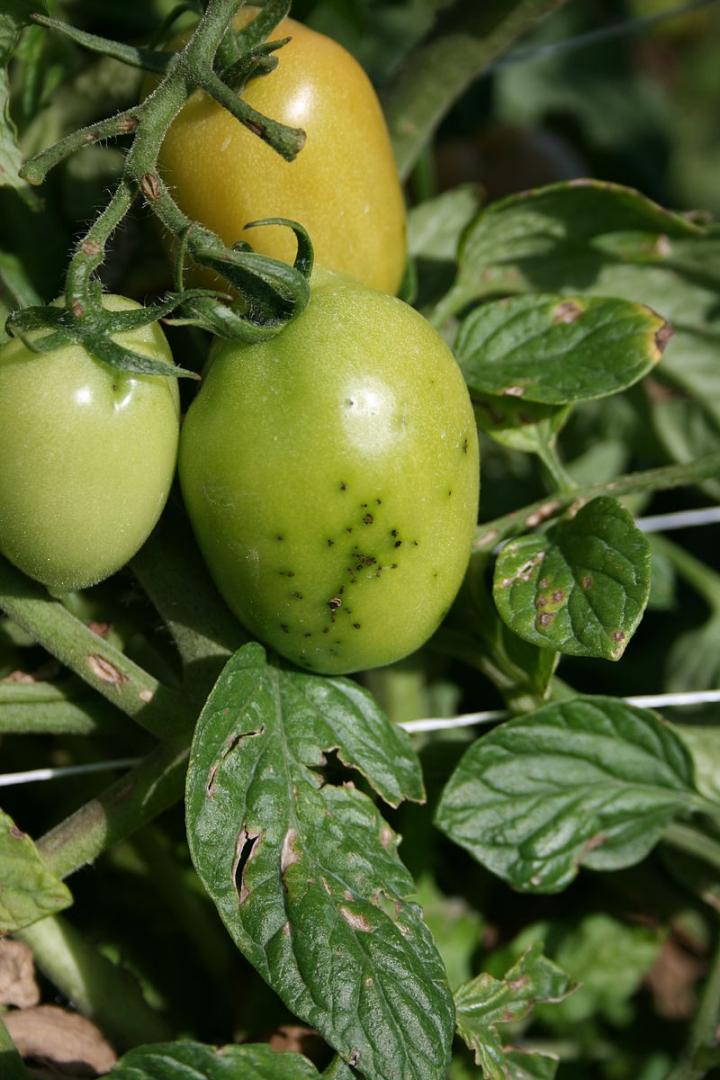
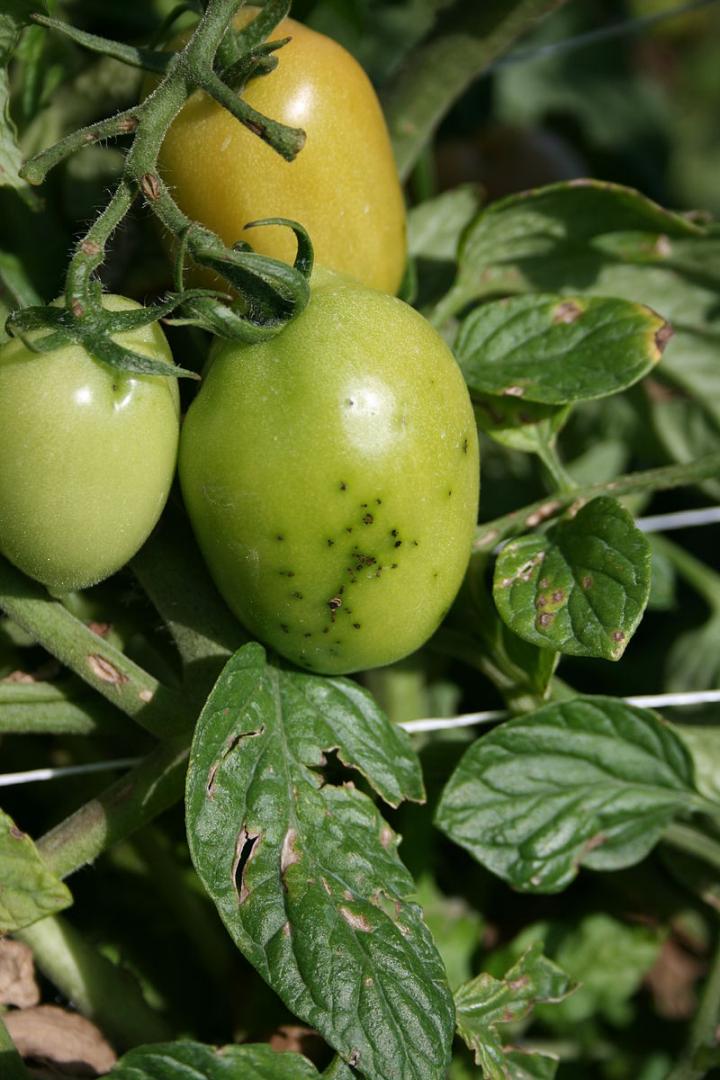
IMAGE

Credit: © Chris Smart, NYSAES, Geneva NY

A missing link in the complex molecular pathway by which plants resist pathogens has been identified by an international team headed by Heribert Hirt from KAUST. This finding highlights a potential mechanism that could be harnessed to "vaccinate" crops against disease.

Plant defense is controlled by genes, made of DNA, which encode proteins. DNA is packaged into an aggregate called chromatin, the shape of which affects whether genes are available for protein building. Changes to the chromatin structure are epigenetic — potentially heritable without altering the DNA sequence itself — and have been associated with pathogen attack.

Pathogens produce small molecules called microbial-associated molecular patterns (MAMPs), which plants recognize via a bipartite receptor protein: part one senses MAMPs outside the plant cell and stimulates the second part inside the cell to act. The latter is a kinase, an enzyme that transfers phosphate groups onto target molecules (phosphorylation), and its action is the first in a sequence of MAMP-triggered phosphorylations between mitogen-activated protein kinases (MAPKs). Hirt, who is now a Professor of Plant Science at KAUST, discovered these in 1997.

The link between MAPKs and epigenetic chromatin modification has remained elusive until this new finding by Hirt's team, who included Assistant Professor Moussa Benhamed, serveral postdocs and a master's student from University's Desert Agriculture Initiative.

Using the model species Arabidopsis thaliana, the researchers activated the MAPKs using a bacterial MAMP. Then, in a series of experiments dubbed "the phosphoproteomics pipeline," they searched for phosphorylation events. Enticingly, they found that the final MAPK in the chain, MPK3, phosphorylates an enzyme, histone deacetylase (HD2B), which regulates DNA compaction into chromatin.

The team showed that, in mutant Arabidopsis lacking MPK3 or HD2B, many genes, including defense genes, increased in activity. This suggests that, normally, HD2B represses gene activity. Under pathogen attack, MPK3's action on HD2B reverses this repression.

Using fluorescent-tagged HD2B, the team showed that MPK3 phosphorylation makes HD2B move from one cellular location to another, binding a different chromatin region. This pathway releases one set of genes and blocks a second set, fundamentally changing the cell's molecular makeup. This epigenetic reprogramming is fast and reversible, enabling plants to respond rapidly to changing conditions and to retain a molecular memory facilitating a speedier response to future pathogens. According to Hirt, "epigenetic mechanisms are the mechanism of choice…the phenomenon occurs across all plants in response to all types of MAMPs and pathogens."

Hirt believes kinase-triggered chromatin reprogramming is a widespread mechanism, and he is enthusiastic about possibilities for artificially stimulating this process. "Once we better understand the mechanism of inducing pathogen memory, we might be able to induce long-term resistance, similar to human vaccination," he suggests. "We are entering a new era investigating the role of epigenetics in plant stress memory."

###

Media Contact

Michelle D'Antoni
[email protected]

http://kaust.edu.sa/

Original Source

https://discovery.kaust.edu.sa/en/article/383/shaping-up-against-pathogens http://dx.doi.org/10.1186/s13059-017-1261-8


Share12Tweet8Share2ShareShareShare2

Related Posts

From Complexity to Clarity: Unraveling the “Topological Laws” Governing Cell Death — Biology

From Complexity to Clarity: Unraveling the “Topological Laws” Governing Cell Death

May 11, 2026
New Classification Framework Identifies Tumor-Associated Bacterial Effectors as Crucial Drivers of Tumor Biology and Immune Response — Biology

New Classification Framework Identifies Tumor-Associated Bacterial Effectors as Crucial Drivers of Tumor Biology and Immune Response

May 11, 2026

HIV-1 Strains Reveal Varied Paths to Antibody Escape

May 11, 2026

CRISPRi Screening Identifies Fungal-Specific Drug Targets

May 11, 2026
Please login to join discussion

POPULAR NEWS

  • Research Indicates Potential Connection Between Prenatal Medication Exposure and Elevated Autism Risk

    841 shares
    Share 336 Tweet 210
  • New Study Reveals Plants Can Detect the Sound of Rain

    728 shares
    Share 290 Tweet 182
  • Salmonella Haem Blocks Macrophages, Boosts Infection

    62 shares
    Share 25 Tweet 16
  • Breastmilk Balances E. coli and Beneficial Bacteria in Infant Gut Microbiomes

    57 shares
    Share 23 Tweet 14

About

We bring you the latest biotechnology news from best research centers and universities around the world. Check our website.

Follow us

Recent News

Humans and Zebra Finches Share Similar Speech Learning Techniques #ASA190

New Study Uncovers How Fungal Parasites Attack Strawberries and Raspberries

City of Hope Researchers to Present Groundbreaking Immunotherapy and Precision Medicine Advances Across Multiple Cancer Types at ASCO 2026

Subscribe to Blog via Email

Enter your email address to subscribe to this blog and receive notifications of new posts by email.

Join 82 other subscribers
  • Contact Us

Bioengineer.org © Copyright 2023 All Rights Reserved.

Welcome Back!

Login to your account below

Forgotten Password?

Retrieve your password

Please enter your username or email address to reset your password.

Log In
No Result
View All Result
  • Homepages
    • Home Page 1
    • Home Page 2
  • News
  • National
  • Business
  • Health
  • Lifestyle
  • Science

Bioengineer.org © Copyright 2023 All Rights Reserved.
