For thousands of years, silk has been prized for its remarkable strength, luster, and versatility—yet the biochemical choreography that converts a liquid protein mixture in a silkworm gland into a tough fiber has remained surprisingly elusive. A central clue lies in sericin, the outer silk protein long treated as a passive “glue” layer rather than an active architect.
Silk fibers are built from two proteins: silk fibroin (SF), which provides the structural core, and silk sericin (SS), which coats fibroin. Earlier studies hinted that higher sericin levels could slow fibroin aggregation, but the mechanisms—especially how silk avoids premature, disordered solidification—were unresolved.
To dissect this process, researchers led by Professors Mingying Yang and Yajun Shuai at Zhejiang University, with Chuanbin Mao at The Chinese University of Hong Kong, created a biomimetic incubation system. They used regenerated fibroin (RSF) and regenerated sericin (RSS) and monitored their behavior over six days under conditions designed to resemble the silkworm’s fifth larval instar silk gland.
Under salt-assisted, weakly alkaline conditions, RSS drove liquid–liquid phase separation (LLPS), forming hydrated coacervate droplets. Cryo-electron microscopy revealed that these coacervates stay dynamic and water-rich—capable of fusion, budding, and rapid remodeling rather than collapsing into solids.
Imaging experiments further identified a core–shell organization: fibroin preferentially concentrated in the coacervate interior, while sericin localized to the periphery. This spatial segregation effectively functions as a “reaction chamber,” concentrating fibroin where ordered assembly can proceed.
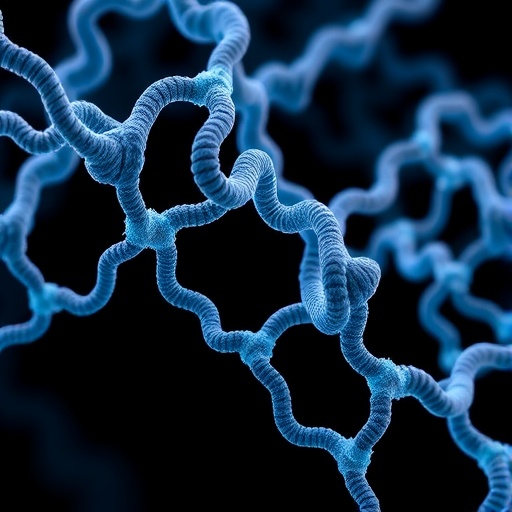
Notably, even in the absence of added salts, RSS rapidly formed aggregate compartments that trapped RSF nanoparticles. Over the multi-day incubation period, the confined fibroin matured into highly ordered, parallel-aligned nanofibrils, with β-sheet content rising from about 11.2% to 27.1% and crystallinity increasing substantially.
When the system was subjected to mechanical shear—mimicking mechanical forces encountered during silk extrusion—compartments disassembled and reorganized, enabling the emergence of ultra-long nanofibrils. This indicates that mechanical cues work in tandem with compartmental chemistry to steer fibril growth.
Overall, the work redefines sericin as an endogenous regulator with a dual function: stabilizing and locally concentrating fibroin to prevent premature aggregation, and directing oriented fibril maturation through phase-separated intermediates. By stepping through successive free-energy states—from soluble proteins to coacervates, aggregates, gels, and ordered fibrils—nature achieves robust assembly without disorderly precipitation.
The findings also suggest design principles for next-generation biomaterials. Programmable, compartment-driven phase transitions could inform synthetic protein-based fibers, smart hydrogels, and hierarchically structured scaffolds for tissue engineering—leveraging dynamic interfaces and multistage assembly pathways to control structure.
Sericin is far more than glue, the authors argue—it acts as the conductor of a hierarchical assembly pipeline, transforming an initially disordered protein solution into a sophisticated, ordered material through confined, dynamic compartments.
Subject of Research: Liquid–liquid phase separation and ordered silk fibroin nanofibril formation mediated by sericin
Article Title: Not provided in the provided text
News Publication Date: Not provided in the provided text
Web References: http://dx.doi.org/10.1016/j.scib.2026.06.045
References: 10.1016/j.scib.2026.06.045
Image Credits: ©Science Bulletin
Keywords: sericin, silk fibroin, liquid–liquid phase separation, coacervates, LLPS, nanofibrils, β-sheets, core–shell architecture, mechanical shear, biomimetic assembly
Tags: biomimetic silk fiber synthesiscryo-electron microscopy of silk proteinsinfluence of sericin on fibroin aggregationliquid–liquid phase separation in protein assemblynanofibril formation in silknatural silk fiber biogenesisprotein phase separation in biomaterialsrole of sericin in silk formationsilk biomaterials and nanostructure designSilk fiber assembly mechanismssilk fiber structural organizationsilk protein interactions under alkaline conditions