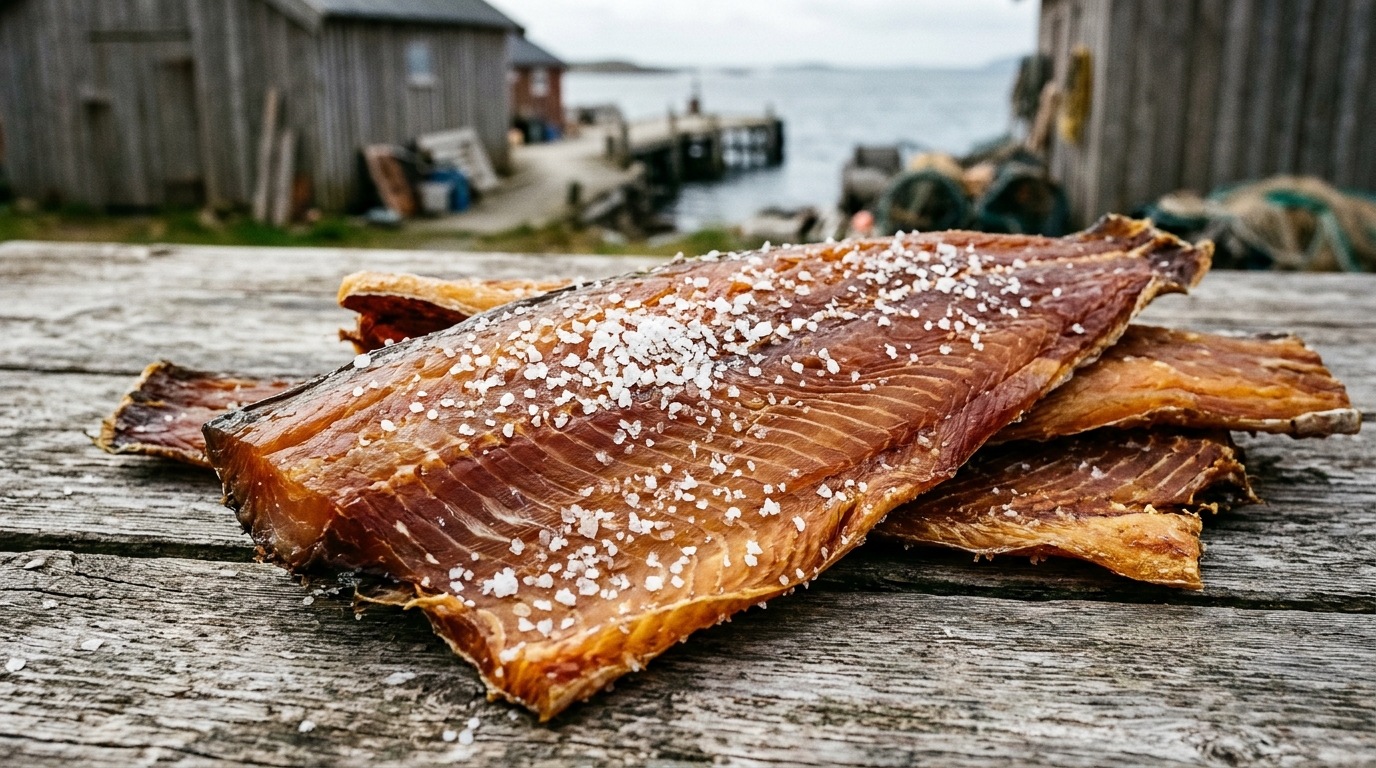
Microplastics are notoriously difficult to isolate from cured fish products. These foods carry complex matrices rich in lipids, proteins, salt, and minerals, and that biochemical load frustrates standard organic matter digestion while undermining the recovery of polymer particles. A new study addresses this problem with a sequential hydrogen peroxide and potassium hydroxide digestion protocol, developed, optimized, and validated specifically for cured fish matrices.
The work began with a preliminary evaluation of different hydrogen peroxide to potassium hydroxide ratios. That screening identified a 30:70 volume-to-volume combination as the optimum reagent mix. From there, the team applied Response Surface Methodology coupled with a Central Composite Design to refine two operational variables: digestion temperature and reagent volume. This statistical approach allowed the researchers to model how the two parameters interact and to locate the condition that best balances organic matter removal with practical sample handling.
The resulting quadratic models showed high predictive performance, with an R² of 0.9515 for digestion efficiency and an R² of 0.9785 for filtration time, and neither model displayed a significant lack of fit. Under the optimum conditions of 60 degrees Celsius and a reagent volume of 36.39 milliliters per gram, the protocol achieved a digestion efficiency of 99.33 percent with a filtration time of 11.33 seconds. Those figures matter because a digestion step that leaves residual organic material slows filtration and can obscure or chemically alter the very particles a laboratory is trying to count and identify.
Validation followed on four distinct cured fish matrices, and digestion efficiencies exceeded 96 percent in each case. Micro-Raman spectroscopy confirmed that the treatment efficiently removed lipid-associated spectral signatures, which is a critical check since residual lipids can interfere with the spectral identification of polymers. The protocol therefore cleared the matrix without introducing artifacts that would compromise downstream analysis.
Equally important was what the digestion did not destroy. Gravimetric measurements, microscopic observations, dimensional analysis, and Raman spectral characterization demonstrated that the optimized sequential treatment preserved the mass, morphology, size, and chemical integrity of particles representing six common polymers: polypropylene, polyethylene, polyvinyl chloride, polyethylene terephthalate, polystyrene, and polyamide. Preserving these properties is essential for any extraction method, because a protocol that shrinks, fragments, or chemically degrades particles would bias both the count and the polymer identification that follow.
The study, published as an open access research article in the journal Microplastics and Nanoplastics on 2 November 2026, was shared early to provide faster access to the peer-reviewed, accepted version, which remains citable under a permanent DOI and is subject to further edits before the final Version of Record. The author team included Aslam Mohamed, K. A. Martin Xavier, Soibam Ngasotter, Jijo Lukose, Megha Sunil, Midhun M. Nair, and A. A. Zynudheen.
The researchers describe the protocol as a rapid, reliable, and reproducible approach for isolating microplastics from cured fish products. Beyond the immediate application, they position the work as establishing a standardized optimization framework, one that combines reagent ratio screening with Response Surface Methodology, that can facilitate method development for other complex food matrices where high lipid, protein, salt, or mineral content currently hampers microplastic extraction.
The technical significance lies in the combination of steps. Hydrogen peroxide is a strong oxidizer that attacks organic matter, while potassium hydroxide is an alkaline digesting agent, and sequencing them at a tuned ratio appears to handle the resistant cured fish matrix better than either reagent alone could at a single fixed condition. By anchoring the optimization in a formal experimental design rather than trial and error, the study also generated predictive models that other laboratories can adapt, adjusting temperature and reagent volume for their own matrices while retaining a quantified expectation of digestion efficiency and filtration time.
For food safety laboratories monitoring microplastic contamination in processed seafood, the protocol offers a validated starting point that has been demonstrated across multiple cured fish matrices and across the polymer types most frequently encountered in environmental and food studies. The reported efficiencies above 96 percent, the confirmed removal of lipid interference, and the demonstrated preservation of particle integrity together define a method that can support accurate quantification without the losses or artifacts that have limited microplastic analysis in these challenging products.
Subject of Research: Development and validation of a chemical digestion protocol for extracting microplastics from cured fish products
Article Title: A sequential H₂O₂–KOH digestion protocol for microplastic extraction from cured fish matrices: development, optimization and validation
Article References: Mohamed, A., Martin Xavier, K. A., Ngasotter, S., Lukose, J., Sunil, M., Nair, M. M., & Zynudheen, A. A. (2026). A sequential H₂O₂–KOH digestion protocol for microplastic extraction from cured fish matrices: development, optimization and validation. Microplastics and Nanoplastics. https://doi.org/10.1186/s43591-026-00247-9
Image Credits: AI Generated
DOI: 10.1186/s43591-026-00247-9
Keywords: microplastics, cured fish, hydrogen peroxide, potassium hydroxide, digestion protocol, response surface methodology, micro-Raman spectroscopy, polymer recovery, food safety, method optimization, sequential, digestion
News Source: Bethany Barker. (November 7, 2026). Sequential H₂O₂–KOH Digestion Protocol Extracts Microplastics from Cured Fish. Scienmag.