A detailed clinical report from Shandong Medical and Pharmaceutical University Hospital describes the successful multidisciplinary rescue of a previously healthy forty-eight-year-old male who developed severe community-acquired pneumonia complicated by refractory septic shock and multiple organ dysfunction, managed through a physiology-guided conversion between extracorporeal membrane oxygenation modalities. The patient, whose previous medical history was significant exclusively for long-term tobacco smoking and entirely devoid of underlying chronic organic conditions such as hypertension, diabetes, or pre-existing cardiopulmonary, hepatic, or renal diseases, was admitted to the intensive care unit on January 15, 2022. Prior to his emergency presentation, he experienced a ten-day prodrome of diarrhea and productive cough, which rapidly worsened over the subsequent forty-eight hours into high fever accompanied by shaking chills.
Initial diagnostic evaluations performed at a local referring medical center demonstrated profound hematologic derangements, notably critical leukopenia with a white blood cell count of 1.8 × 10⁹ per liter and severe thrombocytopenia with a platelet count of 10 × 10⁹ per liter. Upon transfer to the university intensive care department, the patient exhibited cardiovascular collapse and respiratory exhaustion, presenting with a core body temperature of 38.9 degrees Celsius, severe tachycardia at 140 beats per minute, tachypnea at 37 breaths per minute, and arterial blood pressure of 77/46 millimeters of mercury while dependent on continuous intravenous norepinephrine infusion at 0.3 micrograms per kilogram per minute. Repeat complete blood counts upon admission documented worsening multi-lineage marrow suppression, with circulating white blood cells falling to 0.7 × 10⁹ per liter, hemoglobin measuring 75 grams per liter, and platelet counts dropping to 4 × 10⁹ per liter. Biochemical profiling demonstrated substantial end-organ injury, featuring serum albumin reduced to 25.4 grams per liter, aspartate aminotransferase elevated to 183.2 units per liter, total bilirubin at 39.8 micromoles per liter, and serum creatinine climbing to 214.7 micromoles per liter, confirming significant hepatocellular and renal impairment.
Baseline coagulation screening revealed an activated partial thromboplastin time markedly prolonged to 59.3 seconds alongside a prothrombin time of 14.1 seconds. Arterial blood gas testing conducted under an inspired oxygen fraction of 60 percent demonstrated a systemic pH of 7.47, an arterial oxygen partial pressure of 88 millimeters of mercury, a buffer base excess of negative 8.4 millimoles per liter, and a serum lactic acid concentration of 2.8 millimoles per liter. Inflammatory and cardiac strain biomarkers were exceptionally elevated, with serum procalcitonin exceeding 100 nanograms per milliliter and N-terminal pro-brain natriuretic peptide surpassing 35,000 picograms per milliliter. Bedside transthoracic echocardiography documented global left ventricular hypokinesis, revealing a severely depressed left ventricular ejection fraction of 37 percent. Thoracic computed tomography imaging performed on January 15 demonstrated dense, extensive parenchymal consolidation occupying the upper lobe of the left lung. Four bottles of blood cultures, alongside sputum and bronchoalveolar lavage fluid tests, all confirmed a string-test-positive, multidrug-susceptible strain of hypervirulent Klebsiella pneumoniae, confirming hypervirulent community-acquired pneumonia with refractory septic shock and early multiple organ dysfunction.
Initial emergency stabilization included high-flow nasal oxygen, empirical antimicrobial coverage with combined imipenem-cilastatin sodium and moxifloxacin, targeted crystalloid fluid resuscitation, and continuous blood purification. Despite these aggressive supportive interventions, the patient experienced catastrophic respiratory and circulatory deterioration, with his oxygenation index dropping to 70 millimeters of mercury. Immediate escalation to endotracheal intubation, lung-protective mechanical ventilation protocols, and therapeutic prone positioning failed to resolve severe gas exchange failure, leaving the oxygenation index stagnant at 80 millimeters of mercury. Simultaneously, circulatory collapse deepened, with mean arterial pressure remaining at merely 60 millimeters of mercury despite escalating intravenous norepinephrine infusions up to 2 micrograms per kilogram per minute. In accordance with international guidelines for refractory septic shock, clinicians established peripheral venoarterial extracorporeal membrane oxygenation support.
Following initiation of venoarterial extracorporeal life support, the patient achieved hemodynamic stabilization, demonstrating complete resolution of circulatory shock and recovery of left ventricular ejection fraction to 45 percent by January 26, 2022. However, diagnostic bronchoalveolar lavage fluid cultures obtained on January 24 identified secondary nosocomial superinfection with carbapenem-resistant Acinetobacter baumannii. In vitro antimicrobial susceptibility testing verified that the pathogen exhibited complete resistance to all tested cephalosporins and carbapenems, while maintaining sensitivity exclusively to tigecycline, polymyxin, and amikacin. Clinicians immediately commenced combination antimicrobial therapy incorporating intravenous cefoperazone-sulbactam, intravenous tigecycline, and intravenous polymyxin E. Regimen modifications were subsequently adjusted based on serial microbial culture findings, inflammatory biomarkers, and therapy-induced organ injury.
On February 22, the fortieth day of hospitalization, the patient developed profound hypofibrinogenemia directly induced by intravenous tigecycline, prompting immediate temporary suspension of the drug. Following the complete normalization of plasma fibrinogen concentrations, tigecycline was reintroduced without further clinically significant reductions in fibrinogen; however, in light of prolonged cumulative drug exposure, the systemic regimen was permanently converted to oral minocycline. Concurrently, progressive renal dysfunction associated with systemic intravenous polymyxin E administration led clinicians to halt intravenous delivery entirely and transition the patient to an exclusive aerosol inhalation formulation of polymyxin E. This dynamic pharmacological adjustment maintained potent bactericidal pressure against the resistant Acinetobacter baumannii strain while preventing irreversible hematologic and renal damage, ultimately achieving successful microbiological eradication of the secondary opportunistic infection across two months of personalized antimicrobial therapy.
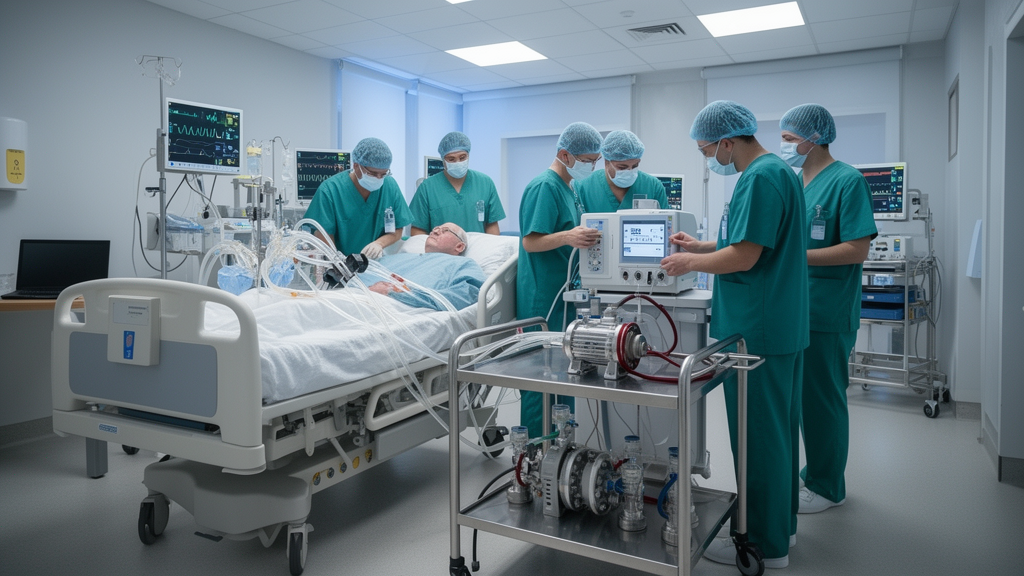
Parallel to antimicrobial adjustments, cardiopulmonary mechanics demanded nuanced bedside decisions regarding extracorporeal configuration. On January 26, 2022, following resolution of circulatory shock and recovery of left ventricular function, a trial of weaning from venoarterial support was initiated. Reducing the extracorporeal fraction of inspired oxygen to 21 percent revealed an oxygenation index below 100 millimeters of mercury; although cardiac function recovered sufficiently to sustain systemic circulation without mechanical circulatory support, extensive consolidation and early abscess formation in the left upper lobe caused severe, refractory hypoxemia that venoarterial support could not correct. Furthermore, continued venoarterial cannulation posed risks of differential hypoxia and upper-body hypoperfusion. Consequently, the clinical team executed a timely transition from venoarterial to venovenous extracorporeal membrane oxygenation, providing targeted respiratory support without affecting extracardiac circulation. Following optimized mechanical ventilation and comprehensive airway management, venovenous extracorporeal life support was successfully discontinued on January 30, 2022.
Over the subsequent two months, severe necrotizing lung infection generated extensive suppurative intrathoracic complications, including large left lung abscesses, empyema, and pyopneumothorax, ultimately forming air-filled cystic cavities. Serial thoracic computed tomography scans meticulously documented this tissue destruction, revealing consolidation with air bronchograms on January 30, solid lesions with abscess formation on February 6, cavitary abscesses with pneumothorax and contralateral pulmonary exudation on February 17, persistent left lung abscesses on February 26, and partial consolidation with pneumothorax on March 22. Because spontaneous expectoration was ineffective under invasive mechanical ventilation and necrotic pus accumulated rapidly within abscess cavities, the medical team conducted repeated flexible bronchoscopic debridement and sputum suctioning a total of seventy-two separate times. These procedures were scheduled every one to three days based on computed tomography findings and sputum volume, complemented continuously by closed intercostal tube drainage to evacuate purulent pleural collections.
To promote functional recovery, the intensive care team implemented a structured pulmonary rehabilitation program, incorporating bedside respiratory muscle training, mechanical chest wall oscillation, and manual percussion techniques to mobilize retained tracheobronchial secretions, combined with early physical rehabilitation exercises and psychological interventions to accelerate ventilator weaning. Concurrently, the patient developed major gastrointestinal complications, suffering severe gastrointestinal hemorrhage secondary to a transverse colon ulcer, followed by mechanical bowel obstruction caused by cicatricial scar contracture. These surgical crises were managed with endoscopic hemostasis, gastrointestinal decompression tube placement, and a surgical transverse colostomy performed on May 31, 2022. Serial thoracic imaging confirmed progressive pulmonary healing, showing cavity absorption on April 6 and reduced air spaces with lesion resolution on contrast-enhanced computed tomography on May 17. After a rigorous six-month multidisciplinary inpatient course, the patient demonstrated substantial clinical improvement and was discharged on July 21, 2022.
Outpatient follow-up demonstrated continued stability alongside management of delayed complications. The patient underwent elective colostomy reversal on February 1, 2023. On April 3, 2023, follow-up pulmonary computed tomography angiography identified a focal filling defect in the posterior segment of the left apical pulmonary artery branch, confirming pulmonary embolism that was successfully managed with anticoagulation therapy. On October 31, 2023, interventional radiologists performed bronchial artery embolization to arrest recurrent hemoptysis, after which the patient remained stable during routine outpatient evaluations. In discussing the broader implications, the authors noted that community-acquired pneumonia remains a leading cause of infectious mortality worldwide, with Chinese epidemiological data demonstrating in-hospital mortality rates of 0.8 to 2.1 percent for general pneumonia and up to 2.49 percent for severe disease. The case illustrates that hypervirulent Klebsiella pneumoniae infections can cause rapid necrotic destruction and septic cardiomyopathy, highlighting how individualized conversion between extracorporeal membrane oxygenation modes, paired with aggressive airway debridement and tiered antimicrobial stewardship, can successfully rescue patients facing catastrophic multi-system collapse.
Subject of Research: Dynamic extracorporeal membrane oxygenation mode conversion in severe community-acquired pneumonia
Article Title: Conversion of VA-to-VV ECMO modes in the management of severe community-acquired pneumonia complicated by septic shock: A case report
Article References: Hu, H., Qiu, X., Zhang, W., Tian, H., Lv, B., Wang, T., & Hao, D. (2026). Conversion of VA-to-VV ECMO modes in the management of severe community-acquired pneumonia complicated by septic shock: A case report. Journal of Infection and Public Health, 19(12), Article 103403. https://doi.org/10.1016/j.jiph.2026.103403
Image Credits: AI Generated
DOI: 10.1016/j.jiph.2026.103403
Keywords: extracorporeal membrane oxygenation, venoarterial ECMO, venovenous ECMO, community-acquired pneumonia, septic shock, septic cardiomyopathy, Klebsiella pneumoniae, Acinetobacter baumannii, hypervirulent Klebsiella pneumoniae, bronchoscopy, pulmonary rehabilitation, mechanical ventilation, hypoxemia, colostomy, pulmonary embolism, antimicrobial resistance
News Source: Ophelia Keating. (November 24, 2026). Sequential ECMO Mode Conversion Manages Severe Pneumonia Complicated by Septic Shock. Scienmag.