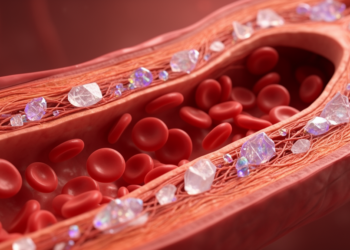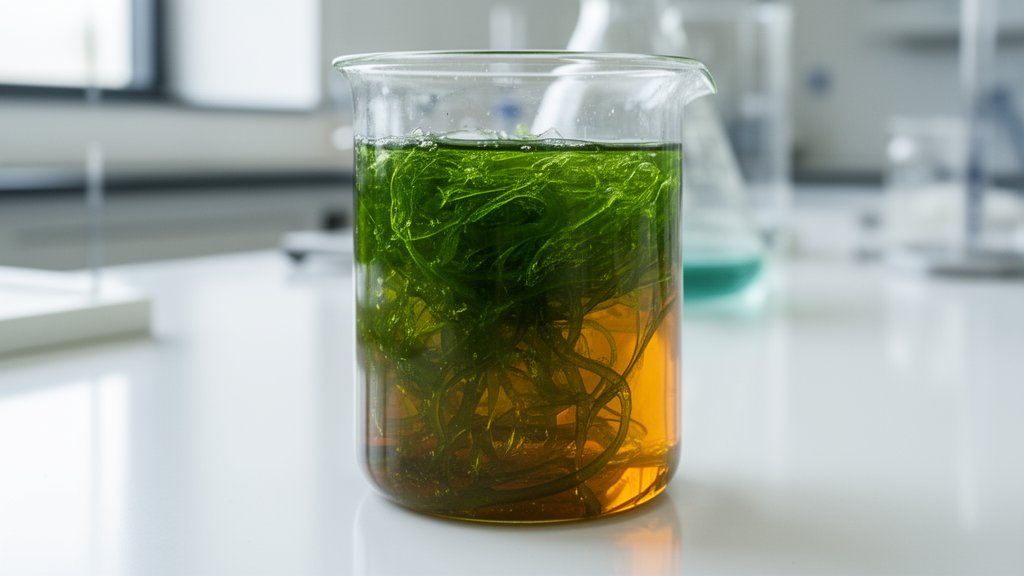
Chemical engineers investigating sustainable biorefinery designs have demonstrated that the order in which individual compounds are isolated from brown seaweed using deep eutectic solvents determines the molecular integrity and functional quality of the recovered biomolecules. Marine biomass harvested from aquatic environments, particularly the brown macroalga Saccharina latissima, contains multiple high-value products within a single cellular matrix, including the antioxidant carotenoid fucoxanthin, the sulphated polysaccharide fucoidan, and structural alginate. Traditional industrial processing methods typically target only a single component, commonly alginate, by deploying severe mineral acid and alkaline digestions that destroy or discard the remaining bioactive fractions. To overcome these destructive trade-offs, researchers developed and compared two integrated three-stage extraction sequences built around a hydrophobic deep eutectic solvent composed of menthol and levulinic acid. Their findings reveal that while both cascade pathways achieve comparable overall recovery efficiencies, reversing the processing sequence dramatically alters the rheological viscosity of the recovered alginate and doubles the degree of sulphation retained on the bioactive fucoidan polymer.
The study utilized cultivated Saccharina latissima biomass collected in May 2024 from coastal waters in Brittany, France, which was frozen at minus twenty degrees Celsius before undergoing forced-air drying at forty degrees Celsius for seventy-two hours in the dark. Chemical characterization of this milled dried biomass established baseline reference concentrations of two hundred ninety-six milligrams of alginate per gram, ten milligrams of fucose per gram as a compositional proxy for fucoidan, and three hundred thirty-eight micrograms of fucoxanthin per gram. To dissolve and recover the lipid-soluble carotenoids without resorting to hazardous petroleum-derived volatile organic solvents, the investigators formulated a Type V natural deep eutectic solvent by blending DL-menthol as a hydrogen bond acceptor with levulinic acid as a hydrogen bond donor at an exact molar ratio of one to two. When heated to sixty degrees Celsius under continuous mechanical agitation, the solid components formed a uniform, stable eutectic liquid with a depressed melting point driven by an extensive intermolecular hydrogen-bonding network.
In the first biorefinery sequence, designated Approach I, dried seaweed was blended directly with the menthol-levulinic acid solvent containing ten percent water by weight at a solid-to-liquid ratio of zero point zero five grams per milliliter. The mixture was agitated in the dark at twenty-five degrees Celsius for two hours, after which centrifugal separation partitioned the mixture into an upper, fucoxanthin-rich organic solvent layer and a dense biomass sediment. The residual biomass pellet was then reconstituted to its original volume with ultrapure water to recover fucoidan across four thermal regimes, spanning a brief ambient wash and one-hour extractions at thirty-five, fifty-five, and seventy-five degrees Celsius. Because levulinic acid from the eutectic solvent partially partitions into aqueous phases, the biomass residue developed an intrinsic acidic environment characterized by a pH of two point eight and a titratable acidity of one point four molar equivalents. Following fucoidan removal, remaining pellets were washed and digested with zero point one molar sodium carbonate at fifty-five degrees Celsius to extract structural sodium alginate.
To investigate whether altering the processing order could mitigate product degradation caused by carryover acidity, the researchers designed Approach II, which inverted the initial stages by introducing an aqueous citric acid pretreatment before applying the deep eutectic solvent. Because fucoxanthin is exceptionally susceptible to thermal degradation and oxidative loss when exposed to hot acidic media, the operational parameters of this initial water-soluble extraction were modeled using response surface methodology. The statistical experimental design evaluated twenty-five randomized runs across discrete numeric ranges of extraction time from thirty to ninety minutes, temperatures from twenty-five to fifty-five degrees Celsius, and citric acid concentrations from zero to eighty millimolar. After centrifugation to isolate the aqueous fucoidan extract, the water-retaining pellet was standardized to a fixed moisture volume and contacted with the anhydrous menthol-levulinic acid eutectic mixture for two hours at twenty-five degrees Celsius, followed by identical downstream sodium carbonate digestion to isolate the residual alginate fraction.
Evaluating the mathematical response surface models revealed distinct kinetic behaviors governing the release of each marine biomolecule during the aqueous pretreatment step of Approach II. Second-order polynomial regressions for fucose and alginate demonstrated robust statistical significance with coefficient of determination values of zero point nine seven zero and zero point nine zero eight, respectively, accompanied by non-significant lack-of-fit probabilities exceeding zero point zero five. Fucose recovery increased steadily toward the highest tested boundaries of temperature and duration, with temperature serving as the dominant experimental factor driving matrix loosening. Conversely, the predictive model for subsequent fucoxanthin extraction yielded a lower coefficient of determination of zero point six nine five and a negative predicted correlation coefficient of minus zero point zero two eight. This reduced predictive power reflected conflicting physical mechanisms, where mild cell-wall disassembly improved pigment accessibility while simultaneous thermal exposure and acid contact catalyzed pigment oxidation within the cellular chloroplast membranes.
Numerical multi-variable optimization prioritizing fucoxanthin extraction identified an optimal pretreatment configuration for Approach II consisting of thirty-six degrees Celsius, thirty-one minutes of residence time, and eighty millimolar citric acid concentration. Experimental validation trials conducted under these rounded settings produced empirical yields of six hundred eleven micrograms of fucoxanthin per gram, three point zero milligrams of fucose per gram, and one hundred twenty-seven milligrams of alginate per gram. All three experimental outcomes fell squarely within the ninety-five percent confidence intervals predicted by the response surface equations, displaying tight relative error margins between one point seven and four point four percent. The resulting fucoxanthin recovery represented an eighty-one percent increase over conventional reference extraction using pure methanol, which yielded only three hundred thirty-eight micrograms per gram, confirming that mild organic acid conditioning primes the algal matrix for subsequent eutectic dissolution without triggering thermal breakdown of the carotenoid pigments.
A direct comparison between the two biorefinery configurations demonstrated significant divergence in polysaccharide yields and structural properties, despite delivering statistically indistinguishable fucoxanthin recoveries. In Approach I, subjecting the acidified residual pellet to fifty-five degrees Celsius achieved a fucose yield of five point five milligrams per gram, approximately one point four times higher than the three point zero milligrams obtained under the milder conditions of Approach II. However, rheological testing of one percent sodium alginate solutions revealed that Approach I suffered extensive structural damage. Fitting shear rate data across one to one hundred inverse seconds to the Ostwald-de Waele power-law model revealed that alginate derived from Approach II possessed a rheological consistency index greater than five times higher than that produced by Approach I. Furthermore, the consistency index of Approach II exceeded that of conventional industrial sulphuric acid benchmark extractions by thirty-six percent, indicating superior preservation of long-chain polymer backbone integrity.
Chemical analysis of the carbohydrate fractions further demonstrated that extraction sequencing directly alters polymer composition and biological functional groups. Alginate isolated via Approach I exhibited a mannuronic acid to guluronic acid ratio of one point one two, which was twelve percent higher than the one point zero zero ratio observed in both Approach II and the conventional benchmark. The authors attributed this variation to the partial dissolution of accessible, mannuronic-rich polymer segments during the initial citric acid wash of Approach II, leaving the residual structural framework enriched with guluronic acid units that dictate calcium-induced gel formation. Concurrently, spectrophotometric barium chloride turbidimetric assays revealed that fucoidan recovered from Approach II retained a degree of sulphation of zero point six two moles of sulphate per mole of neutral sugar. In sharp contrast, fucoidan isolated under Approach I exhibited a degree of sulphation of only zero point three three, representing a twofold loss of critical sulphate ester functional groups.
The sharp drop in fucoidan sulphation and alginate solution viscosity observed in Approach I illustrates the operational hazards of unmanaged chemical carryover within sequential biomass cascades. Although levulinic acid partition into the aqueous phase generates an in-situ acidic environment that facilitates fucoidan dissolution without supplementary chemical inputs, the combination of elevated temperature and sustained acidity promotes the hydrolysis of sulphate esters and cleaves glycosidic bonds within the alginate structure. Furthermore, the presence of residual organic acids in biomass residues increases freshwater washing requirements and elevates alkaline neutralizer consumption during subsequent alginate recovery stages. Conversely, while Approach II requires supplemental citric acid and slightly diminishes initial fucoidan yield, it successfully shelters delicate sulphate substituents and protects structural polysaccharide chains from hydrolytic depolymerization, thereby yielding higher-grade hydrocolloids suitable for sensitive pharmaceutical and biomaterial formulations.
The authors emphasized that the operational trade-offs characterized in this work demonstrate why multiproduct biorefineries must evaluate total process integration rather than optimizing individual extraction stages in isolation. Because the initial solvent contact modifies the internal physicochemical matrix of the seaweed, processing sequences must be tailored to balance target product recovery against downstream macromolecular quality. The researchers cautioned that these empirical findings reflect Saccharina latissima harvested in a single seasonal cohort, noting that seasonal shifts and species-specific variations across brown seaweeds such as Laminaria hyperborea or Ascophyllum nodosum require systematic verification. Future technical scaling will require closed-loop recovery methods for both menthol and levulinic acid phases, rigorous techno-economic modeling, and direct bioactivity assays to establish whether observed retentions in sulphation and viscosity translate into measurable pharmacological and material performance advantages.
Subject of Research: Sequential deep eutectic solvent biorefinery strategies for Saccharina latissima
Article Title: Cascade extraction strategies for Saccharina latissima biorefineries based on deep eutectic solvents
Article References: Reynaga-Navarro, W., Slager, F., Wijffels, R. H., Eppink, M. H. M., & Kazbar, A. (2026). Cascade extraction strategies for Saccharina latissima biorefineries based on deep eutectic solvents. Cleaner Engineering and Technology, 35, Article 101367. https://doi.org/10.1016/j.clet.2026.101367
Image Credits: AI Generated
DOI: 10.1016/j.clet.2026.101367
Keywords: Saccharina latissima, deep eutectic solvents, biorefinery cascade, fucoxanthin extraction, fucoidan recovery, sodium alginate, levulinic acid, DL-menthol, citric acid pretreatment, degree of sulphation, rheological consistency index, mannuronic guluronic ratio, brown seaweed processing, green chemistry extraction, hydrophobic Type V DES, multiproduct valorisation
News Source: Denise Maddox. (November 20, 2026). Sequencing Deep Eutectic Solvent Extractions Preserves Key Seaweed Biopolymer Qualities. Scienmag.