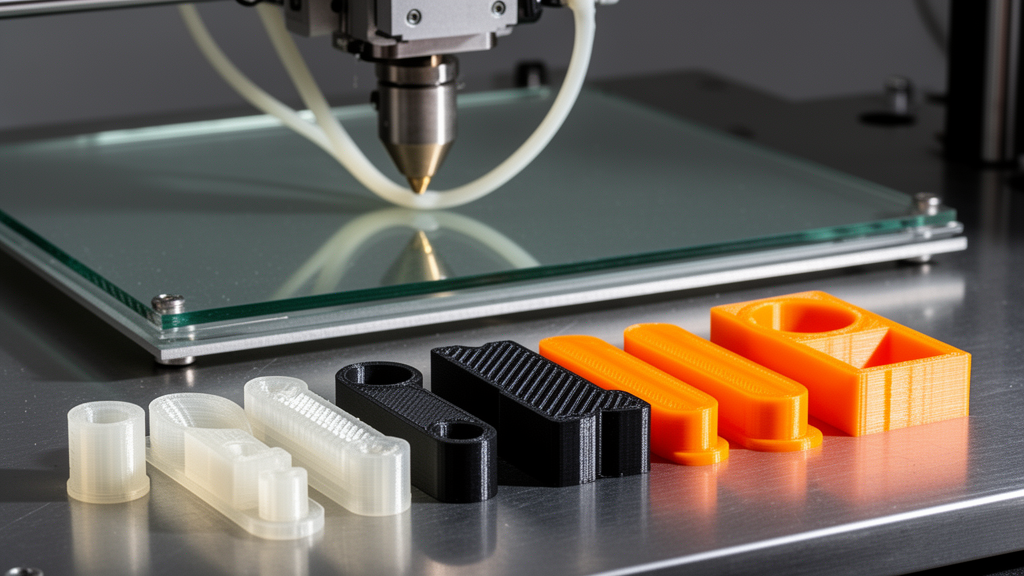
A systematic review has evaluated how critical fabrication parameters affect the long-term durability of material extrusion thermoplastics as additive manufacturing shifts toward load-bearing parts. Published in the Journal of Materials Science: Materials in Engineering, the analysis examines the mechanical reliability of 3D-printed polymers under diverse processing conditions. The authors set out to evaluate structural integrity challenges arising from mesostructural anisotropy and interlayer porosity inherent to the fabrication technique.
The study synthesizes empirical findings across key mechanical performance metrics, concentrating specifically on impact resistance, surface hardness, and creep behavior. Current additive manufacturing literature remains heavily concentrated on common polymers such as polylactic acid and acrylonitrile butadiene styrene. To address this focus, the review identifies an essential research gap regarding the comparative durability of polyethylene terephthalate glycol, engineering-grade polycarbonate, polypropylene, and their recycled counterparts under identical processing conditions.
Fabrication settings exert a decisive influence on the resulting durability of extruded polymers. The authors evaluated the specific roles played by infill architecture, layer height, thermal processing variables, and raster orientation. While increasing infill density consistently correlates with enhanced surface hardness and improved creep resistance, the response of impact toughness across printed specimens proved highly variable.
Empirical data revealed a complex relationship between material volume, internal porosity, and fracture propagation modes during impact events. Multiple evaluated studies reported achieving maximum impact toughness at complete 100 percent infill density. However, other investigations observed peak energy absorption at lower densities ranging between 70 percent and 85 percent, indicating that internal void structures significantly modify fracture dynamics.
The review also evaluates the mechanical durability of recycled polymers within sustainable manufacturing workflows.
A critical limitation highlighted by the authors is the major research gap concerning creep-impact interactions in printed components. Furthermore, the analysis emphasizes the inadequacy of current standardized testing protocols for characterizing the unique failure mechanisms of 3D-printed mesostructures, outlining an engineering framework to optimize material extrusion parameters for safety-critical industrial applications.
Subject of Research: Durability and mechanical behavior of material extrusion 3D-printed thermoplastics
Article Title: The influence of fabrication parameters on the durability of material extrusion (MEX) thermoplastics (PLA, ABS, PETG, PC, and PP): a review of impact, hardness, and creep behavior
Article References: Boostan, A., Hai, F. I., & Ahmed, A. (2026). The influence of fabrication parameters on the durability of material extrusion (MEX) thermoplastics (PLA, ABS, PETG, PC, and PP): a review of impact, hardness, and creep behavior. Journal of Materials Science: Materials in Engineering. https://doi.org/10.1186/s40712-026-00601-y
Image Credits: AI Generated
DOI: 10.1186/s40712-026-00601-y
Keywords: additive manufacturing, material extrusion, 3D printing, thermoplastics, polylactic acid, acrylonitrile butadiene styrene, polyethylene terephthalate glycol, polycarbonate, polypropylene, recycled polymers, infill density, creep resistance, surface hardness, impact toughness, interlayer porosity, mesostructural anisotropy
News Source: Denise Maddox. (November 20, 2026). Review Assesses 3D Printing Parameters and Durability Across Multiple Thermoplastics. Scienmag.