
image:
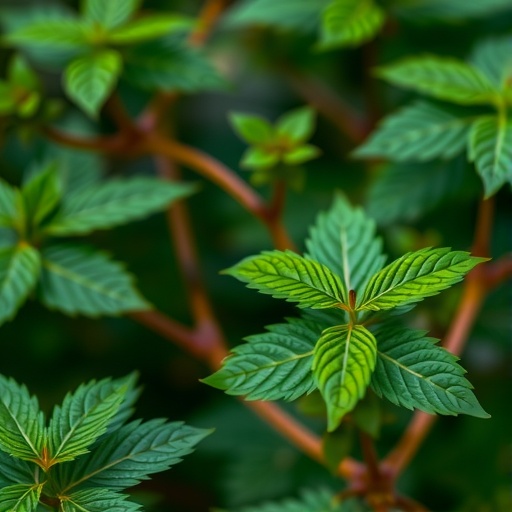
Perilla oil supplementation can improve omega-3 levels in blood, positively modulate blood coagulation and reduce inflammation
view more
Credit: Professor Ji Yeon Kim from Seoul National University of Science and Technology, Korea
Cardiovascular disease (CVD) is among the leading causes of death worldwide. In South Korea, it is the second leading cause of death, and its incidence has continued to rise in recent years. CVD places a substantial burden on public health systems, society, and the economy while also reducing quality of life. As a result, identifying effective strategies for prevention and management remains a major public health priority.
Perilla frutescens, or perilla leaves, is a commonly used herb in many Asian countries for both culinary and medicinal purposes. In South Korea, the leaves are commonly eaten fresh, pickled, or used to wrap seasoned meats. Perilla oil, extracted from the plant’s seeds, is also widely consumed. The oil is particularly rich in α-linolenic acid (ALA), an essential omega-3 fatty acid that can account for up to 70% of its composition. Previous studies suggest that ALA may have anti-inflammatory and antioxidant properties and could help support cardiovascular health. This means that perilla oil can potentially support cardiovascular health, but its specific effects are underexplored.
To investigate this, a research team led by Professor Ji Yeon Kim from the Department of Food Science and Biotechnology at Seoul National University of Science and Technolo in South Korea conducted a randomized double-blind, placebo-controlled, parallel group trial evaluating perilla oil supplementation. “While perilla oil has long been an integral part of Korean food culture, its potential cardiovascular benefits have not been fully recognized,” explains Prof. Kim. “Our research demonstrates these benefits and shows how perilla oil can support cardiovascular health and improve blood circulation.” Their study was made available online on May 13, 2026, and published in Volume 17, Issue 22 of Food and Function on June 22, 2026.
The trial enrolled 65 healthy smokers aged 19–69 years. Smokers were selected because smoking is a major risk factor for CVD and is associated with substantially higher cardiovascular mortality than non-smokers. Participants had no clinically significant diseases and were not taking regular medications. They were randomly assigned by an independent third party to receive either perilla oil capsules (three capsules twice daily) or visually identical placebo capsules for eight weeks.
After 8 weeks, the participants were tested for various biological markers. Compared with the placebo group, perilla oil supplementation significantly prolonged collagen-induced ADP closure time (C-ADP CT), a measure of platelet function. The supplementation also reduced the mRNA expression of the inflammatory markers tumor necrosis factor-α (TNF-α) and T-box transcription factor 21 (TBX21).
Furthermore, perilla oil increased levels of ALA and its metabolites in both plasma and red blood cells, and it also increased plasma levels of eicosapentaenoic acid (EPA), another omega-3 fatty acid associated with anti-inflammatory effects and lower triglyceride levels. The team also found that higher EPA levels were positively correlated with longer C-ADP CT, suggesting a relationship between omega-3 status and platelet function.
The researchers also performed a high-fat, high-glucose loading test, which is often used to assess the cardiovascular effects of functional dietary ingredients under metabolic stress. Perilla oil did not produce significant benefits in this test, suggesting that a longer supplementation period may be needed to detect such effects.
“The results of our study show that perilla oil supplementation positively modulates blood coagulation, and reduces inflammation, even in individuals with high oxidative stress such as smokers,” remarks Prof. Kim. “Perilla oil can be easily integrated into daily diets as a vegan-friendly alternative to fish oil for individuals seeking to manage vascular health.”
Although more research is required, the findings suggest that perilla oil can be an accessible, everyday dietary intervention to potentially improve blood flow and to reduce the risk of cardiovascular events.
Reference
Title of original paper: Effects of perilla oil on platelet and inflammatory responses in healthy smokers: a randomized, double-blind, placebo-controlled, parallel trial
Journal: Food and Function
DOI:
DOI
10.1039/d6fo01112h
Method of Research
Randomized controlled/clinical trial
Subject of Research
Not applicable
Article Title
Effects of perilla oil on platelet and inflammatory responses in healthy smokers: a randomized, double-blind, placebo-controlled, parallel trial
Article Publication Date
22-Jun-2026
COI Statement
The authors declare that they have no known competing financial interests or personal relationships that could have appeared to influence the work reported in this paper.
Media Contact
Seo-Hee Yoon
Seoul National University of Science & Technology
Office: 82-2 – 970 – 9166
DOI
10.1039/d6fo01112h
DOI
10.1039/d6fo01112h
Method of Research
Randomized controlled/clinical trial
Subject of Research
Not applicable
Article Title
Effects of perilla oil on platelet and inflammatory responses in healthy smokers: a randomized, double-blind, placebo-controlled, parallel trial
Article Publication Date
22-Jun-2026
COI Statement
The authors declare that they have no known competing financial interests or personal relationships that could have appeared to influence the work reported in this paper.
Tags
/Health and medicine
/Applied sciences and engineering/Food science
/Life sciences/Organismal biology/Anatomy/Respiratory system
/Applied sciences and engineering/Engineering/Bioengineering/Biotechnology
/Health and medicine/Medical specialties/Internal medicine