

• HOME
  • NEWS
  • EXPLORE
    • CAREER
      • Companies
      • Jobs
    • EVENTS
    • iGEM
      • News
      • Team
    • PHOTOS
    • VIDEO
    • WIKI
  • BLOG
  • COMMUNITY
    • FACEBOOK
    • INSTAGRAM
    • TWITTER
Thursday, March 26, 2026
BIOENGINEER.ORG
No Result
View All Result
  • Login
  • HOME
  • NEWS
  • EXPLORE
    • CAREER
      • Companies
      • Jobs
        • Lecturer
        • PhD Studentship
        • Postdoc
        • Research Assistant
    • EVENTS
    • iGEM
      • News
      • Team
    • PHOTOS
    • VIDEO
    • WIKI
  • BLOG
  • COMMUNITY
    • FACEBOOK
    • INSTAGRAM
    • TWITTER
  • HOME
  • NEWS
  • EXPLORE
    • CAREER
      • Companies
      • Jobs
        • Lecturer
        • PhD Studentship
        • Postdoc
        • Research Assistant
    • EVENTS
    • iGEM
      • News
      • Team
    • PHOTOS
    • VIDEO
    • WIKI
  • BLOG
  • COMMUNITY
    • FACEBOOK
    • INSTAGRAM
    • TWITTER
No Result
View All Result
Bioengineer.org
No Result
View All Result
Home NEWS Science News Health

Sensory device stimulates ears and tongue to treat tinnitus in large trial

Bioengineer by Bioengineer
October 7, 2020
in Health
Reading Time: 2 mins read
0
IMAGE
Share on FacebookShare on TwitterShare on LinkedinShare on RedditShare on Telegram

IMAGE

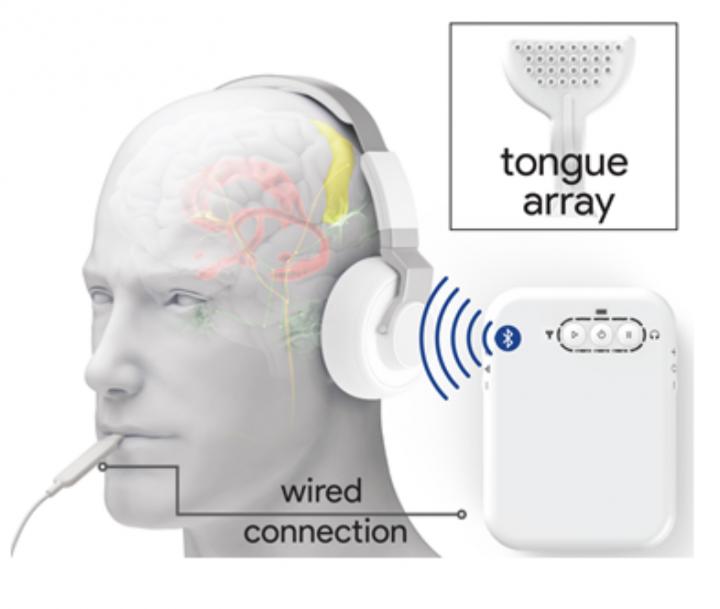
Credit: B. Conlon et al., Science Translational Medicine (2020)

A device that stimulates the ears and tongue substantially reduced the severity of tinnitus symptoms in 326 patients for as long as 1 year, while achieving high patient satisfaction and adherence. The study – one of the largest clinical trials of a tinnitus treatment to date – indicates the bimodal technique could potentially provide the first effective, clinically viable device for tinnitus, which affects up to 15% of the population. This irritating auditory disorder manifests when patients perceive phantom noises such as ringing without any external input. Despite its high prevalence and potentially debilitating nature, there are no approved medical devices or drug treatments that can provide relief to patients. However, recent research in animals has shown that stimulating the auditory nervous system through sounds and electricity improved symptoms. Based on these promising results, Brendan Conlon and colleagues used a non-invasive stimulating device, which delivers sound to the ears through headphones and stimulates the tongue with low amounts of electricity. In a randomized trial of 326 patients with different types of tinnitus, the authors instructed the patients to use the device for 60 minutes daily for 12 weeks. The device reduced tinnitus symptoms, and these improvements persisted throughout a 12-month follow-up period. The team notes they are currently conducting another large clinical trial to study the effects of changing the stimulation protocol over time.

###

Media Contact
Science Press Package Team
[email protected]

Related Journal Article

http://dx.doi.org/10.1126/scitranslmed.abb2830

Tags: Clinical TrialsHearing/SpeechMedicine/Health
Share13Tweet8Share2ShareShareShare2

Related Posts

Aversive Learning Hijacks Brain Sugar Sensor

March 25, 2026

Can Psychosocial Factors Influence Cancer Risk?

March 23, 2026

Depression Factors in Elderly: Pre vs. Post-COVID Analysis

March 23, 2026

Hidden Health Crises Among US and UK Volunteers in Ukraine Uncovered in New Study

March 23, 2026
Please login to join discussion

POPULAR NEWS

  • blank

    Revolutionary AI Model Enhances Precision in Detecting Food Contamination

    96 shares
    Share 38 Tweet 24
  • Imagine a Social Media Feed That Challenges Your Views Instead of Reinforcing Them

    1003 shares
    Share 397 Tweet 248
  • Uncovering Functions of Cavernous Malformation Proteins in Organoids

    54 shares
    Share 22 Tweet 14
  • Promising Outcomes from First Clinical Trials of Gene Regulation in Epilepsy

    51 shares
    Share 20 Tweet 13

About

We bring you the latest biotechnology news from best research centers and universities around the world. Check our website.

Follow us

Recent News

In-Sensor Cryptography Links Physical Process to Digital Identity

Can Psychosocial Factors Influence Cancer Risk?

Depression Factors in Elderly: Pre vs. Post-COVID Analysis

Subscribe to Blog via Email

Success! An email was just sent to confirm your subscription. Please find the email now and click 'Confirm' to start subscribing.

Join 78 other subscribers
  • Contact Us

Bioengineer.org © Copyright 2023 All Rights Reserved.

Welcome Back!

Login to your account below

Forgotten Password?

Retrieve your password

Please enter your username or email address to reset your password.

Log In
No Result
View All Result
  • Homepages
    • Home Page 1
    • Home Page 2
  • News
  • National
  • Business
  • Health
  • Lifestyle
  • Science

Bioengineer.org © Copyright 2023 All Rights Reserved.


