• HOME
  • NEWS
  • EXPLORE
    • CAREER
      • Companies
      • Jobs
    • EVENTS
    • iGEM
      • News
      • Team
    • PHOTOS
    • VIDEO
    • WIKI
  • BLOG
  • COMMUNITY
    • FACEBOOK
    • INSTAGRAM
    • TWITTER
Friday, November 6, 2026
BIOENGINEER.ORG
No Result
View All Result
  • Login
  • HOME
  • NEWS
  • EXPLORE
    • CAREER
      • Companies
      • Jobs
        • Lecturer
        • PhD Studentship
        • Postdoc
        • Research Assistant
    • EVENTS
    • iGEM
      • News
      • Team
    • PHOTOS
    • VIDEO
    • WIKI
  • BLOG
  • COMMUNITY
    • FACEBOOK
    • INSTAGRAM
    • TWITTER
No Result
View All Result
Bioengineer.org
No Result
View All Result
Home NEWS Science News Health

Sensory Axons Function as Peripheral Effectors Regulating Inflammation and Tissue Repair

by
November 6, 2026
in Health
Reading Time: 2 mins read
0
Sensory Axons Function as Peripheral Effectors Regulating Inflammation and Tissue Repair

Sensory Axons Function as Peripheral Effectors Regulating Inflammation and Tissue Repair

Share on FacebookShare on TwitterShare on LinkedinShare on RedditShare on Telegram

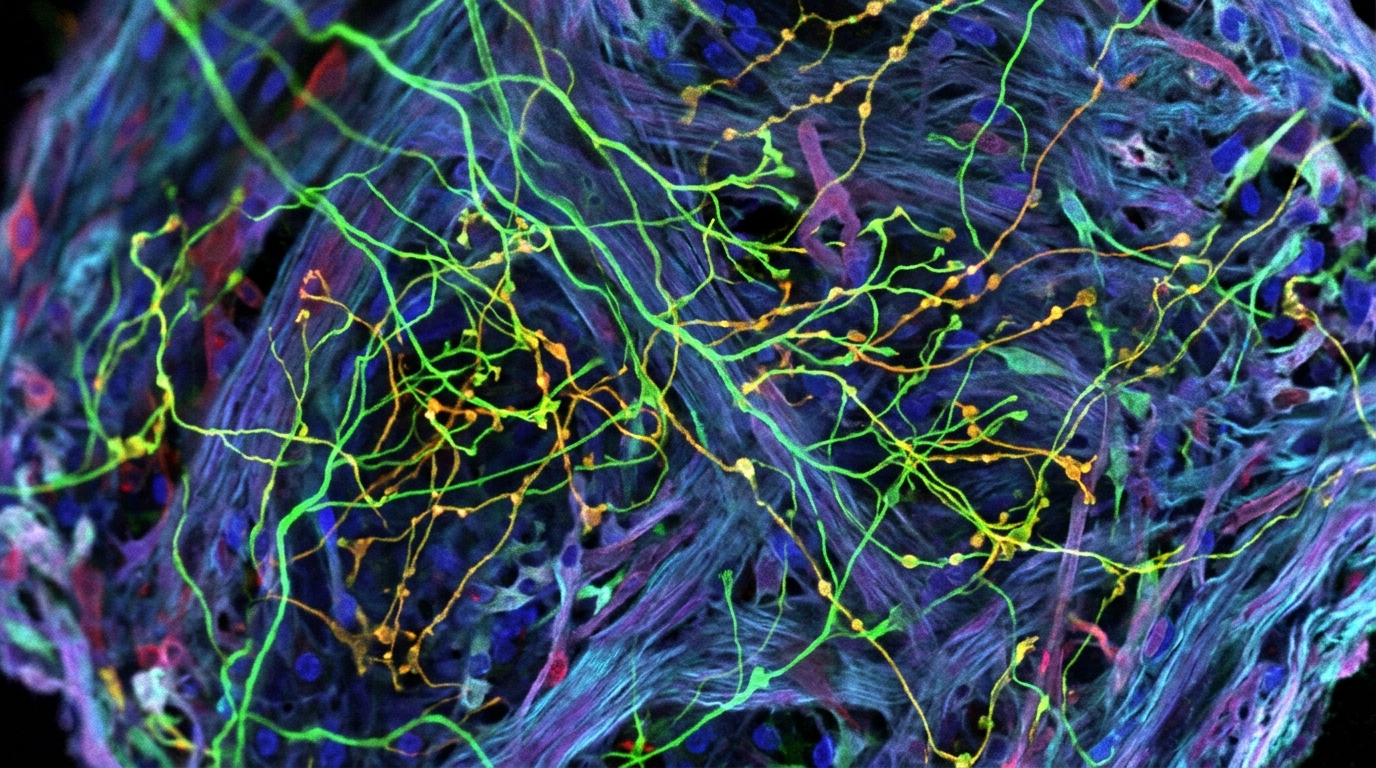
Selected sensory axons can act directly as peripheral effector units by releasing neurotransmitters and neuropeptides from their peripheral terminals, rather than functioning solely as conduits for afferent information. This local signaling mechanism enables sensory nerve endings to exert direct control over target tissues without relying on central synaptic processing or motor-neuron output.

According to a perspective review published in Frontiers in Pain Research by Carlos E. Morado-Urbina and Tony L. Yaksh of the University of California, San Diego, these terminal-derived chemical messengers regulate key physiological parameters in peripheral tissues. Specifically, the local release of neuropeptides and neurotransmitters controls vascular tone, alters vascular permeability, and modulates immune-cell activity within the local microenvironment.

The efferent-like functions of sensory axons extend across several critical biological processes in animal physiology and disease. In addition to regulating blood flow and immune responses, these localized terminal actions participate in neurogenic inflammation, tissue repair cascades, and, within select specialized organs, the regulation of contractile function.

The publication synthesizes and preserves the core scientific concepts first presented in the lecture “The Motor Function of the Sensory Axon,” delivered at the International Veterinary Emergency and Critical Care Society meeting in San Diego, California, on September 4, 2025. It forms part of an academic collection documenting the scientific contributions presented during the symposium within the section on veterinary and comparative pain.

The authors emphasize a clear mechanistic distinction between these direct peripheral effector actions and conventional sensory contributions to motor control. Whereas traditional sensory-driven reflexes strictly require afferent signals to undergo central synaptic processing before eliciting motor-neuron output, the efferent-like functions of sensory axons operate locally at the axon terminal itself to coordinate tissue responses in the periphery.

By focusing on sensory axons within the veterinary and comparative pain domain, the work underscores that peripheral terminals are not merely passive recipients that convey afferent signals upward. Within peripheral tissues, this efferent-like activity alters the local microenvironment by directing immune-cell engagement and modifying vascular parameters, thereby playing an active role in ongoing disease processes across animal species.

Furthermore, the authors note that in specialized organ systems, these terminal discharges directly influence contractile activity.

Carlos E. Morado-Urbina and Tony L. Yaksh, conducting this work from the University of California, San Diego, submitted the formal manuscript in June 2026, which was accepted after peer review in October 2026.

Subject of Research: Peripheral effector functions of sensory axons in animal physiology

Article Title: Peripheral effector functions of sensory axons

Article References: Morado-Urbina, C. E., & Yaksh, T. L. (2026). Peripheral effector functions of sensory axons. Frontiers in Pain Research, 7, Article 1898579. https://doi.org/10.3389/fpain.2026.1898579

Image Credits: AI Generated

DOI: 10.3389/fpain.2026.1898579

Keywords: Sensory Axons, Neurogenic Inflammation, Neuropeptides, Vascular Control, Tissue Repair, Animal Physiology, Veterinary Pain, Peripheral, effector, functions, sensory, axons

News Source: Ophelia Keating. (November 6, 2026). Sensory Axons Function as Peripheral Effectors Regulating Inflammation and Tissue Repair. Scienmag.


Tags: animal physiologyaxonseffectorfunctionsneurogenic inflammationneuropeptidesperipheralsensorySensory Axonstissue repairVascular ControlVeterinary Pain
Share12Tweet7Share2ShareShareShare1

Related Posts

Serial Biomarkers Optimize Antibiotic Utilization in Hospital-Acquired Pneumonia

Serial Biomarkers Optimize Antibiotic Utilization in Hospital-Acquired Pneumonia

November 6, 2026
Review Examines How Viral Infections Might Trigger Chronic Scrotal Content Pain

Review Examines How Viral Infections Might Trigger Chronic Scrotal Content Pain

November 6, 2026

AI biosensors for antimicrobial resistance need claim-specific validation, review warns

November 6, 2026

Hypoxia-Powered MRI Feasibly Guides Targeted Biopsies Beyond Glioblastoma Contrast Enhancement

November 6, 2026

POPULAR NEWS

  • Breaking the Dangerous Vicious Cycle Between Surgical Pain and Sleep Disturbance

    Breaking the Dangerous Vicious Cycle Between Surgical Pain and Sleep Disturbance

    29 shares
    Share 12 Tweet 7
  • Endostatin Normalizes After Antiviral Therapy in Non-Steatotic Chronic Hepatitis C

    29 shares
    Share 12 Tweet 7
  • Constructed Grass Shelters Buffer Extreme Woodland Temperatures for Australian Rufous Bettongs

    29 shares
    Share 12 Tweet 7
  • Study Evaluates Annual Temperature Metrics and Physical Health Across 22 Countries

    29 shares
    Share 12 Tweet 7

About

We bring you the latest biotechnology news from best research centers and universities around the world. Check our website.

Follow us

Recent News

Serial Biomarkers Optimize Antibiotic Utilization in Hospital-Acquired Pneumonia

Review Examines How Viral Infections Might Trigger Chronic Scrotal Content Pain

Genomic Ascertainment Clarifies Prevalence and Clinical Risks of Deleterious TERT Variants

Subscribe to Blog via Email

Enter your email address to subscribe to this blog and receive notifications of new posts by email.

Join 86 other subscribers
  • Contact Us

Bioengineer.org © Copyright 2023 All Rights Reserved.

Welcome Back!

Login to your account below

Forgotten Password?

Retrieve your password

Please enter your username or email address to reset your password.

Log In
No Result
View All Result
  • Homepages
    • Home Page 1
    • Home Page 2
  • News
  • National
  • Business
  • Health
  • Lifestyle
  • Science

Bioengineer.org © Copyright 2023 All Rights Reserved.