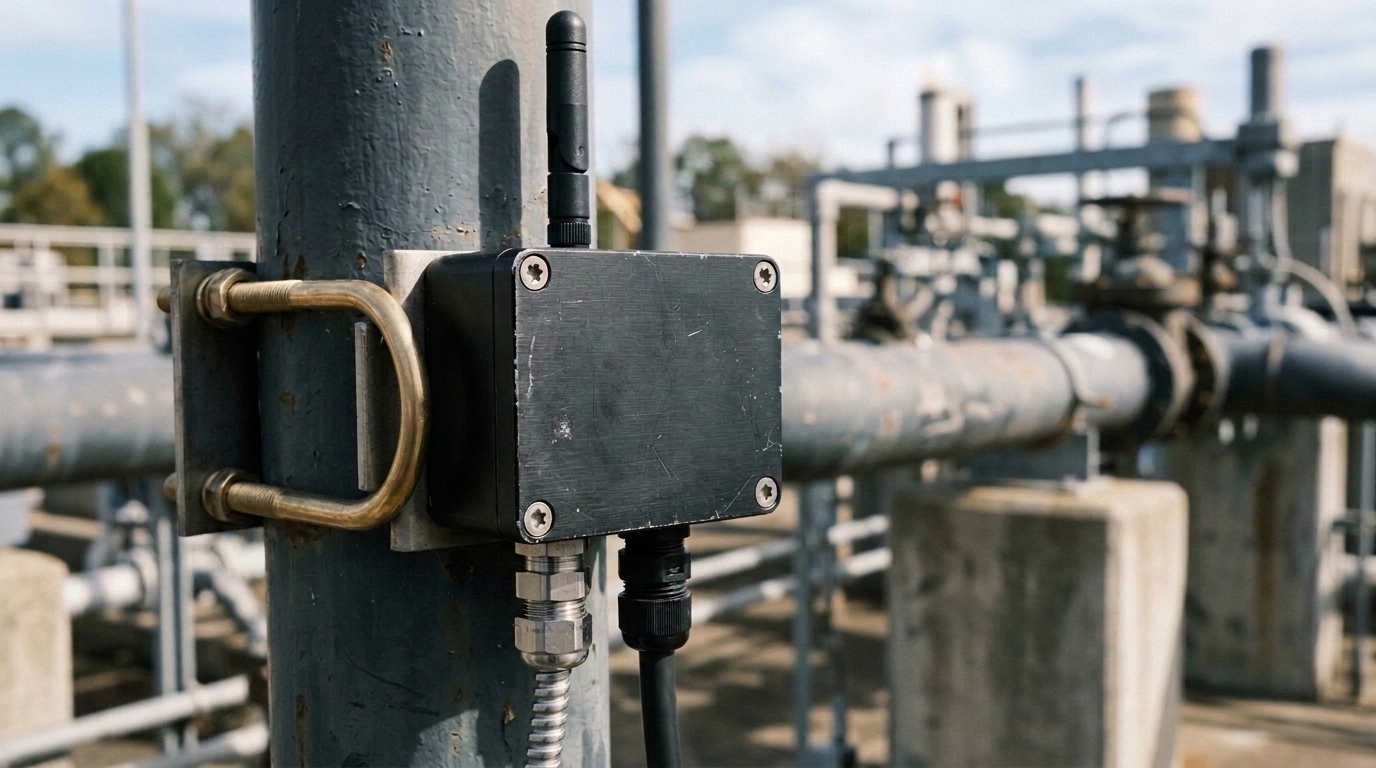
A newly developed self-supervised learning framework improves the accuracy of anomaly detection in dynamic Internet of Things environments by adapting to natural signal variations, researchers report in the Journal of Cloud Computing. The architecture addresses a persistent operational bottleneck in networked monitoring systems, where conventional models frequently generate false alarms during minor, harmless operational fluctuations. By refining how normal operational baselines and synthetic anomalies are established, the system significantly enhances detection reliability across cloud-edge infrastructure without requiring extensive human-labeled training sets.
Deploying automated monitoring across complex Internet of Things scenarios typically suffers from an acute scarcity of labeled failure samples in real-world environments. To manage this limitation, conventional detection mechanisms commonly rely on unsupervised paradigms configured to learn standard device behaviors. However, these traditional models tend to establish rigid, overly strict boundaries for what constitutes normal activity. When environmental or operating conditions cause ordinary signal shifts, the algorithms frequently misidentify the harmless fluctuations as operational faults, creating an elevated volume of false positives that compromises cloud-side monitoring efficiency.
To overcome these boundary limitations, the research team designed a specialized data augmentation mechanism centered on adaptive noise injection. Rather than applying static perturbations, this technique automatically calibrates noise intensity based on the dynamic properties of incoming device signals. By tailoring the perturbation amplitude directly to signal fluctuations, the injection mechanism successfully generates a wide array of simulated anomaly patterns that closely reflect the operational disturbances encountered in practical field deployments.
The underlying representation model utilizes a joint learning paradigm that operates contrastive learning alongside a parallel data reconstruction task. The integration incorporates InfoNCE loss to increase the efficiency of contrastive feature extraction, ensuring the network learns distinct and discriminative characteristics from incoming telemetry streams. Simultaneously, a newly formulated loss function jointly optimizes both the contrastive and reconstruction objectives, allowing the system to balance pattern sensitivity with overall representational robustness.
This joint optimization enables the learned representations to maintain acute sensitivity to genuine operational anomalies while preserving strong generalization across normal behavioral variations. Such balance makes the architecture particularly suitable for fluctuating Internet of Things deployments operating under collaborative cloud-edge computational frameworks. To execute the final detection step, the framework deploys a downstream classifier based on neighbor and non-neighbor representations, enabling automated, self-supervised anomaly discrimination without manual supervisory intervention.
The investigators evaluated their approach across five benchmark monitoring datasets: MSL, SMAP, SMD, SWAT, and WADI. Experimental results demonstrated that the proposed model achieved state-of-the-art performance in both F1-score and the area under the precision-recall curve across four of the tested environments. Across these benchmarks, the method delivered an average improvement of 4.65 percent in F1-score and 2.04 percent in area under the precision-recall curve compared to the strongest baseline models, confirming its practical effectiveness for real-time industrial monitoring.
Subject of Research: Self-supervised anomaly detection for Internet of Things monitoring
Article Title: Adaptive noise injection with joint self-supervised learning based anomaly detection for fluctuating IoT environment
Article References: Du, C., Bian, A., Chen, H., Feng, Y., Wu, L., Ma, S., Li, X., & Chen, P. (2026). Adaptive noise injection with joint self-supervised learning based anomaly detection for fluctuating IoT environment. Journal of Cloud Computing. https://doi.org/10.1186/s13677-026-01017-x
Image Credits: AI Generated
DOI: 10.1186/s13677-026-01017-x
Keywords: anomaly detection, Internet of Things, self-supervised learning, adaptive noise injection, contrastive learning, data augmentation, InfoNCE loss, cloud-edge collaboration, cloud monitoring, reconstruction task, F1-score, AU-PR, sensor data, unsupervised learning, representation learning, SMD dataset, SWAT dataset, WADI dataset
News Source: Josephine Dean. (November 17, 2026). Self-Supervised Framework Enhances Anomaly Detection Accuracy Across Dynamic Internet of Things Networks. Scienmag.