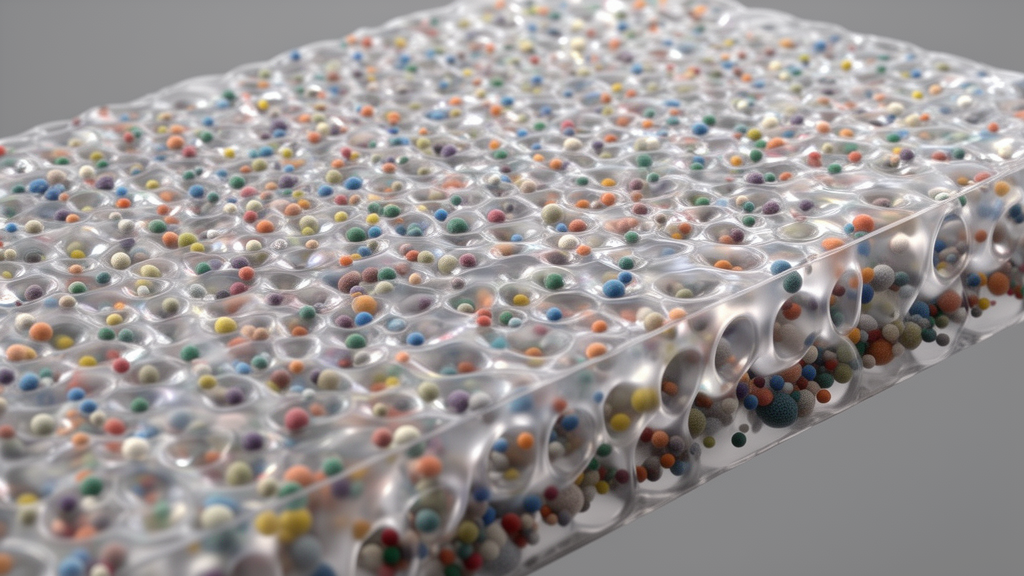
Researchers have reported the spontaneous formation of ring-shaped microcavities in poly(methyl methacrylate) composite films containing pigment. The structures formed through a simple, cost-effective spin-coating process that required no lithography, and their average diameters could be tuned from 15 to 50 micrometres. Optical measurements showed pronounced waveguiding consistent with whispering-gallery-mode propagation, providing enhanced light confinement along the cavity periphery.
The experimental study found that the cavity morphology was highly sensitive to processing conditions. Researchers varied the spin speed, solution concentration and polymer molecular weight to control the dimensions of cavities formed in films containing a single pigment. These three variables collectively demonstrated that the self-organized structures could be adjusted rather than merely reproduced.
The pigment mixture provided an additional means of controlling morphology. Using more than one pigment extended the cavity size to as much as 70 micrometres, beyond the 15–50-micrometre range obtained through variation of the spin-coating conditions. Introducing a second pigment disrupted the observed waveguiding, which the researchers attributed to a non-uniform and discontinuous pigment arrangement along the cavity periphery.
The results establish a direct association between the self-organized structure, the spatial distribution of pigment particles and the confinement of light. Single-pigment rings exhibited the reported waveguiding behavior, while the discontinuous pigment arrangement associated with the two-pigment mixture corresponded with its disruption. The authors describe the work as a promising route toward tunable microcavity structures for optical sensing, low-threshold microlasers, integrated photonics and flexible optoelectronic technologies, but those uses remain prospective rather than demonstrated outcomes.
Subject of Research: Morphology control and light confinement in spin-coated polymer–pigment microcavities
Article Title: Self-organized microcavities in polymer–pigment composite films: morphology control and light confinement
Article References: Lairenjam, P. D. (2026). Self-organized microcavities in polymer–pigment composite films: morphology control and light confinement. Journal of Materials Science, 61(42), 33350-33368. https://doi.org/10.1007/s10853-026-13687-8
Image Credits: AI Generated
DOI: 10.1007/s10853-026-13687-8
Keywords: polymer composites, microcavities, pigment particles, spin coating, self-organization, light confinement, whispering-gallery modes, photonic materials, Self-organized, polymer, pigment, composite
News Source: Neil Sanderson. (October 20, 2026). Self-organized microcavities in polymer–pigment composite films. Scienmag.