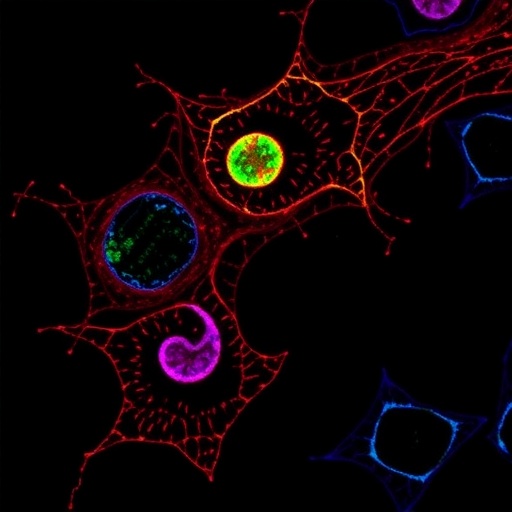
A newly published study is drawing attention to an intricate molecular conversation inside breast epithelial cells: the crosstalk between SELENOF, a selenium-associated protein linked to cellular protein quality control, and the unfolded protein response, the emergency system that helps cells survive disturbances in the endoplasmic reticulum. The research, published in Cell Death & Disease Discovery, suggests that the balance between these pathways can influence whether breast epithelial cells adapt, continue functioning, or move toward cell death.
The findings are important because the endoplasmic reticulum is responsible for producing, folding, and processing many of the proteins required by a cell. When protein production accelerates, nutrients become limited, calcium balance changes, or damaging conditions interfere with folding, misfolded proteins can accumulate. This condition, known as endoplasmic reticulum stress, activates the unfolded protein response, or UPR. Rather than representing a single pathway, the UPR is a coordinated network that attempts to restore cellular stability while also deciding whether a damaged cell can recover.
Three major signaling branches are commonly associated with the UPR: PERK, IRE1, and ATF6. Together, they can reduce the production of new proteins, increase the expression of molecular chaperones, improve the removal of defective proteins, and alter cellular metabolism. If these protective measures succeed, the cell may return to normal operation. If stress is too intense or persists for too long, however, UPR signaling can activate programmed cell death. This built-in switch between adaptation and elimination is central to the biological question explored by the study.
SELENOF, also known as selenoprotein F, is associated with the endoplasmic reticulum and the maintenance of protein homeostasis. Like other selenoproteins, it contains selenium in the form of the amino acid selenocysteine, although its precise functions in different tissues remain an active area of research. Evidence has connected SELENOF with protein folding, redox regulation, and the handling of cellular stress. By examining SELENOF in breast epithelium, the researchers are investigating how a relatively specialized component of the endoplasmic-reticulum machinery may influence broader decisions about cell survival.
Breast epithelial tissue provides a particularly relevant setting for this work. These cells must continually respond to hormonal signals, maintain organized tissue architecture, and produce proteins that support communication between neighboring cells. They also undergo tightly regulated cycles of growth, renewal, and removal. Any disruption in proteostasis—the cell’s ability to produce, fold, traffic, and recycle proteins—can therefore have consequences beyond an individual cell. It may affect tissue integrity and the way epithelial cells respond to injury or disease-associated stress.
The study’s title, “Crosstalk between SELENOF and the unfolded protein response in breast epithelium dictates cell fate,” points to a relationship rather than an isolated action. In this framework, SELENOF may help shape how breast epithelial cells interpret endoplasmic-reticulum stress, while UPR signaling may in turn influence the cellular environment in which SELENOF operates. Such feedback could determine whether protective responses remain temporary or become associated with irreversible damage and cell death. The concept places SELENOF within a larger decision-making network rather than treating it as a single-purpose stress protein.
This distinction matters for cancer biology. Tumor cells often experience chronic endoplasmic-reticulum stress because they grow rapidly, produce large amounts of protein, and encounter oxygen and nutrient shortages. Many cancer cells exploit the protective side of the UPR to survive these pressures. At the same time, excessive or prolonged activation can expose a vulnerability, pushing cells toward apoptosis or other forms of regulated death. Understanding whether SELENOF strengthens, weakens, or redirects these stress signals could eventually help researchers identify ways to make abnormal cells more sensitive to treatment, although such therapeutic applications would require extensive further testing.
The work may also be relevant to conditions that are not cancer. Breast tissue can experience inflammatory signals, metabolic changes, hormonal fluctuations, and environmental stressors, all of which may place pressure on protein-folding systems. A clearer picture of SELENOF–UPR communication could help explain why cells with similar genetic backgrounds sometimes respond differently to the same challenge. One population may activate repair and recover, while another may cross a threshold that initiates cell death. Mapping the molecular factors that control this threshold is a major goal in modern cell biology.
The study also highlights the broader importance of selenium biology. Selenium is required in small amounts for the production of several proteins involved in antioxidant defense, redox control, and cellular maintenance. However, the effects of selenium-related pathways are highly dependent on dose, tissue context, and the specific proteins involved. SELENOF should therefore not be viewed simply as a marker of selenium availability. Its role is more closely tied to the operation of the endoplasmic reticulum and the quality-control systems that protect cells from defective proteins.
By connecting SELENOF with UPR signaling in breast epithelium, Zhang, Rullo, Flowers and colleagues bring attention to a molecular intersection where protein quality control and cell fate meet. The research adds to a growing understanding that cellular stress responses are not merely emergency alarms. They are dynamic decision systems, capable of restoring balance, reshaping metabolism, or initiating controlled cell death. Future studies will need to define which UPR branches are most strongly affected, how SELENOF activity changes under different forms of stress, and whether this relationship can be manipulated safely in human disease. For now, the work offers a compelling explanation for how a small disturbance in protein handling may become a decisive signal for the entire cell.
Subject of Research: The interaction between SELENOF and the unfolded protein response in breast epithelial cells, and how this relationship influences cell survival and death.
Article Title: Crosstalk between SELENOF and the unfolded protein response in breast epithelium dictates cell fate.
Article References: Zhang, A., Rullo, A., Flowers, B. et al. “Crosstalk between SELENOF and the unfolded protein response in breast epithelium dictates cell fate.” Cell Death Discov. (2026). https://doi.org/10.1038/s41420-026-03285-7
Image Credits: AI Generated
DOI: https://doi.org/10.1038/s41420-026-03285-7
Keywords: SELENOF, unfolded protein response, breast epithelium, endoplasmic reticulum stress, cell fate, proteostasis, selenium biology, programmed cell death, breast cancer research
Tags: breast epithelial cell fatecell survival and apoptosiscellular adaptation to stressendoplasmic reticulum stressER stress response mechanismsmolecular crosstalk in breast cellsPERK IRE1 ATF6protein quality controlselenium-associated proteinsSELENOF proteinunfolded protein responseUPR signaling pathways