• HOME
  • NEWS
  • EXPLORE
    • CAREER
      • Companies
      • Jobs
    • EVENTS
    • iGEM
      • News
      • Team
    • PHOTOS
    • VIDEO
    • WIKI
  • BLOG
  • COMMUNITY
    • FACEBOOK
    • INSTAGRAM
    • TWITTER
Sunday, June 7, 2026
BIOENGINEER.ORG
No Result
View All Result
  • Login
  • HOME
  • NEWS
  • EXPLORE
    • CAREER
      • Companies
      • Jobs
        • Lecturer
        • PhD Studentship
        • Postdoc
        • Research Assistant
    • EVENTS
    • iGEM
      • News
      • Team
    • PHOTOS
    • VIDEO
    • WIKI
  • BLOG
  • COMMUNITY
    • FACEBOOK
    • INSTAGRAM
    • TWITTER
  • HOME
  • NEWS
  • EXPLORE
    • CAREER
      • Companies
      • Jobs
        • Lecturer
        • PhD Studentship
        • Postdoc
        • Research Assistant
    • EVENTS
    • iGEM
      • News
      • Team
    • PHOTOS
    • VIDEO
    • WIKI
  • BLOG
  • COMMUNITY
    • FACEBOOK
    • INSTAGRAM
    • TWITTER
No Result
View All Result
Bioengineer.org
No Result
View All Result
Home NEWS Science News

See-through heating pad could help prevent burns from thermotherapy (video)

Bioengineer by Bioengineer
February 22, 2017
in Science News
Reading Time: 2 mins read
0
Share on FacebookShare on TwitterShare on LinkedinShare on RedditShare on Telegram
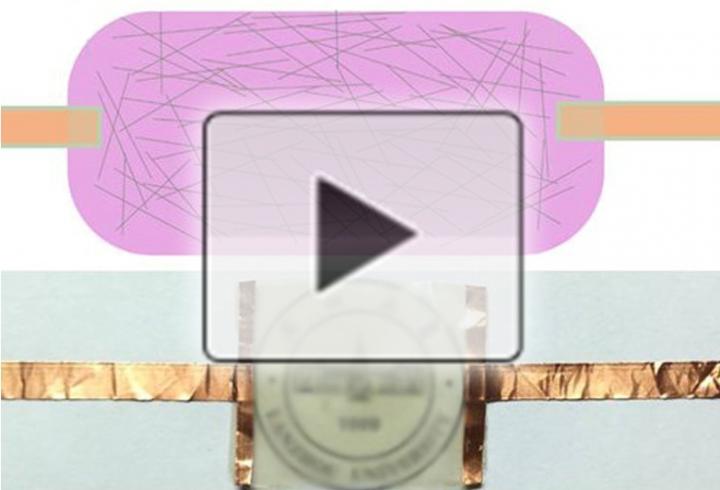
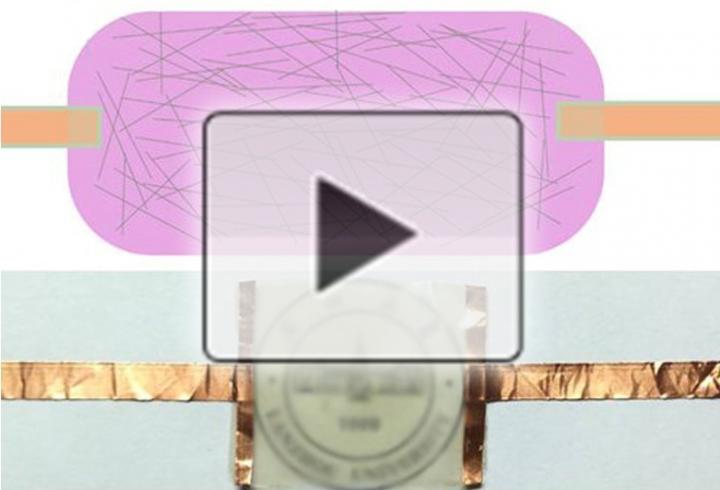
IMAGE

Credit: American Chemical Society

To soothe aches and pains, many people turn to heating pads, patches or creams. Although a common practice, thermotherapy can cause burns. Now researchers are developing a transparent heating pad that allows users to see through it to monitor their skin's color and prevent such injuries. They report their approach in the journal ACS Applied Materials & Interfaces.

Thermotherapy pads help treat a range of conditions including rheumatoid arthritis. But they've been known to cause burns, particularly among people who fall asleep with their heating pads on or among the elderly or others who might not be very sensitive to heat. Part of the problem is that commercial heating pads are opaque, and users can't see how their skin is reacting to the therapy. Other researchers have developed transparent alternatives, but they were ultimately too stiff, costly or brittle. Wei Lan and colleagues wanted to address this problem by developing a flexible, see-through device.

To make their thermotherapy pad, the researchers embedded conductive silver nanowires in a thin polyvinyl alcohol film. They then enveloped the film and a copper electrode in biocompatible polydimethylsiloxane, a type of silicone, to insulate the heating element and protect a user's skin. Testing showed that the transparent device heated quickly when 3 volts were applied, which is the typical voltage of coin-cell batteries used in watches, remotes and other small electronics. It was also very flexible and worked well even after being bent 10,000 times.

###

The authors acknowledge funding from the Natural Science Foundation of Gansu Province, the State Key Laboratory of Advanced Processing and Recycling of Non-ferrous Metals, Lanzhou University of Technology and the Scientific Research Foundation for the Returned Overseas Chinese Scholars, State Education Ministry.

See how the heating pad works in this Headline Science video.

The abstract that accompanies this study is available here.

The American Chemical Society is a nonprofit organization chartered by the U.S. Congress. With nearly 157,000 members, ACS is the world's largest scientific society and a global leader in providing access to chemistry-related research through its multiple databases, peer-reviewed journals and scientific conferences. ACS does not conduct research, but publishes and publicizes peer-reviewed scientific studies. Its main offices are in Washington, D.C., and Columbus, Ohio.

To automatically receive news releases from the American Chemical Society, contact [email protected].

Follow us on Twitter | Facebook

Media Contact

Katie Cottingham
[email protected]
301-775-8455
@ACSpressroom

http://www.acs.org

############

Story Source: Materials provided by Scienmag

Share12Tweet8Share2ShareShareShare2

Related Posts

Professor Kaneko’s Sake and Wine Win Top Honors at French-Japanese Sake Competition for the Second Year Running — Chemistry

Professor Kaneko’s Sake and Wine Win Top Honors at French-Japanese Sake Competition for the Second Year Running

June 7, 2026

Health Responsibility Moderates Impairments in Rural Elders

June 7, 2026

Hybrid Metaheuristics Boost Tomato Leaf Disease Detection

June 7, 2026

Understanding Control in Older Adults’ Fear of Falling

June 7, 2026
Please login to join discussion

POPULAR NEWS

  • ESMO 2025: mRNA COVID Vaccines Enhance Efficacy of Cancer Immunotherapy

    322 shares
    Share 129 Tweet 81
  • Multi-Hospital Study Reveals Long Covid Burden Is Twice as High as Current Estimates

    89 shares
    Share 35 Tweet 22
  • Saying Goodbye to PGY-6: Pediatric Fellowship Realities

    82 shares
    Share 33 Tweet 21
  • Common Food Preservatives Associated with Elevated Blood Pressure and Increased Heart Disease Risk

    58 shares
    Share 23 Tweet 15

About

We bring you the latest biotechnology news from best research centers and universities around the world. Check our website.

Follow us

Recent News

Professor Kaneko’s Sake and Wine Win Top Honors at French-Japanese Sake Competition for the Second Year Running

Health Responsibility Moderates Impairments in Rural Elders

Hybrid Metaheuristics Boost Tomato Leaf Disease Detection

Subscribe to Blog via Email

Enter your email address to subscribe to this blog and receive notifications of new posts by email.

Join 82 other subscribers
  • Contact Us

Bioengineer.org © Copyright 2023 All Rights Reserved.

Welcome Back!

Login to your account below

Forgotten Password?

Retrieve your password

Please enter your username or email address to reset your password.

Log In
No Result
View All Result
  • Homepages
    • Home Page 1
    • Home Page 2
  • News
  • National
  • Business
  • Health
  • Lifestyle
  • Science

Bioengineer.org © Copyright 2023 All Rights Reserved.