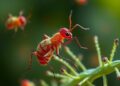
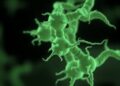
Sometimes the most niche plant pathogens pack the greatest punch. Such is the case for the Florida citrus industry, which has seen a 70% decline in its orange production since the introduction of Huanglongbing (citrus greening) in 2005. This disease is caused by the bacteria Candidatus Liberibacter asiaticus, which spreads via a flying insect—unlike most bacterial plant pathogens. When the insect feeds on the sugary sap of a plant, it deposits the bacteria into the veins of the plant, directly into the phloem, which allows the bacteria to follow this transport highway throughout the plant.
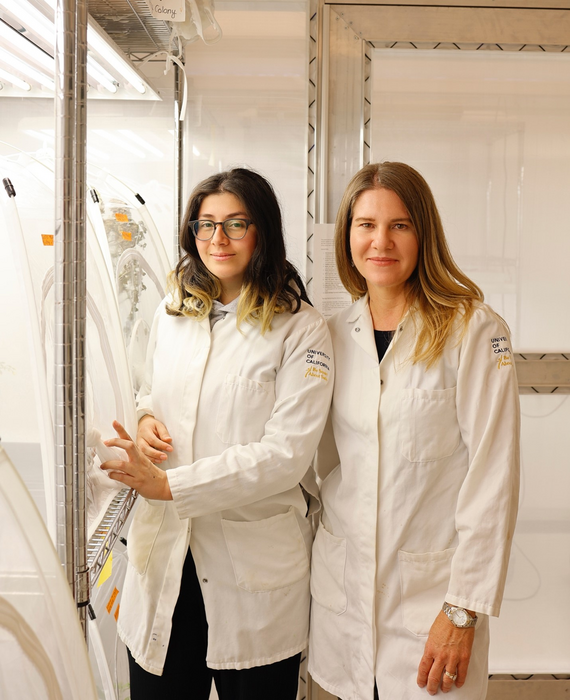
Credit: Dr. Gitta Coaker and Dr. Paola Reyes Caldas
Sometimes the most niche plant pathogens pack the greatest punch. Such is the case for the Florida citrus industry, which has seen a 70% decline in its orange production since the introduction of Huanglongbing (citrus greening) in 2005. This disease is caused by the bacteria Candidatus Liberibacter asiaticus, which spreads via a flying insect—unlike most bacterial plant pathogens. When the insect feeds on the sugary sap of a plant, it deposits the bacteria into the veins of the plant, directly into the phloem, which allows the bacteria to follow this transport highway throughout the plant.
A close relative of the citrus greening pathogen, Candidatus Liberibacter solanacearum (CLso), is a newly emerging pathogen of tomato and potato. As this bacterium cannot survive outside of its hosts, very little is known about it, including how it causes disease. A recent study led by Paola Reyes Caldas, of the University of California, Davis, has discovered and characterized secreted proteins from the pathogen CLso. These proteins, called effectors, offer clues into the manipulation tactics this bacterium uses to subdue its plant host.
Newly published in Molecular Plant-Microbe Interactions, the study found that these effectors can be present in both the plant and insect host. Once inside the plant, these effectors can target various parts of the cell such as the iconic chloroplast, which are critical for the plant to perform photosynthesis. Additionally, these effectors are mobile in that they can travel from one plant cell to another. Corresponding author Gitta Coaker comments, “These effectors can also move from cell to cell, which could explain how Liberibacter can manipulate the plant while remaining restricted to the phloem. Unlike effectors from culturable leaf colonizing bacteria, the majority of Liberibacter effectors do not suppress plant immune responses, indicating that they possess unique activities.”
Whether these unique activities alter the phloem environment or insect attractiveness to facilitate pathogen spread remains to be seen, but this research offers an exciting starting point to unravelling this complex disease. Once targets of these effectors are identified, genetically engineering these important crops to prevent manipulation could be a fruitful solution to managing these diseases.
For additional details, read Effectors from a Bacterial Vector-Borne Pathogen Exhibits Diverse Subcellular Localization, Expression Profiles and Manipulation of Plant Defense, published in MPMI.
Follow two of the authors on Twitter
Gitta Coaker: @GittaCoaker
Paola Reyes Caldas: @paolareyes_c
About Molecular Plant-Microbe Interactions (MPMI)
Molecular Plant-Microbe Interactions® (MPMI) is a gold open access journal that publishes fundamental and advanced applied research on the genetics, genomics, molecular biology, biochemistry, and biophysics of pathological, symbiotic, and associative interactions of microbes, insects, nematodes, or parasitic plants with plants.
Follow us on Twitter @MPMIjournal and visit https://apsjournals.apsnet.org/journal/mpmi to learn more.
Journal
Molecular Plant-Microbe Interactions
DOI
10.1094/MPMI-05-22-0114-R
Article Title
Effectors from a Bacterial Vector-Borne Pathogen Exhibit Diverse Subcellular Localization, Expression Profiles, and Manipulation of Plant Defense
Article Publication Date
15-Nov-2022
COI Statement
The author(s) declare no conflict of interest.