• HOME
  • NEWS
  • EXPLORE
    • CAREER
      • Companies
      • Jobs
    • EVENTS
    • iGEM
      • News
      • Team
    • PHOTOS
    • VIDEO
    • WIKI
  • BLOG
  • COMMUNITY
    • FACEBOOK
    • INSTAGRAM
    • TWITTER
Thursday, June 25, 2026
BIOENGINEER.ORG
No Result
View All Result
  • Login
  • HOME
  • NEWS
  • EXPLORE
    • CAREER
      • Companies
      • Jobs
        • Lecturer
        • PhD Studentship
        • Postdoc
        • Research Assistant
    • EVENTS
    • iGEM
      • News
      • Team
    • PHOTOS
    • VIDEO
    • WIKI
  • BLOG
  • COMMUNITY
    • FACEBOOK
    • INSTAGRAM
    • TWITTER
  • HOME
  • NEWS
  • EXPLORE
    • CAREER
      • Companies
      • Jobs
        • Lecturer
        • PhD Studentship
        • Postdoc
        • Research Assistant
    • EVENTS
    • iGEM
      • News
      • Team
    • PHOTOS
    • VIDEO
    • WIKI
  • BLOG
  • COMMUNITY
    • FACEBOOK
    • INSTAGRAM
    • TWITTER
No Result
View All Result
Bioengineer.org
No Result
View All Result
Home NEWS Science News Biology

Secret weapon to stop invasive honeysuckle: Satellites

Bioengineer by Bioengineer
August 31, 2020
in Biology
Reading Time: 2 mins read
0
IMAGE
Share on FacebookShare on TwitterShare on LinkedinShare on RedditShare on Telegram

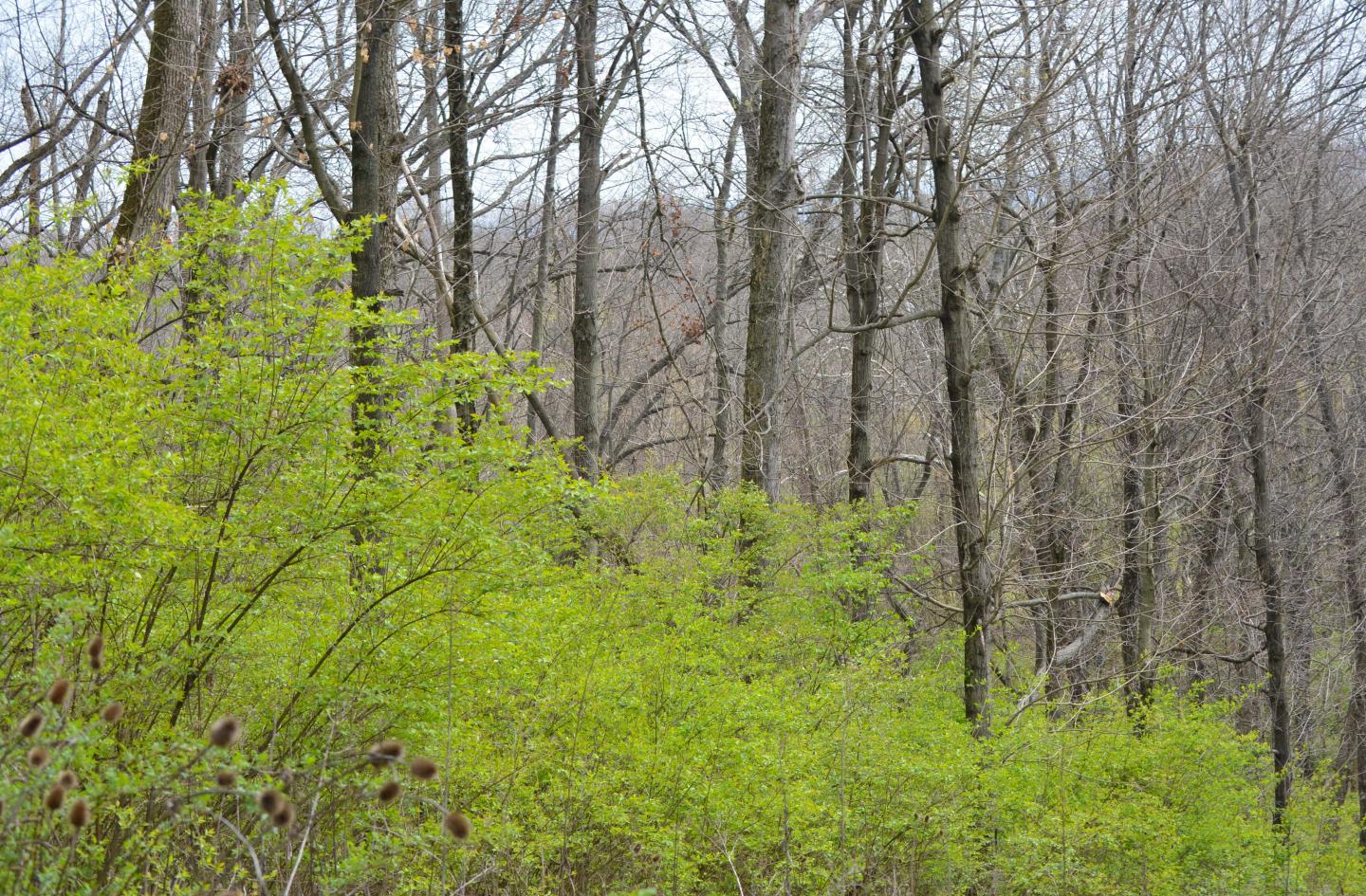
Bane of gardeners and foresters alike, Amur honeysuckle can be identified from space
IMAGE

Credit: Denis Conover

One common invasive species is so widespread that you can see it from space.

The University of Cincinnati found that satellite imagery can identify nonnative and invasive Amur honeysuckle, an ornamental shrub introduced from Asia that has spread in forests across much of the United States.

UC graduate Bridget Taylor, UC biology professor Denis Conover and UC geography professor Richard Beck used satellite imagery to find nonnative invasive Amur honeysuckle in several urban parks and cemeteries from space.

Using one of the satellites in a series of Earth-observing missions jointly managed by NASA and the U.S. Geological Survey, the Landsat-8 satellite can measure the reflection of wavelength energy in the red and near-infrared bands. The ratio of the two wavelengths helps scientists identify foliage of different plants from orbit.

UC found that the method was effective in detecting Amur honeysuckle, according to a study published in the journal Ecological Restoration.

Amur honeysuckle bushes grow in thick patches, often crowding out and outcompeting other plants in a forest’s understory. It has an extended growing season, leafing out earlier and staying green far later in the year than many native trees and shrubs.

UC used Landsat-8 images to examine five urban forests in Greater Cincinnati. The goal: to develop an inexpensive and efficient remote mapping approach for ecological restoration in urban forests. They used global-positioning satellites to corroborate their mapping observations on the ground. They found that their maps were 82% accurate.

“The fact that it was possible to use the satellite imagery in an urban setting was pretty unique,” said Taylor, the study’s lead author.

“Urban areas have a lot of noise in satellite imagery. So it’s harder to identify specific details,” she said.

Taylor has participated in efforts to eradicate the nonnative Amur honeysuckle in places like Burnet Woods, the park adjacent to UC’s Uptown campus.

“It’s very bushy. Birds like to eat the berries and spread the seeds,” she said. “It has a chance to green up and leaf out sooner than native plants, so native wildflowers often get killed off when they’re growing under honeysuckle.”

The study shows that satellite images can provide an effective, inexpensive alternative to using drones or ground surveys to identify larger patches of the invasive bushes for ecological restoration, Taylor said.

###

Media Contact
Michael Miller
[email protected]

Original Source

https://www.uc.edu/news/articles/2020/08/n20941979.html

Related Journal Article

http://dx.doi.org/10.3368/er.38.3.139

Tags: Earth ScienceForestryGeographyPlant SciencesSatellite Missions/ShuttlesSpace/Planetary Science
Share12Tweet8Share2ShareShareShare2

Related Posts

Natural Hallucinogens: Evolution’s Ecological Tools, Not Mere Chemical Byproducts

June 25, 2026

This Famous Butterfly Revealed: Three Distinct Species Hidden in One

June 25, 2026

Scientists Attack Soybean Cyst Nematode by Starving Its Food Source

June 25, 2026

Decoding the Secret Code of a Crucial Immune Sensor

June 24, 2026
Please login to join discussion

POPULAR NEWS

  • Saying Goodbye to PGY-6: Pediatric Fellowship Realities

    103 shares
    Share 41 Tweet 26
  • Multi-Hospital Study Reveals Long Covid Burden Is Twice as High as Current Estimates

    92 shares
    Share 36 Tweet 23
  • Detection of EDCs in Breast Milk and Infant Urine Up to Six Months Highlights Early Exposure Risks

    77 shares
    Share 31 Tweet 19
  • New Drug Candidate Developed at McMaster Shows Potential for Treating Brain Cancer

    58 shares
    Share 23 Tweet 15

About

We bring you the latest biotechnology news from best research centers and universities around the world. Check our website.

Follow us

Recent News

Tracking Lanthanide-Labeled Microplastics in Plants

POSTECH Researchers Slash Cost of Reconstituted Cell-Free Systems by 95%

AI and Physics Collaborate to Design Advanced Hydrogen Storage Materials

Subscribe to Blog via Email

Enter your email address to subscribe to this blog and receive notifications of new posts by email.

Join 82 other subscribers
  • Contact Us

Bioengineer.org © Copyright 2023 All Rights Reserved.

Welcome Back!

Login to your account below

Forgotten Password?

Retrieve your password

Please enter your username or email address to reset your password.

Log In
No Result
View All Result
  • Homepages
    • Home Page 1
    • Home Page 2
  • News
  • National
  • Business
  • Health
  • Lifestyle
  • Science

Bioengineer.org © Copyright 2023 All Rights Reserved.