The malaria parasite Plasmodium vivax (P. vivax) causes frequent, chronic infections that represent a major unrecognized burden on global health, according to a review by Kevin Baird of the Eijkman-Oxford Clinical Research Unit in Indonesia and Katherine Battle of the Institute for Disease Modeling in the United States publishing October 7th in the open access journal PLOS Medicine.
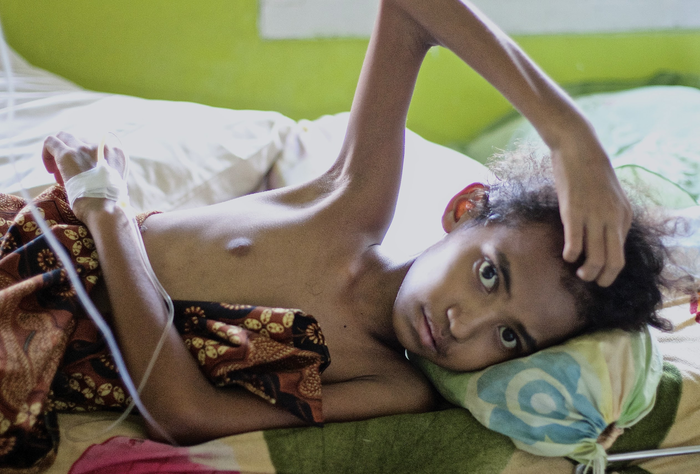
Credit: Pearl Gan, CC BY 4.0 (https://creativecommons.org/licenses/by/4.0/)
The malaria parasite Plasmodium vivax (P. vivax) causes frequent, chronic infections that represent a major unrecognized burden on global health, according to a review by Kevin Baird of the Eijkman-Oxford Clinical Research Unit in Indonesia and Katherine Battle of the Institute for Disease Modeling in the United States publishing October 7th in the open access journal PLOS Medicine.
In this review, Baird and Battle summarize evidence indicating that the global burden of malaria estimated from reported cases of acute attacks likely miss the widespread but more subtle harm done by chronic infection of P. vivax. Furthermore, P. vivax often affects impoverished communities where people face multiple health challenges. There are five Plasmodium species that cause malaria, but the vast majority of reported cases are due to Plasmodium falciparum, with about 193.5 million cases annually. P. vivax is the second most common reported cause, with about 14.3 million cases annually. A recent study found that while P. falciparum is more likely to cause death within two weeks of diagnosis, patients with P. vivax were more than twice as likely to die over the long term. Chronic infections in people who are repeatedly exposed to P. vivax cause damage to the kidneys, brain, and circulatory system.
An improved understanding of the biology of P. vivax has recently revealed multiple factors that contribute to its toll on global health. The parasite can exist in the body at low levels that cause no symptoms, making it difficult to diagnose, but can still spread. Sub-Saharan Africa was once thought to be practically immune to P. vivax infection because most of the population lack the Duffy antigen, a molecule on the surface of red blood cells the parasite uses to invade. However, a recent study finds that P. vivax transmission is still widespread in this region. Additionally, there are two common genetic variations carried by part of the population that interfere with successful treatment of P. vivax malaria.
All these factors complicate efforts to estimate the full extent of P. vivax infections and control its spread. Baird and Battle conclude that the traditional approaches developed to combat P. falciparum in Africa are inadequate for P. vivax. Eliminating P. vivax will require different diagnostics, therapies and vector control strategies, and better data that reveal the true scope of the burden.
Baird adds, “Blood smears from patients suffering acute vivax malaria do not suffice to measure global burdens of this infection. The parasite finds refuge in deeper organs where the harm done is more subtle but nonetheless substantial.”
###
In your coverage please use this URL to provide access to the freely available paper from PLOS Medicine:
http://journals.plos.org/plosmedicine/article?id=10.1371/journal.pmed.1003799
Citation: Battle KE, Baird JK (2021) The global burden of Plasmodium vivax malaria is obscure and insidious. PLoS Med 18(10): e1003799. https://doi.org/10.1371/journal.pmed.1003799
Funding: The authors received no specific funding for the work represented in the manuscript.
Journal
PLoS Medicine
DOI
10.1371/journal.pmed.1003799
Method of Research
Commentary/editorial
Subject of Research
Not applicable
COI Statement
Competing interests: The authors have declared that no competing interests exist.