• HOME
  • NEWS
  • EXPLORE
    • CAREER
      • Companies
      • Jobs
    • EVENTS
    • iGEM
      • News
      • Team
    • PHOTOS
    • VIDEO
    • WIKI
  • BLOG
  • COMMUNITY
    • FACEBOOK
    • INSTAGRAM
    • TWITTER
Monday, May 4, 2026
BIOENGINEER.ORG
No Result
View All Result
  • Login
  • HOME
  • NEWS
  • EXPLORE
    • CAREER
      • Companies
      • Jobs
        • Lecturer
        • PhD Studentship
        • Postdoc
        • Research Assistant
    • EVENTS
    • iGEM
      • News
      • Team
    • PHOTOS
    • VIDEO
    • WIKI
  • BLOG
  • COMMUNITY
    • FACEBOOK
    • INSTAGRAM
    • TWITTER
  • HOME
  • NEWS
  • EXPLORE
    • CAREER
      • Companies
      • Jobs
        • Lecturer
        • PhD Studentship
        • Postdoc
        • Research Assistant
    • EVENTS
    • iGEM
      • News
      • Team
    • PHOTOS
    • VIDEO
    • WIKI
  • BLOG
  • COMMUNITY
    • FACEBOOK
    • INSTAGRAM
    • TWITTER
No Result
View All Result
Bioengineer.org
No Result
View All Result
Home NEWS Science News Biology

Searching for the unique genes of a unique hare

Bioengineer by Bioengineer
November 4, 2022
in Biology
Reading Time: 2 mins read
0
A heath hare.
Share on FacebookShare on TwitterShare on LinkedinShare on RedditShare on Telegram

Researchers at the University of Eastern Finland, in collaboration with colleagues from the Swedish University of Agricultural Sciences (SLU, Sveriges lantbruksuniversitet), have published seven draft genomes for Nordic hare species.
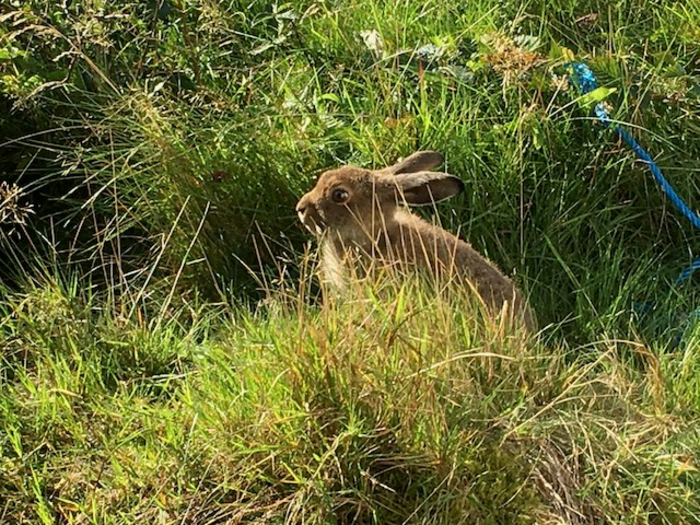
A heath hare.

Credit: © C.-G. Thulin.

Researchers at the University of Eastern Finland, in collaboration with colleagues from the Swedish University of Agricultural Sciences (SLU, Sveriges lantbruksuniversitet), have published seven draft genomes for Nordic hare species.

The genomes include three heath hares (Lepus timidus sylvaticus), a subspecies of the mountain hare (Lepus timidus) that is unique to southern Scandinavia and western Estonia. Instead of a white winter pelage that is typical of boreal/arctic mountain hares (Lepus timidus timidus), the heath hare has a grey/blue winter pelage. It is generally believed that this form of winter coloration is a specific adaptation to the less reliable snow coverage in southern Scandinavia. The distribution of heath hares overlaps with that of the non-native brown hare, which seem to outcompete heath hares wherever they occur. Together with the threat from land use, this competition has pushed the uniquely adapted mountain hare subspecies at risk of going extinct.

Genomic knowledge helps to understand the genetic basis for traits that are important for specific adaptations and provides information about the evolutionary relationships as well as historical origins of the populations. Therefore, the first whole genome sequences from three heath hares were acquired along with two mountain hares, and two brown hares. Rather surprisingly, the genome of the heath hare differed notably from the nominal mountain hares, despite the thousands of years of coexistence, demonstrating that the subspecies difference is not restricted to local adaptation but represents a unique, old evolutionary divergence. This suggests that the heath hare colonized Scandinavia from the south after the most recent ice age, whereas the contemporary mountain hare probably arrived later from the northeast.

The obtained genome sequences are useful also for screening genetic variation that could be used for investigations of genetic differentiation and local adaptations. Hopefully, these sequence data will provide authorities with tools to assess the status of the unique heath hares and help conservation efforts.


Journal

Scientific Data

DOI

10.1038/s41597-022-01794-5

Article Title

Mountain- and brown hare genetic polymorphisms to survey local adaptations and conservation status of the heath hare (Lepus timidus sylvaticus, Nilsson 1831).

Article Publication Date

3-Nov-2022

Share12Tweet8Share2ShareShareShare2

Related Posts

Subtilase Maturation Key to Stomatal Patterning — Biology

Subtilase Maturation Key to Stomatal Patterning

May 4, 2026
Brown Fat May Guard Against Cardiovascular Disease in Obesity — Biology

Brown Fat May Guard Against Cardiovascular Disease in Obesity

May 4, 2026

How Plants Adjust Their Energy Balance to Cope with Stress

May 4, 2026

Key Gene Discovered in Model Plant That Controls Self-Replication

May 4, 2026

POPULAR NEWS

  • Research Indicates Potential Connection Between Prenatal Medication Exposure and Elevated Autism Risk

    834 shares
    Share 334 Tweet 209
  • New Study Reveals Plants Can Detect the Sound of Rain

    718 shares
    Share 287 Tweet 179
  • Scientists Investigate Possible Connection Between COVID-19 and Increased Lung Cancer Risk

    67 shares
    Share 27 Tweet 17
  • Salmonella Haem Blocks Macrophages, Boosts Infection

    61 shares
    Share 24 Tweet 15

About

We bring you the latest biotechnology news from best research centers and universities around the world. Check our website.

Follow us

Recent News

New Approaches to Managing Anxiety in Adults Within Primary Care Settings

Subtilase Maturation Key to Stomatal Patterning

Effective AAV Gene Therapy in Late-Stage Lysosomal Disease

Subscribe to Blog via Email

Enter your email address to subscribe to this blog and receive notifications of new posts by email.

Join 82 other subscribers
  • Contact Us

Bioengineer.org © Copyright 2023 All Rights Reserved.

Welcome Back!

Login to your account below

Forgotten Password?

Retrieve your password

Please enter your username or email address to reset your password.

Log In
No Result
View All Result
  • Homepages
    • Home Page 1
    • Home Page 2
  • News
  • National
  • Business
  • Health
  • Lifestyle
  • Science

Bioengineer.org © Copyright 2023 All Rights Reserved.