• HOME
  • NEWS
  • EXPLORE
    • CAREER
      • Companies
      • Jobs
    • EVENTS
    • iGEM
      • News
      • Team
    • PHOTOS
    • VIDEO
    • WIKI
  • BLOG
  • COMMUNITY
    • FACEBOOK
    • INSTAGRAM
    • TWITTER
Tuesday, October 20, 2026
BIOENGINEER.ORG
No Result
View All Result
  • Login
  • HOME
  • NEWS
  • EXPLORE
    • CAREER
      • Companies
      • Jobs
        • Lecturer
        • PhD Studentship
        • Postdoc
        • Research Assistant
    • EVENTS
    • iGEM
      • News
      • Team
    • PHOTOS
    • VIDEO
    • WIKI
  • BLOG
  • COMMUNITY
    • FACEBOOK
    • INSTAGRAM
    • TWITTER
No Result
View All Result
Bioengineer.org
No Result
View All Result
Home NEWS Science News Health

Sea cucumber-inspired gel improves tendon healing in rat study

by
October 20, 2026
in Health
Reading Time: 2 mins read
0
Sea cucumber-inspired gel improves tendon healing in rat study

Sea cucumber-inspired gel improves tendon healing in rat study

Share on FacebookShare on TwitterShare on LinkedinShare on RedditShare on Telegram

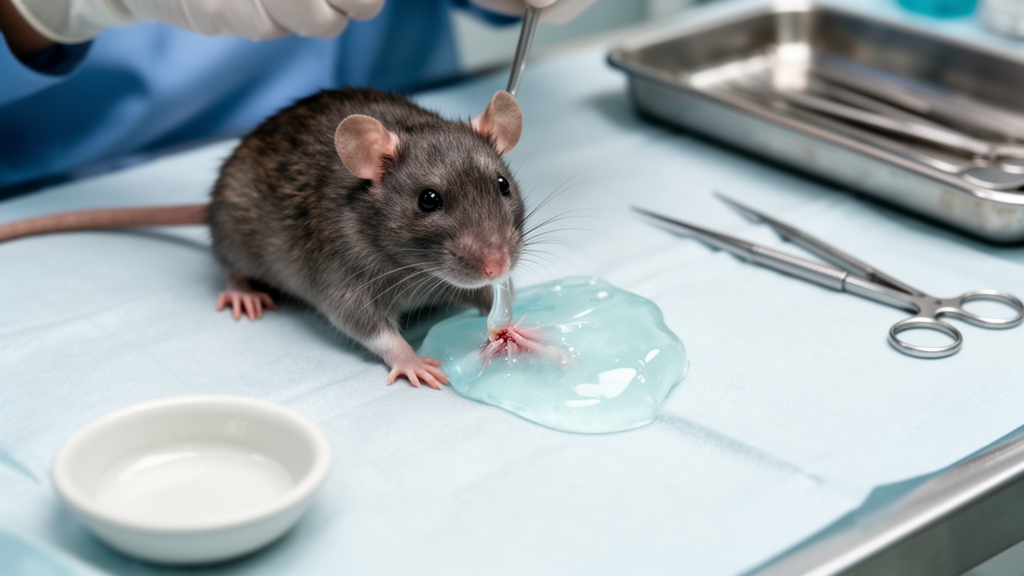
University of Waterloo researchers have developed a sea cucumber-inspired hydrogel that supported more organized tendon regeneration in a preclinical study involving rats. Rats with damaged tendons treated with the gel showed improved healing compared with animals whose tendons were repaired with stitches alone, according to the university’s news release. During healing, the hydrogel gradually broke down and was absorbed by the body over approximately eight weeks. The findings demonstrate experimental benefits in rats and do not establish that the material is safe or effective in humans.

The project took inspiration from sea cucumbers, which can change the stiffness of their bodies. The researchers developed a water-rich material, or hydrogel, designed to act as a temporary support structure while new tissue grows and the material gradually degrades. Its stiffness can be adjusted so that it may be made softer or firmer for different tissue applications. “Soft tissues don’t all require the same scaffold,” said Yimin Wu, a mechanical engineering professor at the University of Waterloo. A material placed near soft brain tissue, for example, would need to behave differently from one used to repair a hard tendon.

To create the gel, the researchers first froze it to form its internal structure. They then soaked it in specially prepared salt solutions, allowing them to adjust its stiffness depending on the tissue it was designed to support. This broadly programmable approach could eventually make the material useful for interfaces involving muscles, cartilage, skin, brain tissue and other organs, but those applications have not yet been tested. The rat experiment evaluated the hydrogel as a tendon-repair material, and further research is needed to determine whether it can safely and effectively support healing in other parts of the body.

After nearly four years of research, the international team tested the hydrogel in rats with damaged tendons. The preclinical study compared tendon repair using the gel with repair using stitches alone. The gel-treated tendons showed improved healing and supported the growth of new, more organized tissue. As the tendons healed, the hydrogel gradually broke down and was absorbed over roughly eight weeks. These observations indicate that the material provided temporary mechanical support while new tissue developed, rather than remaining permanently in the repaired area.

Youchao Teng, who led the project under Wu’s supervision, said the tendon was regenerated with more organized new tissue and comparable function to a healthy tendon. The university described the result as encouraging, but the evidence came from an animal study rather than a clinical trial. Planned next steps include testing in larger animals and, eventually, clinical trials. Wu and Teng have also applied for two patents related to the work and formed a company to try to commercialize the material. The peer-reviewed paper, “Bioinspired Hydrogels with Broadly Programmable Mechanics for Soft-Tissue Interfaces,” was published in Advanced Functional Materials.

Subject of Research: A programmable bioinspired hydrogel tested for tendon regeneration in rats

Article Title: Sea cucumber-inspired gel could help heal damaged tissue in humans

Article References: Sea cucumber-inspired gel could help heal damaged tissue in humans. Original publication (Bibliographic details unavailable.)

Image Credits: AI Generated

DOI: Not provided

Keywords: bioinspired hydrogel, tendon healing, tissue regeneration, sea cucumbers, biomaterials, rat study, programmable mechanics, soft-tissue repair, cucumber-inspired, help, heal, damaged

News Source: Ophelia Keating. (October 20, 2026). Sea cucumber-inspired gel improves tendon healing in rat study. Scienmag.

Tags: bioinspired hydrogelbiomaterialscucumber-inspireddamagedhealhelpprogrammable mechanicsrat studysea cucumberssoft tissue repairtendon healingtissue regeneration
Share12Tweet7Share2ShareShareShare1

Related Posts

Research report: Microbial profiles, resistance patterns, and clinical outcomes in diabetic foot ulcers: a prospective cohort study using the WIfI classification

Research report: Microbial profiles, resistance patterns, and clinical outcomes in diabetic foot ulcers: a prospective cohort study using the WIfI classification

October 20, 2026
Retrospective study links PFO closure to migraine relief and protein shifts

Retrospective study links PFO closure to migraine relief and protein shifts

October 20, 2026

Mechanistic Role of Layer 5-to-2/3 Recurrent Feedback in TMS-Evoked Motor Potentials

October 20, 2026

Research report: Case Report: Twelve-year longitudinal CMR follow-up in Becker muscular dystrophy–associated cardiomyopathy

October 20, 2026

POPULAR NEWS

  • Research report: Microbial profiles, resistance patterns, and clinical outcomes in diabetic foot ulcers: a prospective cohort study using the WIfI classification

    Research report: Microbial profiles, resistance patterns, and clinical outcomes in diabetic foot ulcers: a prospective cohort study using the WIfI classification

    29 shares
    Share 12 Tweet 7
  • Sea cucumber-inspired gel improves tendon healing in rat study

    29 shares
    Share 12 Tweet 7
  • Blind subterranean fish found in Bihar alluvial aquifers

    29 shares
    Share 12 Tweet 7
  • Lab Study Links Combined Beetle Density and Sex Ratio to Burial and Brood Traits

    29 shares
    Share 12 Tweet 7

About

We bring you the latest biotechnology news from best research centers and universities around the world. Check our website.

Follow us

Recent News

Research report: Microbial profiles, resistance patterns, and clinical outcomes in diabetic foot ulcers: a prospective cohort study using the WIfI classification

Sea cucumber-inspired gel improves tendon healing in rat study

Blind subterranean fish found in Bihar alluvial aquifers

Subscribe to Blog via Email

Enter your email address to subscribe to this blog and receive notifications of new posts by email.

Join 85 other subscribers
  • Contact Us

Bioengineer.org © Copyright 2023 All Rights Reserved.

Welcome Back!

Login to your account below

Forgotten Password?

Retrieve your password

Please enter your username or email address to reset your password.

Log In
No Result
View All Result
  • Homepages
    • Home Page 1
    • Home Page 2
  • News
  • National
  • Business
  • Health
  • Lifestyle
  • Science

Bioengineer.org © Copyright 2023 All Rights Reserved.