


Tropical oceans are typically nutrient-poor, yet they host vast biologically diverse reef ecosystems built by symbiotic cnidarians (including corals and anemones). This apparent contradiction, known as the Darwin Paradox, has puzzled scientists since it was first described by Charles Darwin in 1842.
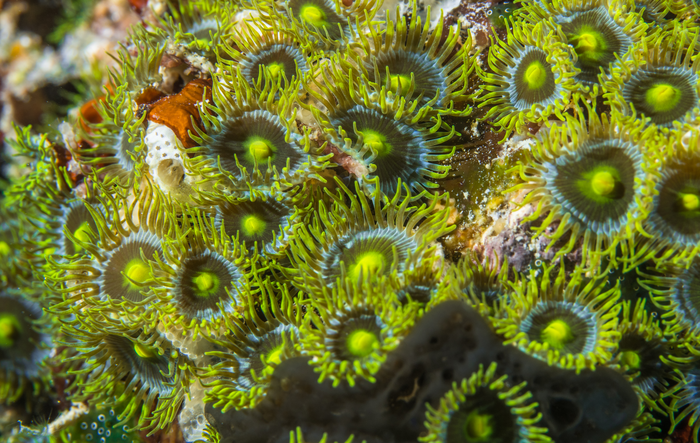
Credit: © 2023 KAUST; Morgan Bennett-Smith.
Tropical oceans are typically nutrient-poor, yet they host vast biologically diverse reef ecosystems built by symbiotic cnidarians (including corals and anemones). This apparent contradiction, known as the Darwin Paradox, has puzzled scientists since it was first described by Charles Darwin in 1842.
Now, an international study led by KAUST researchers[1] has demonstrated how the sea anemone Aiptasia distributes the sugar it receives from its symbionts to recycle nitrogen waste efficiently throughout its body, enabling it to thrive in nutrient-poor environments.
“Many previous studies focused on the ocean environment to discover where the limited nutrients come from — particularly nitrogen, which is very scarce,” says research scientist Guoxin Cui, who worked on the project under the supervision of Manuel Aranda.
“Some coral-based studies hypothesized that coral-algae symbiosis generated these ecological hotspots. However, the underlying molecular mechanism enabling cnidarians to build these massive ecosystems remained elusive,” Cui says.
Cui was particularly interested in examining the symbiotic relationship at the tissue level. Cnidarians have a simple tissue structure consisting of two major cell layers: the gastrodermis and the epidermis. Only the inner layer, the gastrodermis, forms the intracellular relationship with algae.
First, the team adapted a laser microdissection technique to separate the two tissue layers of Aiptasia and study tissue-specific gene expression. Using emerging single-cell RNA-sequencing technology, they investigated the RNA transcription profiles associated with symbiosis at fine cellular scales. This is the first time such techniques have been used to study symbiosis in sea anemones.
The approach allowed the researchers to identify the key transporters involved in nitrogen assimilation, before using antibody staining to track the localization of these nutrient transporters within the anemone.
“We found that the anemone changes the expression and localization of nutrient transporters to distribute the glucose it receives from its symbionts across all of its tissues,” says Aranda. “It uses most of its body mass to recycle the nitrogen waste produced, alongside processing any ammonium that is available in the environment.”
The symbiotic relationship turns the whole organism into a nitrogen assimilator, notes Cui. “This challenges the widespread belief that algae are the sole actors in nitrogen assimilation; the anemone also plays a major role in recycling this scarce nutrient. They form a single inseparable meta-organism.”
The team hope that this study provides the basis for creating better selective breeding methods and may inform efforts to safeguard reef ecosystems. They are expanding their research to examine symbiotic relationships across different cnidarian taxa and ecological contexts.
Journal
Science Advances
DOI
10.1126/sciadv.adf7108
Article Title
Molecular insights into the Darwin paradox of coral reefs from the sea anemone Aiptasia
Article Publication Date
15-Mar-2023

