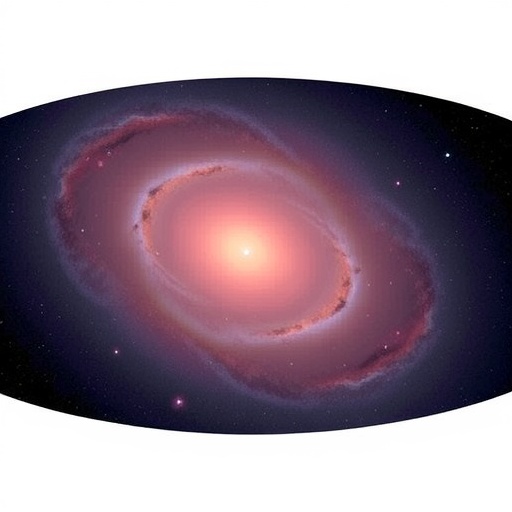
The Sloan Digital Sky Survey V has released its twentieth public data release, opening access to more than two million stellar spectra and offering astronomers the most extensive spectroscopic view yet of the Milky Way and its surrounding regions. Known as DR20, the release significantly expands the survey’s Milky Way Mapper program, which is designed to chart stars across the Galaxy by measuring their temperatures, ages, motions, and chemical compositions. The observations were collected with twin optical spectrographs at Apache Point Observatory in New Mexico and Las Campanas Observatory in Chile, providing a combined view of the northern and southern skies.
Unlike a conventional photograph, a stellar spectrum records how a star emits or absorbs light at different wavelengths. These patterns reveal the elements present in a star’s atmosphere, its surface temperature, and, when combined with other observations, clues about its age and movement. Because stars retain chemical information from the environments in which they formed, millions of spectra can be used to reconstruct the Milky Way’s history. Repeated observations also allow researchers to identify changes in brightness and motion, making the data useful for studying stellar systems, binary stars, and energetic objects.
One of DR20’s major scientific advances is the public release of the first large dataset from the Milky Way Mapper Halo Program. The program focuses on the faint, diffuse halo surrounding the Galaxy’s bright disk. This region contains some of the oldest stars known and preserves evidence of smaller galaxies that were absorbed by the Milky Way over billions of years. The newly released sample includes spectra for approximately 250,000 halo stars, including distant giant stars observed across the sky, rapidly moving stars close to the Sun, and extremely metal-poor stars whose atmospheres contain less than one percent of the iron found in the Sun.
Metal-poor stars are especially valuable to galactic archaeologists because they formed when the Universe contained relatively few elements heavier than hydrogen and helium. Their chemical compositions preserve conditions that existed shortly after the first generations of stars began enriching cosmic space. Their orbits provide another layer of evidence: unusual trajectories can reveal the remnants of ancient satellite galaxies or gravitational encounters that shaped the Milky Way. By combining spectroscopy with stellar distances and motions, researchers can trace structures in the halo that are almost invisible in ordinary images.
The release also more than doubles the number of publicly available white dwarf spectra from the Sloan Digital Sky Survey, adding about 49,000 observations. White dwarfs are the compact remnants left behind when stars similar in mass to the Sun exhaust their nuclear fuel and shed their outer layers. Their interiors are supported by electron degeneracy pressure rather than ongoing nuclear fusion, and they gradually cool over billions of years. More than 80 percent of the white dwarfs in this new sample had not previously been observed by SDSS, while over 40 percent are located in the southern sky. Their atmospheres can contain traces of heavier elements, sometimes indicating that asteroids or planets were torn apart and accreted by the dead star.
Closer to Earth, the Solar Neighborhood Census is assembling a detailed spectroscopic inventory of objects within 250 parsecs, or roughly 815 light-years, of the Sun. DR20 includes spectra for about 280,000 nearby stars, with particular attention to low-mass M dwarfs and brown dwarfs. These faint objects account for most of the stars in the Galaxy but are difficult to study because they emit relatively little visible light. By combining SDSS-V spectroscopy with precise distance measurements from the European Space Agency’s Gaia mission, astronomers can compare the masses, ages, chemical compositions, and motions of nearby stellar populations with unprecedented consistency.
The data release also expands the Young Galaxy Program to more than 200,000 young stars and planetary nurseries, quadrupling its size compared with the previous release. Young stars often retain disks of gas and dust from which planets may form, while intense magnetic activity can produce powerful flares and high-energy radiation. The program also tracks massive O- and B-type stars, which live only a few million years but illuminate and shape their surroundings. Because these stars form preferentially along spiral arms, their distribution helps astronomers investigate how star formation moves through the Milky Way.
Another component of DR20 links optical spectroscopy with observations from the European Space Agency’s eROSITA X-ray telescope. SDSS-V has obtained nearly 48,000 optical spectra of objects first identified as energetic X-ray sources. The combined dataset includes accreting binary systems, magnetic stars, and other sources capable of producing intense high-energy emission. X-rays often reveal processes hidden at visible wavelengths, such as material falling onto a compact stellar remnant or magnetic fields accelerating particles. Matching X-ray detections with optical spectra allows researchers to identify the objects responsible and determine their physical properties.
The release is already being used to investigate ancient stars outside the Milky Way. A study led by Maddie Lucey reports the first five carbon-enhanced metal-poor stars identified in the Large Magellanic Cloud, a satellite galaxy of the Milky Way. Carbon-enhanced metal-poor stars are rare relics whose unusual abundances may reflect pollution by early supernovae or mass transfer from an evolved companion. Their discovery in the Large Magellanic Cloud gives astronomers a new way to test whether the oldest stars formed under different conditions in smaller galaxies. Related work using SDSS-V data has also examined the distant and metal-poor halo and reported an exceptionally pristine star associated with the Large Magellanic Cloud.
By placing millions of measurements into public hands, SDSS-V is transforming the Milky Way from a collection of individual observations into a dynamic, chemically structured system that can be analyzed statistically. Researchers can use the spectra to identify stellar families, reconstruct merger events, measure the history of star formation, and examine how planetary systems survive the deaths of their host stars. The scale of DR20 also creates opportunities for discoveries that were not part of the survey’s original goals, as automated searches and independent studies examine the catalog for rare stars, unusual binaries, and previously overlooked phenomena.
Subject of Research: The Milky Way’s stars, stellar populations, galactic halo, white dwarfs, nearby low-mass stars, young stars, planetary nurseries, X-ray sources, and ancient metal-poor stars in the Large Magellanic Cloud.
Article Title: Sloan Digital Sky Survey Releases Largest Spectroscopic Map Yet of the Milky Way
News Publication Date: Not specified in the provided content.
Web References: https://www.sdss.org/sdss-launches-twentieth-release/ ; https://www.sdss.org/ ; https://ui.adsabs.harvard.edu/abs/2026NatAs..10..842J/abstract ; https://ui.adsabs.harvard.edu/abs/2026ApJ..1000..283C/abstract ; https://ui.adsabs.harvard.edu/abs/2026ApJ..1000L..44L/abstract
References: Ji et al. (2026), “A nearly pristine star from the Large Magellanic Cloud,” Nature Astronomy, Vol. 10, pp. 842–857; Chandra et al. (2026), “Mapping the Distant and Metal-poor Milky Way with SDSS-V,” The Astrophysical Journal, Vol. 1000, 283; Lucey et al. (2026), “Discovery of the First Five Carbon-enhanced Metal-poor Stars in the LMC,” The Astrophysical Journal Letters, Vol. 1000, L44.
Image Credits: SDSS-V, Ilija Medan, University of Toronto.
Keywords
Sloan Digital Sky Survey V, SDSS-V, Data Release 20, Milky Way Mapper, galactic archaeology, stellar spectroscopy, Milky Way halo, white dwarfs, M dwarfs, brown dwarfs, young stars, planetary formation, eROSITA, Large Magellanic Cloud, metal-poor stars, carbon-enhanced metal-poor stars
Tags: advancements in Galactic mappingall-sky spectroscopic surveybinary star and stellar system studiesGalactic history reconstructionMilky Way Mapper programMilky Way stellar spectramulti-observatory data collectionpublic data release SDSS-VSouthern Hemisphere astronomical observationsspectral analysis of energetic objectsstar temperature and age measurementstellar chemical composition analysis