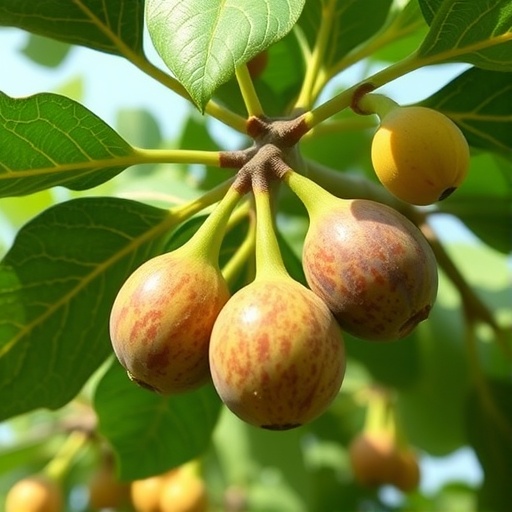
The ancient fig tree, one of the first plants ever domesticated by humans, is hiding remarkable genetic secrets in the mountainous corners of southeastern Türkiye. A new study published in Biochemical Genetics has revealed that fig genotypes growing in the remote Derecik and Çukurca districts of Hakkâri province harbor exceptionally high levels of genetic diversity, offering breeders and conservationists a treasure trove of variation in a crop whose wild relatives and landraces are increasingly threatened around the Mediterranean basin.
An international team of researchers led by Meliha Feryal Sarıkaya and Sarmad Ali Qureshi of Sivas University of Science and Technology, together with Muhammad Azhar Nadeem of Mersin University and Faheem Shehzad Baloch, set out to document the genetic makeup of 72 Ficus carica genotypes collected from these two geographically close but ecologically distinct regions. Their choice of location was no accident. Hakkâri sits at a crossroads of biodiversity in the northern Fertile Crescent, an area long recognized as a center of origin and diversification for numerous crop species. Yet the fig germplasm of this rugged border province had never been systematically characterized at the molecular level.
To interrogate the DNA of these trees, the team employed Start Codon Targeted, or SCoT, markers, a relatively young but increasingly popular molecular tool first described in 2009. Unlike random markers that scatter across the genome, SCoT primers anneal to the short ATG start codon flanking regions of genes, meaning that the polymorphisms they detect are often physically linked to functional, gene-associated sequences. This gene-targeted character gives SCoT markers a practical advantage for breeding-oriented diversity studies, since the variation they reveal is more likely to reflect biologically meaningful differences than purely neutral background noise. The technique is also simple, inexpensive and requires only basic PCR equipment, making it particularly attractive for laboratories working in developing breeding programs.
Fifteen highly polymorphic SCoT primers were used to amplify DNA extracted from young leaves of the 72 accessions, which had been gathered from the Derecik and Çukurca populations. The amplification produced a total of 481 scorable bands, and of these, 475 turned out to be polymorphic, appearing in some genotypes but not others. That translates into an average polymorphism rate of 98.60 percent, an extraordinarily high figure that immediately signaled just how much hidden genetic variation these mountain fig trees carry. In practical terms, nearly every banding position examined differed across the collection, a level of discriminating power that confirms both the informativeness of the marker system and the genetic richness of the material itself.
The diversity statistics built on those bands told a consistent story. The mean effective number of alleles per locus was 1.53, gene diversity, a measure analogous to expected heterozygosity, averaged 0.31, and the Shannon information index, which captures both richness and evenness of genetic variation, reached 0.47. The average pairwise genetic distance between genotypes was 0.37, but individual pairs were far more divergent. The most genetically distant pair in the entire collection, genotypes HC4 and HD7, recorded a distance of 0.721, meaning these two trees shared barely a quarter of their marker profile. For breeders, such maximally divergent pairs are exactly what cross-design programs seek, because crossing genetically distant parents often produces heterosis and transgressive segregation, the generation of offspring with traits exceeding those of either parent.
Perhaps the most important structural finding came from the analysis of molecular variance, or AMOVA. When the researchers partitioned the observed genetic variation between and within the two sampling populations, they found that 93 percent of it resided within populations, while only 7 percent distinguished Derecik from Çukurca. This pattern indicates that the two fig populations, despite growing tens of kilometers apart in a mountainous landscape, are not strongly genetically isolated from one another. The most likely explanation is gene flow through seed and pollen movement, whether mediated by the fig’s obligate pollinator wasp, by human exchange of planting material, or by both. At the same time, the significant minority of among-population variation confirms that geography does leave a measurable fingerprint on the genome, one worth preserving through in situ conservation of both districts.
Bayesian clustering analysis with the STRUCTURE software added further nuance. By modeling the multilocus genotypes as mixtures of hypothetical ancestral populations, the analysis identified two distinct genetic clusters that corresponded largely to the geographic origin of the trees. However, the picture was not clean cut. Applying the conventional membership coefficient threshold of 0.70, the researchers classified 22 of the 72 genotypes, or 30.56 percent of the collection, as admixed, meaning these trees carry substantial ancestry from both clusters. Such admixture is a hallmark of historically interconnected populations and provides additional raw material for adaptation. Principal coordinate analysis, or PCoA, independently corroborated the clustering: the first two axes explained 24.31 percent and 15.07 percent of the total genetic variation respectively, and the resulting ordination plot clearly separated the genotypes according to their sampling locations, visually echoing the STRUCTURE result.
The significance of this work extends well beyond the borders of Hakkâri. The common fig is an economically important fruit crop across the Mediterranean region and beyond, prized both for its fresh and dried fruit and for its nutritional and functional compounds, including antioxidants documented in recent horticultural studies. Archaeobotanical evidence from the Jordan Valley suggests fig domestication may predate that of cereal crops, and the species occupies a special place in the history of agriculture. Yet despite its cultural and economic weight, fig genetic resources face mounting pressure from urbanization, climate change and the replacement of traditional landraces with a handful of commercial cultivars. Previous studies have characterized fig germplasm from Tunisia, Algeria, the Adriatic region and other parts of Türkiye using SSR, ISSR, AFLP and more recently iPBS-retrotransposon markers, but systematically underexplored pockets of diversity remain, particularly in the eastern reaches of the Fertile Crescent where this new study focuses.
By demonstrating that SCoT markers can resolve population structure and quantify diversity effectively in fig, the researchers have validated a low-cost, gene-targeted toolkit that breeding programs in resource-limited settings can readily adopt. The high polymorphism rate they observed is consistent with findings from other crops, including bread wheat, lentil, sugar beet, cotton, peanut, grape, maize and date palm, where SCoT markers have repeatedly proven capable of distinguishing even closely related genotypes. The two maximally divergent genotypes, HC4 and HD7, are now obvious candidates for inclusion in a core collection, and the admixed individuals identified by STRUCTURE analysis merit attention as potential sources of novel allele combinations.
The authors are candid about the limitations of their dominant marker system and the narrow geographic scope of the sampling. Because SCoT markers are dominant, they cannot reliably distinguish heterozygous from homozygous individuals, which limits certain population genetic inferences. The team recommends that future studies incorporate codominant markers such as simple sequence repeats and single nucleotide polymorphisms, which allow more precise estimates of heterozygosity and kinship, expand the geographic sampling across the broader fig-growing regions of Türkiye and the Middle East, and deposit their marker data in open repositories so that global breeding and conservation efforts can build on shared datasets. Funding for the study came from the scientific research sections of Sivas University of Science and Technology and Mersin University, under projects supporting the Plant Genomics Laboratory infrastructure that made the work possible.
For the farmers of Derecik and Çukurca, the trees dotting their hillsides are simply part of the landscape, sources of fruit that have sustained families for generations. For science, those same trees now stand revealed as living archives of genetic variation accumulated over millennia of natural selection, local adaptation and informal human selection. Preserving that variation, whether through protected in situ populations, ex situ field gene banks or well-designed core collections built on molecular data, is no longer a matter of guesswork. This study provides the genetic map that conservation planners and fig breeders have lacked for this corner of the species’ range, and it does so with an affordable marker technology that can be replicated wherever threatened crop diversity awaits discovery. In an era when crop genetic erosion is accelerating worldwide, the message from the mountains of Hakkâri is a hopeful one: some of the fig’s oldest and most valuable secrets are still out there, waiting to be read, one DNA band at a time.
Subject of Research: Genetic diversity and population structure of 72 fig (Ficus carica L.) genotypes from Hakkâri province, Türkiye, assessed using SCoT markers.
Subject of Research: Biology
Article Title: Genetic Diversity and Population Structure of 72 Turkish Ficus carica (L.) Genotypes Assessed Using SCoT Markers
Article References: Sarıkaya, M. F., Nadeem, M. A., Qureshi, S. A., Bedir, M., Tatar, M., Ali, A., Altaf, M. T., Uçer, V. A., Kökten, K., Aglar, E., & Baloch, F. S. (2026). Genetic Diversity and Population Structure of 72 Turkish Ficus carica (L.) Genotypes Assessed Using SCoT Markers. Biochemical Genetics. https://doi.org/10.1007/s10528-026-11419-w
Image Credits: AI Generated
DOI: 10.1007/s10528-026-11419-w
Keywords: Ficus carica, SCoT markers, genetic diversity, population structure, Hakkâri, Türkiye, AMOVA, STRUCTURE analysis, germplasm conservation, fig breeding, molecular markers, polymorphism
Cite Scienmag News
APA MLA Chicago
Juliet Wilcox. (September 9, 2026). SCoT markers reveal genetic diversity in 72 Turkish fig genotypes. Scienmag. https://scienmag.com/scot-markers-reveal-genetic-diversity-in-72-turkish-fig-genotypes/
Juliet Wilcox. “SCoT markers reveal genetic diversity in 72 Turkish fig genotypes.” Scienmag, 9 September 2026, https://scienmag.com/scot-markers-reveal-genetic-diversity-in-72-turkish-fig-genotypes/. Accessed 9 September 2026.
Juliet Wilcox. “SCoT markers reveal genetic diversity in 72 Turkish fig genotypes.” Scienmag. September 9, 2026. https://scienmag.com/scot-markers-reveal-genetic-diversity-in-72-turkish-fig-genotypes/
Copy citation Download RIS
Tags: biodiversity hotspots in Fertile Crescentbiodiversity in southeastern Türkiyebiodiversity of fig in southeastern Türkiyeconservation of wild fig relativesDNA fingerprinting of Turkish figsdomestication and genetic secrets of figsFig genetic diversitygenetic analysis of fig germplasm in TurkeyGenetic diversity in Turkish fig genotypesgenetic resources of ancient cropsgenetic study of fig landracesgenetic variation in Mediterranean fig landracesgenetic variation in Mediterranean fig populationsimpact of geographic regions on fig geneticslandrace diversity in Hakkâri figslandrace preservation in Türkiyemolecular characterization of Ficus caricamolecular characterization of fig landracesmolecular markers for crop biodiversitySCoT marker analysis in Ficus caricaSCoT marker analysis in figsTurkish fig genotypesuse of molecular markers in fig breeding