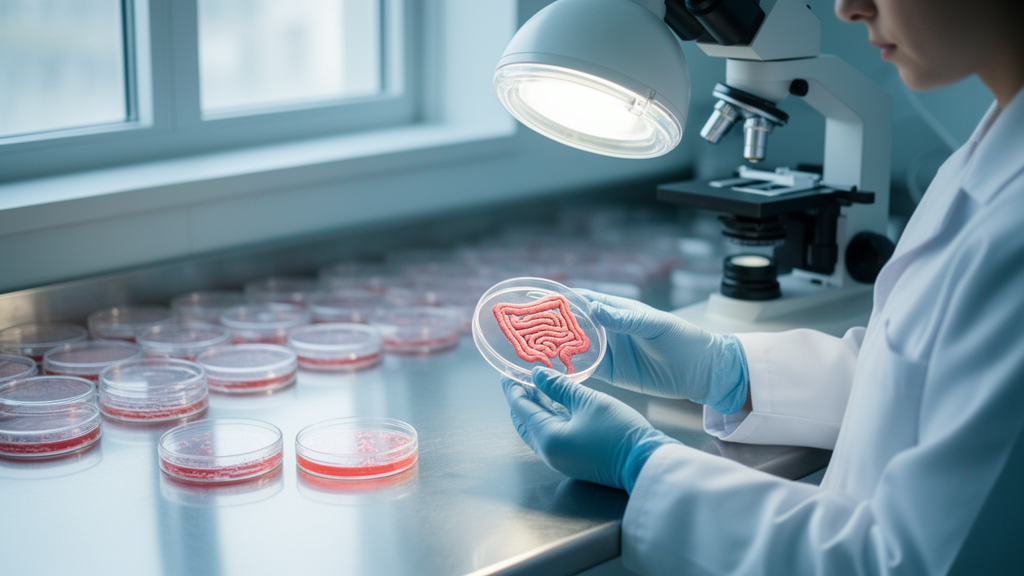
A sweeping scoping review published in BMC Gastroenterology has mapped the experimental evidence on how micro- and nanoplastics affect mammalian intestinal systems, and its findings reveal a research field that has grown explosively while remaining strikingly narrow in its methods. The analysis, conducted according to the Joanna Briggs Institute framework and reported under the PRISMA-ScR guidelines, included 90 peer-reviewed studies selected from 3,540 records initially identified in PubMed, Scopus, and Web of Science. The authors, Deniz Özkan Vardar and Necati Vardar, completed their literature searches on 5 March 2026 and screened records independently using a blinded workflow before extracting data from every included study.
The headline pattern is a pronounced methodological monoculture. In vitro studies accounted for 88.9 percent of the evidence base, with 80 of the 90 included papers relying on simplified cell systems. Caco-2-based platforms dominated overall, appearing in 52.2 percent of studies, while Caco-2 monoculture-like models alone made up 36.7 percent. Only eight studies included an in vivo animal component, and just five employed advanced biomimetic systems such as intestinal organoids or chip-based platforms. Multicellular co- and tri-culture models, which introduce mucus-secreting cells into the experimental architecture, appeared in 17 studies. The review’s authors argue that this concentration matters because model architecture can shape both the magnitude and the biological dimension of the responses observed after plastic exposure.
The polymer landscape is similarly skewed. Polystyrene appeared in 60.0 percent of the included studies, a dominance the authors attribute partly to its commercial availability as relatively uniform particles with well-characterized properties. By contrast, environmentally prevalent polymers such as polyethylene and polyethylene terephthalate were each represented in only 12 studies, or 13.3 percent, while polypropylene, polyvinyl chloride, and polylactic acid were investigated even less frequently. The review emphasizes that this imbalance does not mean polystyrene is intrinsically more toxic; rather, the greater number of reported effects associated with it reflects study availability and experimental representation. Studies that directly compared major polymers have shown that intestinal uptake and cellular responses can differ across polyethylene, polypropylene, PET, and PVC particles, challenging a polystyrene-centered interpretation of intestinal plastic toxicity.
Particle size tells a parallel story of concentration. Nanoplastics, defined in the review as particles smaller than 1 micrometer, were the most frequently investigated size category, appearing in 60.0 percent of studies, followed by small microplastics of 1 to 10 micrometers in 54.4 percent. Large microplastics above 10 micrometers were examined in only 4.4 percent of studies, and 10.0 percent used mixed-size designs. The authors caution that because some studies examined more than one size class, these occurrence-based distributions reflect patterns of research emphasis rather than mutually exclusive counts. The nano-centric orientation, they argue, stems from the suitability of nanoscale particles for mechanistic work on cellular uptake, intracellular localization, and particle-cell interactions, not from evidence of inherently greater toxicity. Direct comparisons between size classes remain limited and are often confounded by differences in polymer type, surface characteristics, and exposure conditions.
Perhaps the most consequential gap concerns particle condition. Most studies, 68.9 percent, relied on virgin particles, whereas digestion-modified particles appeared in 10.0 percent, aged or weathered particles in 8.9 percent, and product-released particles in 7.8 percent. This matters because environmental and gastrointestinal transformation processes alter surface roughness, functional group composition, biomolecular adsorption, aggregation behavior, and biological reactivity. Studies using product-released particles from food containers and infant feeding bottles, as well as digestion-modified foodborne PET particles, showed that transformed materials can induce intestinal stress responses that differ from those observed with conventional pristine particles. The authors note, however, that the small number of studies using transformed particles prevents any general conclusion that such particles are consistently more or less toxic than pristine ones.
Across the 90 studies, the most prominent evidence themes included oxidative stress and mitochondrial injury, cellular uptake and translocation, barrier dysfunction and permeability changes, inflammation and immune signaling, and cell death or DNA damage-related responses. The review highlights recent mechanistic work linking intestinal micro- and nanoplastic exposure to reactive-oxygen-species-dependent inflammatory signaling, mitochondrial-AMPK-DNA damage pathways, and mitochondrial bioenergetic dysfunction. Co-exposure studies added another layer of complexity: PET microplastics combined with PFOA were associated with synergistic barrier disruption and tight-junction injury in a Caco-2 model, while aged polystyrene nanoplastics enhanced the combined toxic effects observed with norfloxacin. Contaminants examined in co-exposure research also included PFOS, nonylphenol, tetrabromobisphenol A, silver-based materials, arsenic, and boscalid, with no single uniform interaction pattern emerging.
A smaller but distinct body of evidence addressed the gut microbiota. Nine studies investigated microbiota composition, microbial diversity or function, probiotic viability, or probiotic-mediated modulation of particle-associated intestinal responses, drawing on human-derived fecal or simulated microbiota systems, intestinal epithelial-microbiota models, and probiotic-associated configurations. The authors describe microbiota-related effects as an emerging but underexplored axis, substantially less investigated than epithelial barrier dysfunction, oxidative stress, and cellular injury. They also stress that heterogeneity in these microbiota models, spanning human versus animal-derived communities, isolated cultures versus complex communities, and differing polymers, particle sizes, and exposure durations, currently prevents any consistent conclusion about whether particular polymers or particle sizes exert reproducible microbiota-specific effects.
The review also confronts the yawning gap between laboratory exposure conditions and real-world human exposure. Experimental concentrations varied enormously, with reported examples ranging from 1 to 100 micrograms per milliliter up to 68 milligrams per milliliter in some in vitro configurations, while in vivo porcine studies used metrics such as 0.1 to 1 gram per day. The authors emphasize that these concentrations cannot be directly equated with human exposure estimates, which are expressed in entirely different metrics and remain highly uncertain. The World Health Organization estimated microplastic intake from drinking water at approximately 0.01 to 2 micrograms per day based on available occurrence data, while an intentionally conservative scenario yielded 85 micrograms per day, a figure considered highly unlikely because it combined extreme assumptions. A recent systematic review of dietary exposure reported estimates spanning 0.0002 to 1,531,524 particles per day across food and drinking-water studies. The review concludes that the evidence does not currently support a simple quantitative translation from experimental concentrations to human health risk.
Reproducibility concerns run through the discussion. The authors report substantial variation in how particle size, morphology, exposure concentration, and particle condition were characterized across studies, with size often given only as a broad category rather than a precise distribution. Differences in particle preparation, dispersion procedures, characterization methods, exposure media, and duration may influence aggregation, sedimentation, cellular availability, and effective exposure at the intestinal interface. Consequently, differences in reported biological responses may reflect experimental design as much as intrinsic differences between polymers or particle sizes. The authors also note that no formal risk-of-bias assessment was performed, consistent with the scoping review’s mapping objective, so their quality-related observations should be read as reporting and methodological patterns rather than formal quality ratings.
The review’s conclusions are measured but pointed. The current evidence provides a strong mechanistic foundation for intestinal micro- and nanoplastic toxicology, the authors write, but remains insufficiently standardized and environmentally representative for robust translational interpretation. They call for broader use of physiologically representative intestinal models, including organoid and organ-on-a-chip platforms, environmentally prevalent polymers, aged or digestion-modified particles, and standardized physicochemical characterization and exposure protocols. They also highlight the underuse of mucus-inclusive designs, noting that standard Caco-2 monocultures lack a functional mucus layer even though ingested particles must interact with the intestinal mucus barrier before reaching epithelial surfaces, which may cause simplified systems to overrepresent direct particle-cell interactions. As a structural overview rather than a quantitative evaluation, the evidence map is intended to guide the design of more realistic, comparable, and physiologically relevant future studies of intestinal plastic exposure.
Subject of Research: A scoping review mapping the experimental evidence on biological effects of micro- and nanoplastics in mammalian intestinal models
Article Title: Mapping the biological effects of micro- and nanoplastics in mammalian intestinal models: a scoping review
Article References: Özkan Vardar, D., & Vardar, N. (2026). Mapping the biological effects of micro- and nanoplastics in mammalian intestinal models: a scoping review. BMC Gastroenterology, 26(1), Article 705. https://doi.org/10.1186/s12876-026-05475-0
Image Credits: AI Generated
DOI: 10.1186/s12876-026-05475-0
Keywords: microplastics, nanoplastics, gut health, Caco-2 cells, scoping review, intestinal barrier, polystyrene, oxidative stress, gut microbiota, particle characterization, toxicology, environmental health
News Source: Ophelia Keating. (October 27, 2026). Scoping review finds intestinal microplastic research dominated by simplified lab models. Scienmag.