Using genetic and environmental data, research team maps landscape connectivity in mosquitoes that are known vectors for dengue, chikungunya and Zika
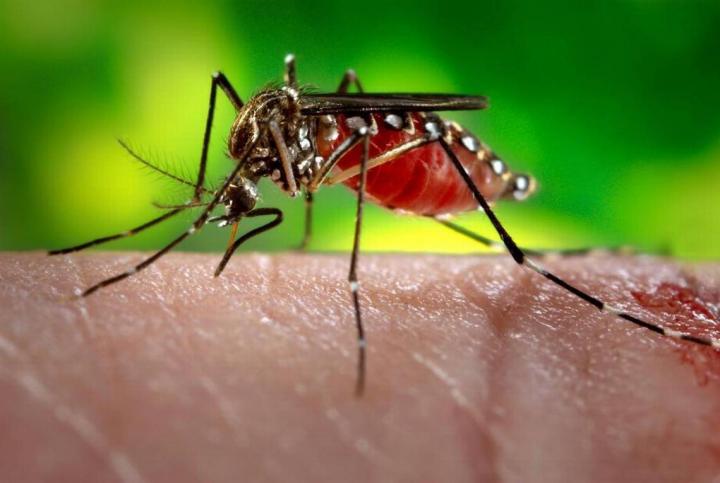
Credit: James Gathany, CDC
LOGAN, UTAH, USA — You might not like mosquitoes, but they like you, says Utah State University biologist Norah Saarman. And where you lead, they will follow.
In addition to annoying bites and buzzing, some mosquitoes carry harmful diseases. Aedes aegypti, the so-called Yellow Fever mosquito and the subject of a recent study by Saarman and colleagues, is the primary vector for transmission of viruses causing dengue fever, chikungunya and Zika, as well as yellow fever, in humans.
“Aedes aegypti is an invasive species to North America that’s become widespread in the eastern United States,” says Saarman, assistant professor in USU’s Department of Biology and the USU Ecology Center, whose research focuses on evolutionary ecology and population genomics. “We’re examining the genetic connectivity of this species as it adapts to new landscapes and expands its range.”
With Evlyn Pless of the University of California, Davis and Jeffrey Powell, Andalgisa Caccone and Giuseppe Amatulli of Yale University, Saarman published findings from a machine-learning approach to mapping landscape connectivity in the February 22, 2021 issue of the Proceedings of the National Academy of Sciences (PNAS).
The team’s research was supported by the National Institutes of Health.
“We’re excited about this approach, which uses a random forest algorithm that allows us to overcome some of the constraints of classical spatial models,” Saarman says. “Our approach combines the advantages of a machine-learning framework and an iterative optimization process that integrates genetic and environmental data.”
In its native Africa, Aedes aegypti was a forest dweller, drawing sustenance in landscapes uninhabited or scarcely populated by humans. The mosquito has since specialized to feed on humans, and thrives in human-impacted areas, favoring trash piles, littered highways and well-irrigated gardens.
“Using our machine-learning model and NASA-supplied satellite imagery, we can combine this spatial data with the genetic data we have already collected to drill down into very specific movement of these mosquitoes,” Saarman says. “For example, our data reveal their attraction to human transportation networks, indicating that activities such as plant nurseries are inadvertently transporting these insects to new areas.”
Public officials and land managers once relied on pesticides, including DDT, to keep the pesky mosquitoes at bay.
“As we now know, those pesticides caused environmental harm, including harm to humans,” she says. “At the same time, mosquitos are evolving resistance to the pesticides that we have found to be safe for the environment. This creates a challenge that can only be solved by more information on where mosquitos live and how they get around.”
Saarman adds the rugged survivors are not only adapting to different food sources and resisting pesticides, they’re also adapting to varied temperatures, which allows them to expand into colder ranges.
Current methods to curb disease-carrying mosquitoes focus on biotechnological solutions, including cutting-edge genetic modification.
“We hope the tools we’re developing can help managers identify effective methods of keeping mosquito populations small enough to avoid disease transmission,” Saarman says. “While native species play an important role in the food chain, invasive species, such as Aedes aegypti pose a significant public health risk that requires our vigilant attention.”
###
Media Contact
Norah Saarman
[email protected]
Related Journal Article
http://dx.