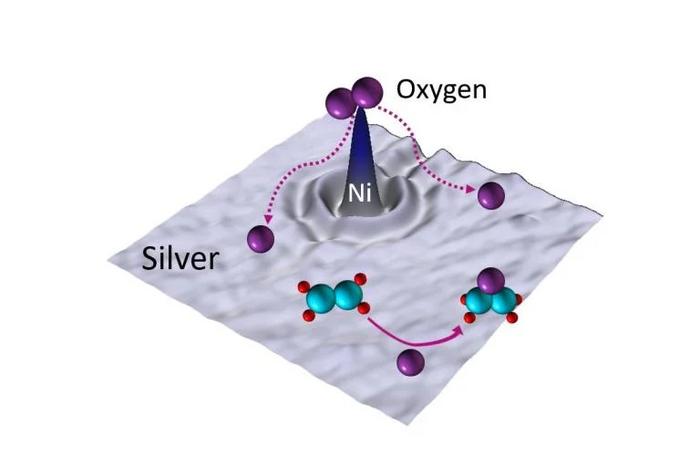

In recent months, advancements in chemical engineering have emerged that could significantly shift the production landscape of ethylene oxide, a key platform chemical with innumerable applications in everyday products. This chemical is the backbone of various industries, from pharmaceuticals to plastics, and its global market value is an astounding $40 billion annually. However, the traditional methods for its production are fraught with environmental challenges, primarily due to the substantial amounts of carbon dioxide released during the process. The results of a groundbreaking study have opened the door to potentially reducing the carbon footprint of ethylene oxide production through the innovative use of nickel catalysts alongside silver.
The production of ethylene oxide has long been problematic. As conventional methods typically outpour millions of tons of CO₂ into the atmosphere, the modern era faces increasing pressure to recalibrate industrial processes to be more sustainable. The introduction of chlorine in the production process to enhance efficiency further complicates matters, as chlorine is toxic and poses significant risks to both human health and the environment. Thus, an urgent need to develop an alternative has emerged, and researchers may have found a solution.
Charles Sykes, a chemistry professor at Tufts University, along with his research team, has unlocked an effective methodology for producing ethylene oxide that circumvents some of these environmental pitfalls. Through their experiments, the researchers have demonstrated that by incorporating small amounts of nickel atoms into silver catalysts, they can enhance the production efficiency of ethylene oxide while reducing or even eliminating reliance on chlorine. This revolutionary approach redefines the parameters for selective oxidation reactions essential for producing ethylene oxide from its base materials, ethylene and molecular oxygen.
Initially conceptualized by Sykes in collaboration with Tulane University’s Matthew Montemore, the foundation of their inquiry rests upon exploring catalytic advancements. Their interest in selective oxidation reactions led them down the path of ethylene oxide production, where conventional silver catalysts typically yield two molecules of CO₂ for every single molecule of ethylene oxide produced. The integration of nickel changes the dynamics—enabling a process that requires significantly less CO₂ generation while maintaining high efficiency levels critical for large-scale manufacturing.
At the heart of this innovative research lies a thorough understanding of catalysis itself. Catalysts serve a pivotal role by reducing the energy required to drive reactions forward without themselves undergoing any permanent change. This property is particularly salient in the context of silver, which is conventionally recognized for its role as a catalyst in producing ethylene oxide. However, the reaction has significant room for improvement, particularly in mitigating CO₂ emissions. Sykes and Montemore’s approach to introducing nickel to the silver catalyst proposes an elegant solution to these critical shortcomings.
The research team engaged in extensive experimentation, meticulously incorporating nickel in single-atom forms thereby allowing a deep examination of its effects on the reactions involving silver catalysts. By employing Sykes’ single-atom alloy concept—a technique he meticulously developed over a decade ago—they were able to observe the intricacies of how nickel integrates within the catalyst structure. This approach not only revealed the functional benefits of nickel but also solidified the predictive accuracy of their Catalytic model.
Collaborating with Phillip Christopher from the University of California, Santa Barbara, the team was able to develop a new formulation for silver catalysts. The inclusion of nickel enhanced the selective oxidation reaction, a notoriously difficult and complex process. Both Sykes and Christopher emphasized the criticality of their findings, noting how surprising it was to observe such a dramatic improvement in catalytic efficiency. This underscores the potential for future applications in an industrial context.
One of the crucial technical challenges encountered during this study was ensuring the reproducibility of incorporating nickel into the silver catalyst. Anika Jalil, a Ph.D. student within Christopher’s group, successfully navigated this hurdle, showcasing remarkable ingenuity in the lab. The successful incorporation of nickel is particularly noteworthy; the fact that such an effect had not been previously documented suggests that substantial benefits lie within overlooked elements of chemical catalysis.
As the team transitions from laboratory experimentation to practical applications, the potential for reducing CO₂ emissions and toxic inputs in ethylene oxide production becomes increasingly plausible. With a provisional patent filed in 2022 and an additional international patent submitted in 2023, the researchers are actively engaging with a major commercial producer of ethylene oxide in order to explore the feasibility of real-world implementation of their findings. This proactive approach may facilitate the transition from experimental science to industry-standard practices.
The implications of these findings extend far beyond the laboratory. The ability to manufacture ethylene oxide more sustainably could alter supply chains across multiple sectors, beyond traditional chemical engineering as it connects with industry stakeholders interested in environmentally friendly production techniques. This research may also serve as a catalyst for further inquiries into the roles of other common elements that could enhance catalytic processes, thereby ensuring that sustainability remains a priority within industrial chemical processes.
As the research landscape continues to evolve, it’s clear that the synthesis of ethylene oxide through this novel methodology holds promise to be a significant contributor to the reduction in greenhouse gas emissions. By essentially re-engineering an established process, researchers have opened doors that could redefine chemical production as we know it in the realm of green chemistry.
With ethical and environmental considerations now at the forefront of industrial practices, the contributions from Sykes and his team come at an opportune time. They not only address the immediate production issues surrounding ethylene oxide but also set a precedent for future research to pursue sustainable methodologies in chemical synthesis.
In conclusion, the innovative work accomplished by the team at Tufts University emphasizes the value of interdisciplinary approaches in addressing complex global challenges. By harnessing the catalytic properties of metals like nickel and silver, researchers are positioning themselves to lead the way towards greener and more efficient production methods that align with modern sustainability goals.
Subject of Research: Ethylene oxide production and its catalysis improvement
Article Title: Nickel’s Role in Revolutionizing Ethylene Oxide Production
News Publication Date: February 20, 2025
Web References: http://dx.doi.org/10.1126/science.adt1213
References: Not applicable
Image Credits: Elizabeth Happel
Keywords
Greenhouse gases, Chemical processes, Sustainable chemical synthesis, Catalysts, Ethylene oxide production.
Tags: advancements in green chemistryalternatives to chlorine in chemical processescarbon footprint reduction in chemicalseco-friendly chemical productionenvironmental impact of pharmaceuticalsethylene oxide production methodsinnovations in chemical engineeringnickel catalysts in chemical engineeringreducing CO2 emissions in manufacturingsilver catalysts for eco-friendly solutionssustainable industrial processessustainable practices in plastics industry