Credit: Junjie Zhu
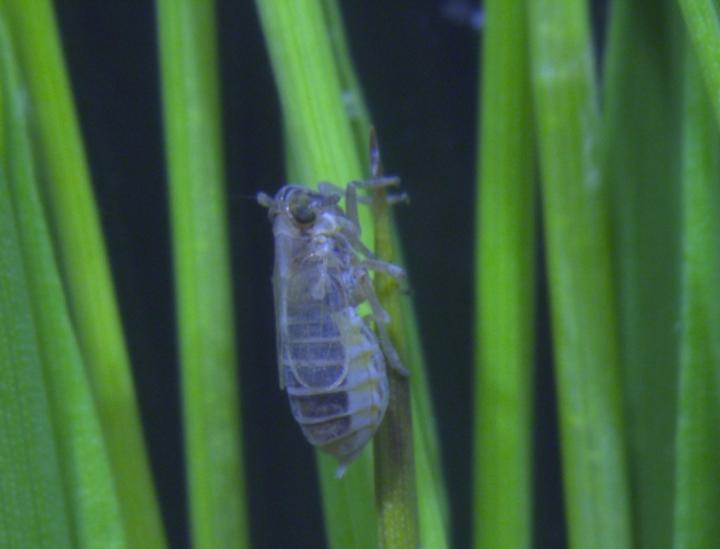
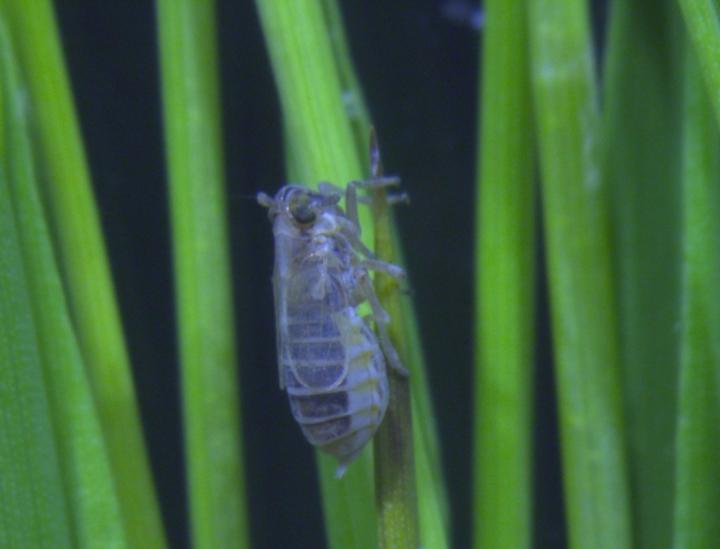
Researchers from the Chinese Academy of Sciences' Institute of Zoology have discovered how a severe rice virus reproduces inside the small brown planthopper, a major carrier of the virus.
Rice stripe virus (RSV) causes major damage to rice crops each year. The study could inform future strategies for controlling the spread of this and other viruses that can lead to devastating effects on rice, wheat, cotton and other crops.
"Most plant viruses depend on insects to carry them between plants, and many can reproduce inside the cells of these carrier insects, or 'vectors', without actually harming them," says Feng Cui, Professor of Zoology. "RSV, one of the most notorious plant viruses, is carried by the small brown planthopper and, once inside the cells, manages to achieve a balance with the insect's immune system."
Viral infections in animal hosts activate a pathway by which a type of enzyme, called c-Jun N-terminal kinase (JNK), is signalled to respond. But how exactly viruses regulate this pathway in vectors remains an open question, and Cui says the answer would provide important clues for intervening in the spread of plant viruses.
To address this question, Cui and her team explored the effect of RSV on the JNK signalling pathway in the small brown planthopper. Studying interactions between proteins, and using an analytical method to determine the compounds that are important for the JNK signalling pathway, they found that the virus activates the pathway in various ways – especially through the interaction of a planthopper protein called G protein pathway suppressor 2 (GPS2), and a viral protein called capsid protein.
"The interaction between these two proteins promotes RSV reproduction inside the planthopper, ultimately leading to disease outbreak when the insect carries the virus among rice crops," says first author and postdoctoral researcher Wei Wang.
"We discovered that RSV infection increased the level of another protein called Tumor Necrosis Factor-α (TNF-α) and decreased the level of GPS2 in the insect vector. The virus capsid, which stores all of RSV's genetic material, competitively binds GPS2 to stop it from inhibiting the JNK activation machinery. JNK activation then promotes RSV replication in the vector, while inhibiting this pathway causes a significant reduction in virus production, therefore delaying disease outbreak in plants."
The findings suggest that inhibiting the JNK pathway, either by lowering JNK expressions, strengthening interactions with GPS2 or weakening the effects of TNF-a, could be beneficial for rice agriculture.
"Such inhibition could be achieved through breeding or other means of genetic modification," Wang concludes. "In some cases, it could be possible to administer the appropriate chemical compounds to rice plants to reduce the spread of RSV."
###
Reference
The paper 'The c-Jun N-terminal kinase pathway of a vector insect is activated by virus capsid protein and promotes viral replication' can be freely accessed online at https://doi.org/10.7554/eLife.26591. Contents, including text, figures and data, are free to reuse under a CC BY 4.0 license.
Media contact
Emily Packer, eLife
[email protected]
01223-855373
About eLife
eLife is a unique collaboration between the funders and practitioners of research to improve the way important research is selected, presented and shared. eLife publishes outstanding works across the life sciences and biomedicine — from basic biological research to applied, translational and clinical studies. All papers are selected by active scientists in the research community. Decisions and responses are agreed by the reviewers and consolidated by the Reviewing Editor into a single, clear set of instructions for authors, removing the need for laborious cycles of revision and allowing authors to publish their findings quickly. eLife is supported by the Howard Hughes Medical Institute, the Max Planck Society and the Wellcome Trust. Learn more at elifesciences.org.
Media Contact
Emily Packer
[email protected]
01-223-855-373
@elife
http://www.elifesciences.org
Related Journal Article
http://dx.doi.org/10.7554/eLife.26591