• HOME
  • NEWS
  • EXPLORE
    • CAREER
      • Companies
      • Jobs
    • EVENTS
    • iGEM
      • News
      • Team
    • PHOTOS
    • VIDEO
    • WIKI
  • BLOG
  • COMMUNITY
    • FACEBOOK
    • INSTAGRAM
    • TWITTER
Wednesday, May 13, 2026
BIOENGINEER.ORG
No Result
View All Result
  • Login
  • HOME
  • NEWS
  • EXPLORE
    • CAREER
      • Companies
      • Jobs
        • Lecturer
        • PhD Studentship
        • Postdoc
        • Research Assistant
    • EVENTS
    • iGEM
      • News
      • Team
    • PHOTOS
    • VIDEO
    • WIKI
  • BLOG
  • COMMUNITY
    • FACEBOOK
    • INSTAGRAM
    • TWITTER
  • HOME
  • NEWS
  • EXPLORE
    • CAREER
      • Companies
      • Jobs
        • Lecturer
        • PhD Studentship
        • Postdoc
        • Research Assistant
    • EVENTS
    • iGEM
      • News
      • Team
    • PHOTOS
    • VIDEO
    • WIKI
  • BLOG
  • COMMUNITY
    • FACEBOOK
    • INSTAGRAM
    • TWITTER
No Result
View All Result
Bioengineer.org
No Result
View All Result
Home NEWS Science News Chemistry

Scientists unlock crops’ power to resist floods

Bioengineer by Bioengineer
August 31, 2020
in Chemistry
Reading Time: 2 mins read
0
IMAGE
Share on FacebookShare on TwitterShare on LinkedinShare on RedditShare on Telegram

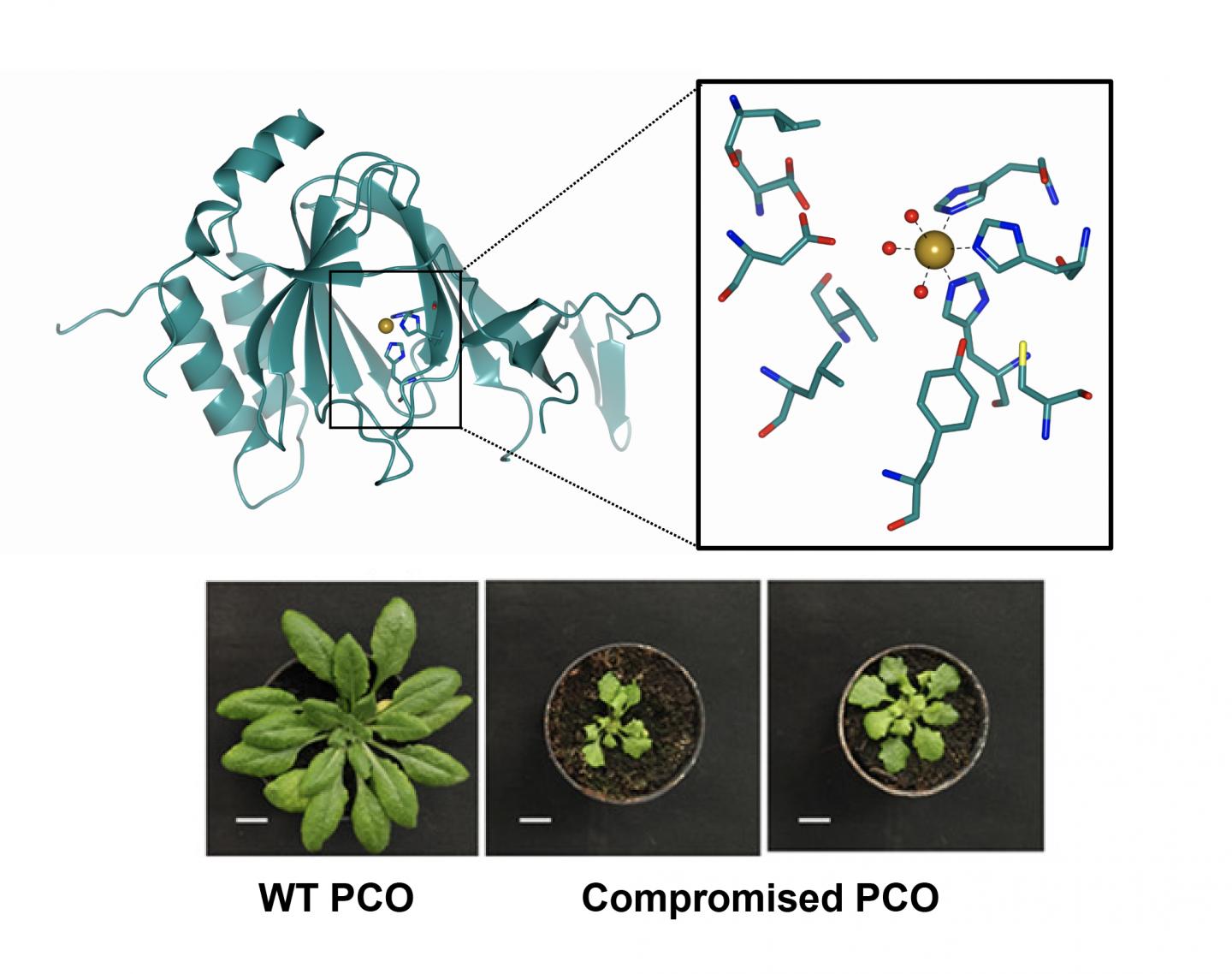
Tweaking proteins in staple foods could help feed a warming world
IMAGE

Credit: University of Oxford/PNAS

Enzymes that control a plant’s response to lower oxygen levels could be manipulated to make vital crops resistant to the impacts of flooding triggered by climate change, new research shows.

Co-author Dr Mark White in the School of Chemistry at the University of Sydney said: “Climate change is a major global issue, not least for its impact on food security. We hope these findings can help produce flood-tolerant crops to help mitigate the devasting social and economic impact of extreme weather events on food production.”

The research, largely done at the University of Oxford, is published today in the Proceedings of the National Academy of Sciences of the United States of America.

Climate change has increased the number and intensity of global flooding events, threatening food security through significant crop loss. Plants, including staple crops such as rice, wheat and barley, can survive temporary periods of flooding by activating energy pathways that don’t rely on air in response to the low oxygen conditions in water.

These responses are controlled by oxygen-sensing enzymes called the Plant Cysteine Oxidases (PCOs), which use oxygen to regulate the stability of proteins that control gene activity.

The research describes the molecular structures of the PCOs for the first time, identifying chemical features that are required for enzyme activity.

“The results provide a platform for future efforts to manipulate the enzyme function in an attempt to create flood-resistant crops that can mitigate the impact of extreme weather events,” Dr White said.

###

Dr White joined the University of Sydney last year as an Australian Research Council Discovery Early Career Research Award recipient. He was previously a postdoctoral researcher at Novo Nordisk, Denmark, and worked at the University of Oxford’s Chemistry Research Laboratory with Dr Emily Flashman, lead researcher on the Plant Cysteine Oxidases paper published today.

DOWNLOAD images of the research and a photo of Dr White at this link.

RESEARCH available upon request.

INTERVIEWS

Dr Mark White

ARC DECRA Research Fellow, School of Chemistry

The University of Sydney

[email protected]

MEDIA ENQUIRIES

Marcus Strom | [email protected] | +61 423 982 485

DECLARATION

This work was supported by the UK Biotechnology and Biological Research Council New Investigator Grant, the European Research Council and the Italian Ministry of Education University and Research.

Media Contact
Marcus Strom
[email protected]

Related Journal Article

http://dx.doi.org/10.1073/pnas.2000206117

Tags: AgricultureBiochemistryBiologyCell BiologyChemistry/Physics/Materials Sciences
Share12Tweet8Share2ShareShareShare2

Related Posts

Researchers Develop High-Efficiency Hydrogen Separation Membranes Using Innovative ‘Mortar-and-Brick’ Design — Chemistry

Researchers Develop High-Efficiency Hydrogen Separation Membranes Using Innovative ‘Mortar-and-Brick’ Design

May 13, 2026
Green Electrosynthesis Paves the Way for Direct Amines Production from Atmospheric Nitrogen — Chemistry

Green Electrosynthesis Paves the Way for Direct Amines Production from Atmospheric Nitrogen

May 13, 2026

Decoding Life’s Chemistry: A Revolutionary Search Engine from Molecules to Meaning

May 13, 2026

How Olympic Weightlifting Harnesses the Barbell’s ‘Whip’ for Peak Performance #ASA190

May 13, 2026
Please login to join discussion

POPULAR NEWS

  • Research Indicates Potential Connection Between Prenatal Medication Exposure and Elevated Autism Risk

    842 shares
    Share 337 Tweet 211
  • New Study Reveals Plants Can Detect the Sound of Rain

    729 shares
    Share 291 Tweet 182
  • Salmonella Haem Blocks Macrophages, Boosts Infection

    62 shares
    Share 25 Tweet 16
  • Breastmilk Balances E. coli and Beneficial Bacteria in Infant Gut Microbiomes

    57 shares
    Share 23 Tweet 14

About

We bring you the latest biotechnology news from best research centers and universities around the world. Check our website.

Follow us

Recent News

Rice Scientists Create Realistic ‘Mock’ Samples to Accelerate Cervical Cancer Test Development

Blood Pressure Medication Shown to Reduce Arterial Stiffness

Adaptive Evolution Shapes Hyperdiverse Cichlid Intestines

Subscribe to Blog via Email

Enter your email address to subscribe to this blog and receive notifications of new posts by email.

Join 82 other subscribers
  • Contact Us

Bioengineer.org © Copyright 2023 All Rights Reserved.

Welcome Back!

Login to your account below

Forgotten Password?

Retrieve your password

Please enter your username or email address to reset your password.

Log In
No Result
View All Result
  • Homepages
    • Home Page 1
    • Home Page 2
  • News
  • National
  • Business
  • Health
  • Lifestyle
  • Science

Bioengineer.org © Copyright 2023 All Rights Reserved.