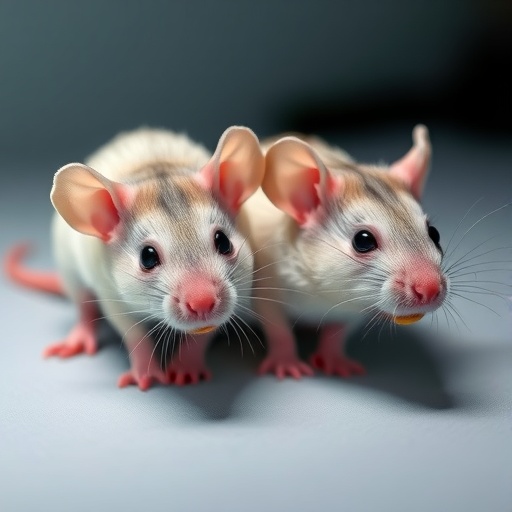
Drug self-administration has long been regarded as one of the most informative laboratory approaches for studying substance use disorder. Unlike experiments in which animals passively receive a drug, self-administration models allow researchers to examine voluntary drug-taking behavior, including how animals learn to obtain a substance, how strongly they work for it and how patterns of use change over time. Because these features more closely resemble important elements of human addiction, the method is widely considered to have exceptional construct and predictive validity among preclinical models.
For decades, however, most self-administration studies have been conducted in freely moving animals. That experimental freedom is valuable, but it can also create a major obstacle for researchers using modern neurotechnologies. Many techniques for recording or manipulating brain activity require the animal’s head to remain stable. High-resolution optical imaging, electrophysiological recordings, fiber-based stimulation and other increasingly sophisticated approaches can be difficult to combine with unrestricted movement, particularly during the precise behavioral sequence surrounding drug seeking and consumption.
A new protocol described in Nature Protocols addresses this challenge by presenting a head-restrained system for self-administration experiments in mice. Developed and validated by Emily M. Doncheck, Rachel E. Clarke, Andrew G. Gordon and colleagues, the approach enables mice to obtain intravenous drugs or oral rewards while their heads remain fixed in a controlled experimental position. The design is intended to preserve the central behavioral logic of self-administration while making the animals more compatible with technologies that require stable access to the brain.
The protocol is not limited to a conceptual description of the method. It provides a practical route for laboratories to build and operate the entire experimental platform, beginning with the custom equipment needed to support head restraint and reward delivery. The researchers also describe the implementation and adaptation of open-source software, which can be used to coordinate behavioral events, detect responses and control the delivery of rewards. Such software-based control is essential because self-administration experiments depend on precise timing between an animal’s action and the resulting drug or nondrug reward.
In the intravenous version of the procedure, mice receive a surgically implanted catheter that provides access to the bloodstream. When the animal performs the designated response, the behavioral system can trigger a controlled infusion through the catheter. This arrangement allows researchers to measure drug-taking behavior under defined schedules of reinforcement while maintaining head stability. The protocol includes guidance on catheter implantation, an operation that requires careful surgical technique, attention to catheter placement and ongoing monitoring to preserve reliable vascular access throughout the study.
The oral self-administration format extends the system beyond injectable substances. It allows mice to work for consumable rewards while remaining head-restrained, creating opportunities to compare drug-related behavior with responses to natural or nondrug reinforcers. That comparison is important in addiction research because it can help distinguish mechanisms specifically associated with drug reward from broader processes involved in motivation, learning, action selection and reward seeking.
Head restraint introduces experimental considerations that do not arise in the same way when animals move freely. Researchers must account for acclimation to the restraint apparatus, the animal’s posture and comfort, the accessibility of the response device and the timing of training. The experimental environment must be designed so that the restraint itself does not overwhelm the behavioral task or obscure the motivation being measured. The protocol therefore emphasizes unique practical decisions involved in conducting these experiments, from equipment construction and software configuration to surgical preparation and behavioral implementation.
By stabilizing the animal’s head, the method could make it easier to align self-administration with real-time measurements of neural activity. Researchers may be able to track how defined populations of neurons respond when a mouse initiates a drug-seeking action, receives an infusion or consumes an oral reward. They could also examine how neural signals evolve during learning, repeated drug exposure and changes in reward value. The key advantage is temporal and spatial coordination: behavioral events can be linked more precisely to measurements from the brain while the animal performs a motivated action.
The authors present the protocol as a standalone guide for researchers with varying levels of experience. Its detailed treatment of hardware, open-source programming, catheter surgery and behavioral procedures is designed to lower the practical barrier to adopting head-fixed self-administration. The broader significance is not that head restraint replaces conventional freely moving experiments, but that it creates another experimental framework for addiction research. By combining voluntary reward-taking behavior with technologies that demand mechanical stability, the approach may help investigators connect the observable actions of drug self-administration with the neural circuits and cellular processes that drive them.
Subject of Research: Head-restrained intravenous and oral drug self-administration in mice
Article Title: Drug self-administration in head-fixed mice
Article References: Doncheck, E.M., Clarke, R.E., Gordon, A.G. et al. Drug self-administration in head-fixed mice. Nat Protoc (2026). https://doi.org/10.1038/s41596-026-01406-1
Image Credits: AI Generated
DOI: https://doi.org/10.1038/s41596-026-01406-1
Keywords: Substance use disorder, addiction research, drug self-administration, head-fixed mice, head restraint, intravenous self-administration, oral rewards, neurotechnology, catheter implantation, open-source software
Tags: behavioral analysis of drug self-administrationbrain activity recording during drug intakedrug self-administrationelectrophysiological studies of addictionhead-fixed mice modelinnovative experimental protocols for miceneurobiological mechanisms of addictionneurotechnology in addiction studiesoptical imaging in head-fixed animalspreclinical models of substance usesubstance use disorder researchvoluntary drug-taking behavior