• HOME
  • NEWS
  • EXPLORE
    • CAREER
      • Companies
      • Jobs
    • EVENTS
    • iGEM
      • News
      • Team
    • PHOTOS
    • VIDEO
    • WIKI
  • BLOG
  • COMMUNITY
    • FACEBOOK
    • INSTAGRAM
    • TWITTER
Tuesday, April 21, 2026
BIOENGINEER.ORG
No Result
View All Result
  • Login
  • HOME
  • NEWS
  • EXPLORE
    • CAREER
      • Companies
      • Jobs
        • Lecturer
        • PhD Studentship
        • Postdoc
        • Research Assistant
    • EVENTS
    • iGEM
      • News
      • Team
    • PHOTOS
    • VIDEO
    • WIKI
  • BLOG
  • COMMUNITY
    • FACEBOOK
    • INSTAGRAM
    • TWITTER
  • HOME
  • NEWS
  • EXPLORE
    • CAREER
      • Companies
      • Jobs
        • Lecturer
        • PhD Studentship
        • Postdoc
        • Research Assistant
    • EVENTS
    • iGEM
      • News
      • Team
    • PHOTOS
    • VIDEO
    • WIKI
  • BLOG
  • COMMUNITY
    • FACEBOOK
    • INSTAGRAM
    • TWITTER
No Result
View All Result
Bioengineer.org
No Result
View All Result
Home NEWS Science News

Scientists to track the reaction of crystals to the electric field

Bioengineer by Bioengineer
November 6, 2018
in Science News
Reading Time: 2 mins read
0
Share on FacebookShare on TwitterShare on LinkedinShare on RedditShare on Telegram
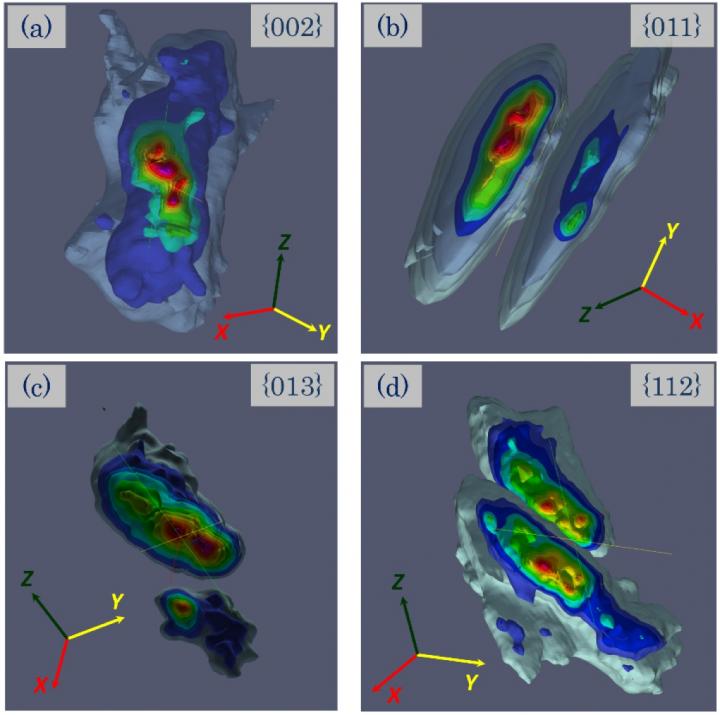
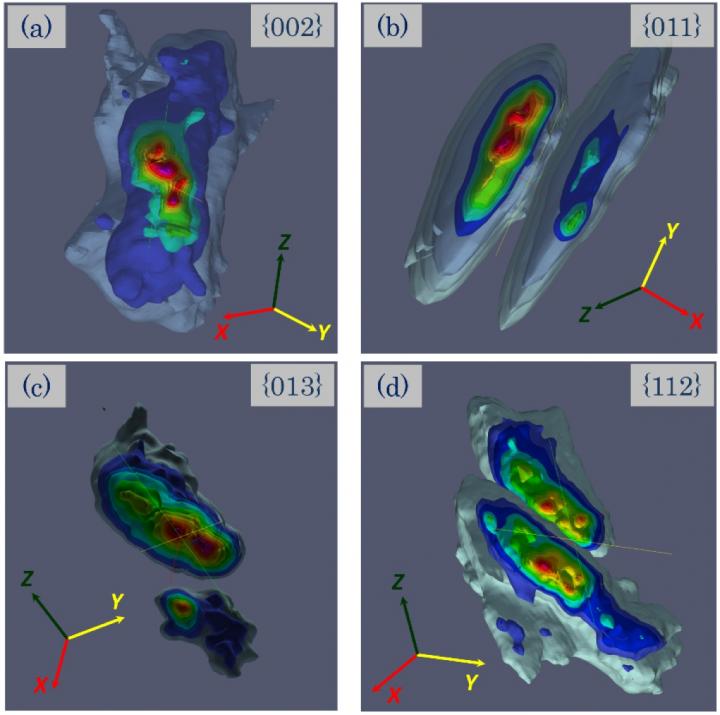
IMAGE

Credit: Peter the Great St. Petersburg Polytechnic University

The international scientific team, which included the researchers and alumni of Peter the Great St. Petersburg Polytechnic University (SPbPU) developed a new method for measuring the response of crystals on the electric field.

The results a collaborative research done at the European Synchrotron Radiation Facility (ESRF) were published in the Journal of Applied Crystallography and appeared on the cover of the October issue.

According to the international scientific group (the team that unites scientists from China, Israel, England, and Russia), this method will help to implement new and improve existing functional materials.

"The study is dedicated to crystalline materials (ferroelectric), which are used in a variety of devices from sonars for submarines to elements of ultrasonic diagnostic devices", said researcher of the Swiss-Norwegian Beam Lines at ESRF and the "Physical electronics" department of SPbPU Dmitry Chernyshov. He stressed that improving the properties of such materials is an extremely important scientific task.

The scientist said that detailed three-dimensional scattering maps were collected during the synchrotron experiments at the ESRF. These maps carry detailed information about the structure of the crystal and its response to the electric field. Next, a mathematical method was invented for extracting the relevant information from such maps. The crystals under study were placed in a special cell for the application of electric field, the cell was developed by the alumni of St. Petersburg Polytechnic University Tikhon Vergentiev as part of his PhD project during his internship at the ESRF.

As Dmitry Chernyshov explained that the structure of crystals can be described in different spatial scales. It is possible to describe the structure at the atomic level or at the level of large blocks of the atomic structure (domains, boundaries between domains, structural defects). When the external conditions change (temperature, pressure, etc.), all components of the structure react differently. The research team studied the response of the material to the electric field, which appears in its atomic and domain structures.

"In the framework of one experiment we were able to see how the different levels of the structural hierarchy react to external influences: if we measure and describe the response of individual components of a complex system, as well as their interaction, it is going to be possible to rationally control the structure and properties of such materials", mentioned Dmitry Chernyshov.

The authors of the study expect that the obtained results will be required by a wide range of specialists: it will help chemists to tune the chemical composition and crystal structure, and materials scientists will use new tools for manipulating the large blocks of structure, domains (domain engineering). According to scientists, this will lead to the improvement of the properties of materials used in ultrasonic diagnostic devices.

###

Media Contact

Raisa Bestugina
[email protected]
7-812-591-6675
@pgpuspb

http://english.spbstu.ru/

Related Journal Article

http://dx.doi.org/10.1107/S1600576718011317

Share12Tweet8Share2ShareShareShare2

Related Posts

Hormonal Signal-H2A.Z Axis Reshapes Fat Cell DNA

April 21, 2026
Shallow Sequencing: Pros and Cons for Strain Analysis

Shallow Sequencing: Pros and Cons for Strain Analysis

April 21, 2026

New 2024 Guidelines Released for Diagnosing and Treating Pediatric Low-Grade Gliomas in China

April 21, 2026

Building and Controlling Cyborg Animals: Merging Biology with Electromechanical Systems for Advanced Applications

April 21, 2026
Please login to join discussion

POPULAR NEWS

  • Research Indicates Potential Connection Between Prenatal Medication Exposure and Elevated Autism Risk

    774 shares
    Share 310 Tweet 194
  • Scientists Investigate Possible Connection Between COVID-19 and Increased Lung Cancer Risk

    65 shares
    Share 26 Tweet 16
  • Salmonella Haem Blocks Macrophages, Boosts Infection

    56 shares
    Share 22 Tweet 14
  • NSF funds machine-learning research at UNO and UNL to study energy requirements of walking in older adults

    101 shares
    Share 40 Tweet 25

About

We bring you the latest biotechnology news from best research centers and universities around the world. Check our website.

Follow us

Recent News

Hormonal Signal-H2A.Z Axis Reshapes Fat Cell DNA

Shallow Sequencing: Pros and Cons for Strain Analysis

New 2024 Guidelines Released for Diagnosing and Treating Pediatric Low-Grade Gliomas in China

Subscribe to Blog via Email

Enter your email address to subscribe to this blog and receive notifications of new posts by email.

Join 79 other subscribers
  • Contact Us

Bioengineer.org © Copyright 2023 All Rights Reserved.

Welcome Back!

Login to your account below

Forgotten Password?

Retrieve your password

Please enter your username or email address to reset your password.

Log In
No Result
View All Result
  • Homepages
    • Home Page 1
    • Home Page 2
  • News
  • National
  • Business
  • Health
  • Lifestyle
  • Science

Bioengineer.org © Copyright 2023 All Rights Reserved.