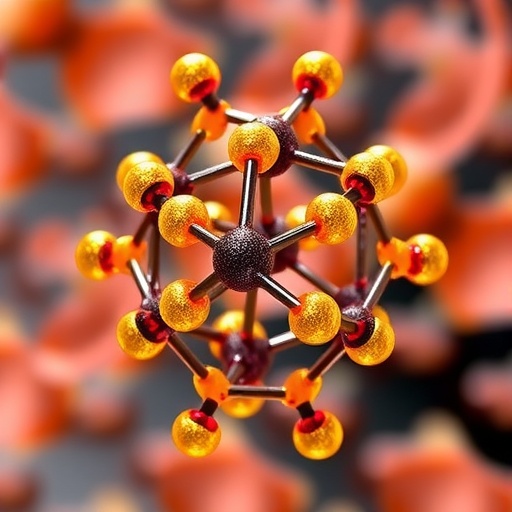
Nanocarbons are poised to become the quiet workhorses of next-generation materials, from gas storage to ultra-low-power electronics. Yet for years, chemists faced a stubborn limitation: most nanocarbon molecules have been assembled by fusing small, flat carbon fragments at their edges, leaving the interior largely untouched. Inner bonds are typically locked into rigid, planar frameworks, making radical rewiring feel nearly off-limits.
Now researchers from Nagoya University report a strategy that treats the interior as a design space rather than a constraint. Using a technique called skeletal editing, they cut and reform bonds inside common flat carbon precursors, enabling structures to reorganize into entirely new geometries. The team targeted chiral nanocarbons—molecules that exist in two mirror-image forms, analogous to left and right hands.
The results are striking not only for complexity but for control. The researchers produced chiral nanocarbons with diverse architectures, including rings containing 10 carbon atoms and a double-helix motif. Even more compelling, the emitted light from these molecules forms a spiral pattern as it propagates, revealing a direct link between chirality and optical behavior.
Functionally, several members of the set exhibit robust charge storage, able to hold multiple electrical charges without structural failure. One molecule maintains its handedness up to 280°C, a temperature stability that broadens practical relevance beyond fragile lab conditions. Another assembles into a porous crystal whose chiral pores can trap and release carbon dioxide, pointing toward improved gas sorbent designs.
Why this matters for the chemistry community is that skeletal editing has mostly been used to build pharmaceuticals, not carbon nanostructures. This work extends the method into a new terrain and addresses two long-standing hurdles: incorporating a ten-membered ring into large chiral nanocarbons and producing both left- and right-handed versions at this scale—an outcome achieved only rarely before with comparable nanocarbon sizes.
The double-helix material self-assembles into a chiral porous framework and represents the first of its kind in that category. It is described as a cousin to metal-organic frameworks (MOFs), a class celebrated by the 2025 Nobel Prize in Chemistry, suggesting that carbon-based alternatives may soon compete in gas-capture performance.
Overall, the study frames a broader shift in molecular engineering: if chemists can reliably edit “inside-out,” then the space of reachable nanocarbon shapes—and their associated properties—could expand dramatically. The authors hope this will inspire researchers to search for what else becomes possible when the interior is no longer off-limits.
Keywords
chiral nanocarbon, skeletal editing, carbon dioxide capture, spiral photonics, molecular chirality, double helix, porous crystals, charge storage
Subject of Research: Nanocarbon synthesis; chiral porous materials
Article Title: Skeletal transformation to chiral nanocarbon molecules
News Publication Date: 28-Jul-2026
Web References: https://doi.org/10.1038/s41467-026-75280-6
References: Nature Communications (DOI: 10.1038/s41467-026-75280-6)
Image Credits: Graduate School of Engineering, Nagoya University