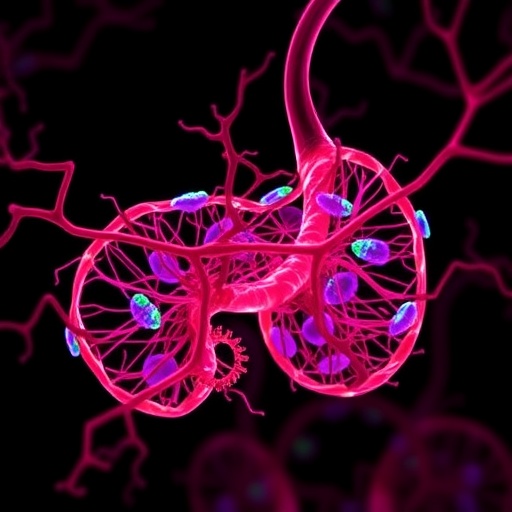
In a groundbreaking advancement in pancreatic cancer research, scientists at The University of Texas MD Anderson Cancer Center have unveiled a pivotal epigenetic regulator, DPY30, which plays an indispensable role in maintaining genomic stability during DNA replication stress in pancreatic tumors. This discovery not only expands the fundamental understanding of tumor biology but also opens promising new avenues for therapeutic intervention, especially in the realm of immunotherapy, where treatment options for pancreatic cancer have historically been limited.
DPY30, traditionally recognized as a constituent of the COMPASS complex involved in gene transcription regulation, has now been identified as a crucial orchestrator at the replication forks—the dynamic sites where DNA synthesis takes place. During the intricate process of DNA replication, replication forks act as bifurcation points where the parental DNA strands separate and serve as templates for the nascent strands. The integrity of these replication forks is paramount, as replication stress—common in rapidly dividing cancer cells—can lead to fork stalling or collapse, precursors to genomic instability and tumor progression.
The team led by Francesca Citron, Pharm.D., Ph.D., alongside key collaborators in genomic and cancer biology, demonstrated that DPY30 enhances the recruitment of epigenetic activation marks specifically at these stressed replication forks. This targeted activity stabilizes the replication machinery under duress, effectively enabling pancreatic tumor cells to circumvent lethal DNA damage and sustain their proliferative capacity. This function delineates a novel epigenetic ‘decoupling’ mechanism whereby DPY30 selectively operationalizes in replication stress contexts, distinct from its canonical role in modulating gene transcription.
Experimental depletion of DPY30 unveiled a dramatic shift in tumor cell behavior: destabilization of replication forks precipitated marked genomic instability. This loss of genomic fidelity did not merely hinder cancer cell viability—it also triggered a cascade of inflammatory signaling pathways. The resultant pro-inflammatory milieu fostered pronounced immune cell infiltration into the tumor microenvironment. Strikingly, these previously immunologically “cold” tumors were converted into “hot” tumors, characterized by heightened responsiveness to immune checkpoint blockade therapies—a transformative finding with significant clinical implications.
Patient-derived samples further substantiated these molecular insights. Tumors exhibiting elevated DPY30 expression correlated with higher histological grades and poorer prognostic outcomes, underscoring DPY30’s dual role as both a facilitator of tumor aggressiveness and a biomarker indicative of reduced immunotherapy sensitivity. This inverse correlation offers a precision medicine opportunity, where DPY30 levels could guide therapeutic stratification and patient selection for immunomodulatory treatments.
The mechanistic insights into DPY30’s role in replication fork stabilization provide a novel therapeutic target. Inhibiting DPY30 function could exacerbate replication stress beyond the tolerable threshold of cancer cells, inducing catastrophic genomic damage while simultaneously igniting potent antitumor immune responses. Such an approach stands to synergistically amplify the efficacy of existing immunotherapeutic agents, transforming the treatment landscape for pancreatic cancer, a malignancy notoriously refractory to standard therapies.
While the translational potential is immense, researchers urge cautious optimism as further preclinical validation and safety profiling are imperative prior to clinical deployment. Unraveling the precise molecular intermediates connecting DPY30 loss to immune activation remains an active area of investigation, with the goal of optimizing combinational regimens and minimizing unintended toxicities.
This paradigm-shifting research underscores the intricate interplay between epigenetic regulation, DNA replication fidelity, and immune dynamics within the tumor microenvironment. It exemplifies how dissecting fundamental cancer cell biology can unveil vulnerabilities exploitable by therapeutic innovation, particularly in malignancies where conventional strategies falter.
Funded by prestigious grants including the AACR-AstraZeneca START Grant and the Horizon Europe research program, and published in the esteemed journal Cancer Research, this study represents a collaborative triumph spanning genomic medicine, cancer biology, and immunology. It propels DPY30 to the forefront of epigenetic research as both a prognostic biomarker and a daring therapeutic target in pancreatic cancer.
As research progresses, DPY30 stands to revolutionize the therapeutic paradigm for pancreatic cancer, harnessing the power of epigenetic modulation to breach tumor defenses and unleash the immune system’s antitumor potential. This discovery invigorates hope for patients confronting one of the deadliest cancer types and marks a seminal moment in precision oncology.
In conclusion, by elucidating how DPY30 maintains replication fork stability and suppresses immune activation within pancreatic tumors, MD Anderson researchers have uncovered a master regulator that could redefine treatment strategies. Targeting DPY30 might transform immunotherapy resistance into vulnerability, setting the stage for more effective, personalized interventions against pancreatic cancer’s somber prognosis.
Subject of Research: Pancreatic cancer, epigenetic regulation, DNA replication stress, immunotherapy.
Article Title: DPY30: An Epigenetic Switch Governing Replication Fork Stability and Immunotherapy Sensitization in Pancreatic Cancer.
News Publication Date: April 9, 2026.
Web References:
University of Texas MD Anderson Cancer Center: https://www.mdanderson.org/
Pancreatic Cancer: https://www.mdanderson.org/cancer-types/pancreatic-cancer.html
Immunotherapy: https://www.mdanderson.org/treatment-options/immunotherapy.html
Cancer Research Journal: https://aacrjournals.org/cancerres/article/doi/10.1158/0008-5472.CAN-25-3849/782666/DPY30-is-an-epigenetic-decoupler-linking
Keywords: Pancreatic cancer, DPY30, replication stress, epigenetic regulation, genomic stability, immune infiltration, immunotherapy, cancer biology, COMPASS complex, DNA replication, immune checkpoint blockade, predictive biomarker.
Tags: COMPASS complex role in gene transcriptionDNA replication stress in tumorsDNA synthesis and replication fork dynamicsDPY30 epigenetic regulator functionenhancing immunotherapy response in pancreatic cancerepigenetic activation marks at replication forksepigenetic mechanisms in tumor biologygenomic stability in cancer cellspancreatic cancer immunotherapy targetspancreatic tumor genomic instabilityreplication fork integrity in cancertherapeutic strategies for pancreatic tumors