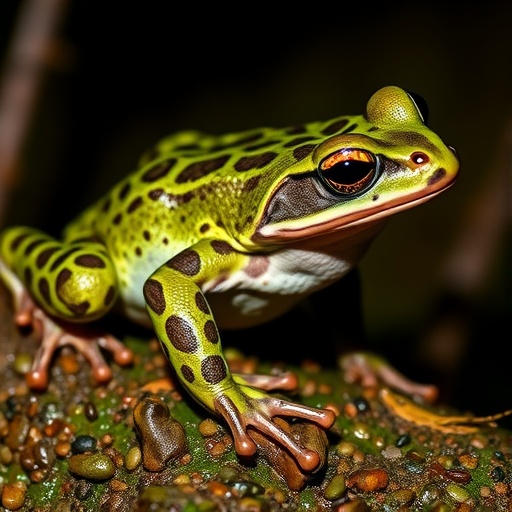
A Global Study Warns That Climate Change Could Turn Frog Populations Younger, Smaller and Shorter-Lived
Frogs, toads and their close relatives may be heading toward a future in which populations are not merely smaller in number, but younger, shorter-lived and physically smaller, according to a broad analysis of amphibian biology. Researchers compiled published information on 184 anuran species belonging to 22 families and examined the forces that shape three key features of their age structure: maximum age, average age and the age at which individuals become sexually mature. Their results suggest that climate change could reshape amphibian populations from the inside out. Rather than simply reducing abundance, a warmer and more environmentally stressful world may alter which age groups survive, how long animals live and how quickly they reproduce. The study, published in Frontiers in Zoology, offers one of the most wide-ranging efforts to connect amphibian age patterns with climate, geography, habitat and body size.
Age structure is a powerful but often overlooked measure of population health. A population dominated by juveniles may be growing, recovering after a disturbance or losing adults rapidly. A population made up mostly of older individuals may indicate low recruitment, when too few young animals survive to replace breeding adults. For conservation biologists, these patterns can reveal pressures that a simple population count misses. The researchers focused on anurans because their ectothermic physiology makes them especially sensitive to environmental conditions. Unlike mammals and birds, frogs and toads do not generate enough internal heat to maintain a stable body temperature. Their metabolism, development, movement, immune function and reproduction are therefore strongly influenced by external temperature and moisture. Age-related traits can expose the cumulative effects of those influences across an animal’s life.
The study brought together estimates of lifespan and maturation from existing scientific literature, then evaluated them against several categories of environmental and biological variables. Maximum age represents the upper limit recorded or estimated for a species, while average age describes the typical age distribution within a population. Age at sexual maturity indicates how quickly an individual enters the reproductive pool. These traits are related but not interchangeable. A species may mature early yet have a short lifespan, or mature later and invest more energy in survival and prolonged growth. The researchers also considered geographical gradients, climate variables, broad habitat types and body size, while examining whether males and females responded in the same way. By comparing patterns across many species, the analysis sought to separate general ecological signals from the peculiarities of individual frogs.
One of the study’s less intuitive findings was that broad habitat categories did not significantly determine the age-related traits examined. Frogs living in forests, grasslands, wetlands or other generalized habitat classes did not show consistent differences in maximum age, average age or maturity age simply because of those labels. The researchers suggest that microhabitats may help explain the result. A “forest,” for example, contains shaded pools, leaf litter, tree cavities, sun-exposed edges and streams, each with its own temperature and humidity profile. Small-scale refuges can buffer animals from the average conditions measured across a much larger landscape. A frog sheltering beneath damp vegetation may experience a very different climate from the surrounding region. This buffering capacity can blur the effects of broad habitat classification and demonstrates why conservation assessments based only on coarse land-cover maps may miss biologically important variation.
The clearest patterns emerged when the researchers examined sex-specific responses. Male and female anurans may face different energetic demands because reproduction is not divided equally between them. In many species, males invest energy in calling, territorial defense and mate attraction, while females must produce eggs, which can represent a substantial physiological cost. These divergent strategies can create different trade-offs between growth, reproduction and survival. Environmental stress may therefore influence the sexes in distinct ways. A warmer or drier environment could increase the metabolic costs of maintenance, reduce feeding opportunities or intensify competition, forcing males and females to allocate limited energy differently. The study’s finding that age traits respond differently by sex suggests that population-level averages may conceal important demographic changes. A population could appear stable overall while one sex is maturing earlier, dying younger or becoming less common among older individuals.
Body size also matters because it is closely tied to growth rate, metabolism and life history. Larger amphibians often require more time to develop and may reach sexual maturity later, but they can also possess greater energy reserves or produce more offspring. Smaller-bodied animals may mature sooner, yet potentially have less capacity to withstand periods of starvation, dehydration or temperature stress. Climate change can affect these relationships through several pathways. Higher temperatures generally accelerate biochemical reactions within an ectotherm’s viable range, which can speed development but also raise energy demands. If food availability does not keep pace, faster metabolism may leave less energy for growth and repair. Heat extremes can directly damage tissues, disrupt water balance and increase vulnerability to disease. The combined result may be a shift toward smaller adult bodies and altered schedules of maturation, especially where environmental stress repeatedly interrupts growth.
The researchers then projected how anuran age structure might change under different climate-change scenarios. Across those future projections, the broad signal was a widespread decline in both lifespan and average age, accompanied by a shift toward younger populations and a general tendency toward smaller body size. The study does not imply that every species will respond identically or that all populations will decline at the same rate. Instead, it identifies a directional risk that could affect many lineages. Shorter lifespans would reduce the time individuals have to reproduce, while younger population structures could indicate elevated mortality among adults or reduced survival into older age classes. If body size declines at the same time, females in some species could carry fewer or smaller eggs, and males could have less energy for calling and territorial behavior. Such changes could compound one another, creating demographic effects that are larger than any single climate variable would suggest.
The implications extend beyond frogs themselves. Anurans occupy important positions in food webs, consuming insects and other invertebrates while serving as prey for fish, reptiles, birds and mammals. Their permeable skin allows water and dissolved substances to pass readily into their bodies, making them sensitive to environmental contamination and changes in moisture. Because they often respond quickly to ecological disruption, amphibians are widely regarded as indicators of environmental health. A climate-driven reduction in age and size could therefore signal broader changes in wetlands, forests and freshwater systems. It could also influence ecosystem processes: smaller or less abundant amphibians may consume different prey, provide less food for predators or transport fewer nutrients between aquatic and terrestrial environments. Monitoring only the number of calling males or the presence of a species may not reveal these deeper transformations.
For conservation, the findings point toward a need to track demographic details rather than relying solely on species lists and total counts. Age at maturity, the proportion of juveniles and adults, maximum observed age, body size and sex-specific survival could all become valuable indicators of climate stress. Protecting microhabitats may be particularly important because shaded retreats, moist leaf litter, spring-fed pools and other localized features can moderate temperature and humidity. Maintaining networks of such refuges could give amphibians opportunities to avoid the most severe conditions even when regional climate trends become less favorable. Conservation planning may also need to account for different requirements between males and females, especially during breeding seasons. The researchers’ analysis provides a foundation for these strategies by showing that age structure is shaped by an interaction among climate, biology and local environment—not by habitat labels alone.
The study also highlights the limits of predicting the future from broad averages. Published records of amphibian age can vary in quality, geographic coverage and measurement method, and age estimates are difficult to obtain for animals that are small, secretive and short-lived. Future work will need more long-term field studies, standardized aging techniques and monitoring that follows individuals across their lives. Even so, the cross-species analysis delivers a striking warning: climate change may make anuran populations look younger before their disappearance becomes obvious. A pond may still echo with calls, yet contain fewer older breeders, smaller adults and animals living under increasingly compressed life histories. Understanding that hidden demographic shift could be crucial to recognizing amphibian decline early enough for conservation to make a difference.
Subject of Research: Age structure, lifespan, sexual maturity and climate responses in frogs and toads
Article Title: Uncovering the drivers of anuran age structure
Article References: “Uncovering the drivers of anuran age structure,” Frontiers in Zoology
Image Credits: AI Generated
DOI: 10.1186/s12983-026-00630-5
Keywords: anurans, amphibian lifespan, age structure, climate change, sexual maturity, environmental stress, body size, conservation biology