

• HOME
  • NEWS
  • EXPLORE
    • CAREER
      • Companies
      • Jobs
    • EVENTS
    • iGEM
      • News
      • Team
    • PHOTOS
    • VIDEO
    • WIKI
  • BLOG
  • COMMUNITY
    • FACEBOOK
    • INSTAGRAM
    • TWITTER
Sunday, May 10, 2026
BIOENGINEER.ORG
No Result
View All Result
  • Login
  • HOME
  • NEWS
  • EXPLORE
    • CAREER
      • Companies
      • Jobs
        • Lecturer
        • PhD Studentship
        • Postdoc
        • Research Assistant
    • EVENTS
    • iGEM
      • News
      • Team
    • PHOTOS
    • VIDEO
    • WIKI
  • BLOG
  • COMMUNITY
    • FACEBOOK
    • INSTAGRAM
    • TWITTER
  • HOME
  • NEWS
  • EXPLORE
    • CAREER
      • Companies
      • Jobs
        • Lecturer
        • PhD Studentship
        • Postdoc
        • Research Assistant
    • EVENTS
    • iGEM
      • News
      • Team
    • PHOTOS
    • VIDEO
    • WIKI
  • BLOG
  • COMMUNITY
    • FACEBOOK
    • INSTAGRAM
    • TWITTER
No Result
View All Result
Bioengineer.org
No Result
View All Result
Home NEWS Science News Health

Scientists eye role of a fatty acid deficiency in sight-robbing condition

Bioengineer by Bioengineer
January 30, 2023
in Health
Reading Time: 2 mins read
0
Biomedical researcher
Share on FacebookShare on TwitterShare on LinkedinShare on RedditShare on Telegram

As the number of children born with a vision-impairing condition known as optic nerve hypoplasia (ONH) increases, scientists with the Fralin Biomedical Research Institute at VTC are investigating potential ways to prevent and treat the disease.
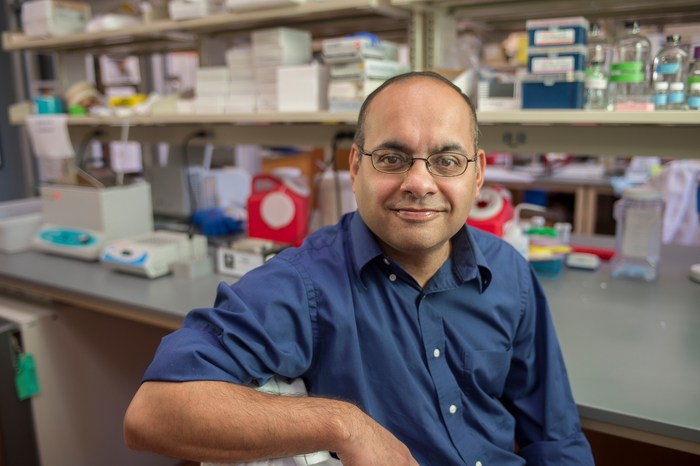
Biomedical researcher

Credit: Virginia Tech

As the number of children born with a vision-impairing condition known as optic nerve hypoplasia (ONH) increases, scientists with the Fralin Biomedical Research Institute at VTC are investigating potential ways to prevent and treat the disease.

The condition occurs when optic nerves that transmit signals from the retina to the brain are underdeveloped at birth, causing moderate to severe vision loss in children, according to the National Institutes of Health (NIH). It has no known cause, and families touched by the disorder have few medical solutions. 

With support from a four-year, $1.56 million grant from the National Eye Institute of the NIH, Virginia Tech scientists, led by principal investigator Konark Mukherjee, will explore whether a prenatal deficiency of an important fatty acid known as arachidonic acid contributes to the disorder. 

If so, the discovery could explain why ONH in babies has been associated with factors such as young maternal age and prenatal exposures to smoking, alcohol, recreational drugs, anti-depressants, anticonvulsants, and other agents.

As the research proceeds, Mukherjee will test whether arachidonic acid supplementation improves or prevents ONH in two independent mouse models of the disease.

“Currently, there are no effective medical treatments, but if we are correct, the intervention may be a simple nutritional supplementation for the population at risk,” said Mukherjee, whose research seeks to better understand neurodevelopment and provide new insights into childhood illnesses. 

Optic nerve hypoplasia accounts for about 15 percent to 25 percent of infants with serious vision loss, according to the NIH, and although precise numbers are unavailable, the incidence of the disease seems to be rising.



Share12Tweet8Share2ShareShareShare2

Related Posts

Evaluating Digoxin Use in Patients with Symptomatic Rheumatic Heart Disease

May 10, 2026

Evaluating the Effectiveness and Safety of Digitalis Glycosides in Treating Heart Failure

May 10, 2026

Urdu Fall Risk Questionnaire Adapted for Elderly

May 10, 2026

Key Pharmacological Markers for HIV Prevention in MSM

May 10, 2026

POPULAR NEWS

  • Research Indicates Potential Connection Between Prenatal Medication Exposure and Elevated Autism Risk

    840 shares
    Share 336 Tweet 210
  • New Study Reveals Plants Can Detect the Sound of Rain

    727 shares
    Share 290 Tweet 181
  • Scientists Investigate Possible Connection Between COVID-19 and Increased Lung Cancer Risk

    68 shares
    Share 27 Tweet 17
  • Salmonella Haem Blocks Macrophages, Boosts Infection

    61 shares
    Share 24 Tweet 15

About

We bring you the latest biotechnology news from best research centers and universities around the world. Check our website.

Follow us

Recent News

Evaluating Digoxin Use in Patients with Symptomatic Rheumatic Heart Disease

Evaluating the Effectiveness and Safety of Digitalis Glycosides in Treating Heart Failure

Urdu Fall Risk Questionnaire Adapted for Elderly

Subscribe to Blog via Email

Enter your email address to subscribe to this blog and receive notifications of new posts by email.

Join 82 other subscribers
  • Contact Us

Bioengineer.org © Copyright 2023 All Rights Reserved.

Welcome Back!

Login to your account below

Forgotten Password?

Retrieve your password

Please enter your username or email address to reset your password.

Log In
No Result
View All Result
  • Homepages
    • Home Page 1
    • Home Page 2
  • News
  • National
  • Business
  • Health
  • Lifestyle
  • Science

Bioengineer.org © Copyright 2023 All Rights Reserved.