

• HOME
  • NEWS
  • EXPLORE
    • CAREER
      • Companies
      • Jobs
    • EVENTS
    • iGEM
      • News
      • Team
    • PHOTOS
    • VIDEO
    • WIKI
  • BLOG
  • COMMUNITY
    • FACEBOOK
    • INSTAGRAM
    • TWITTER
Thursday, April 30, 2026
BIOENGINEER.ORG
No Result
View All Result
  • Login
  • HOME
  • NEWS
  • EXPLORE
    • CAREER
      • Companies
      • Jobs
        • Lecturer
        • PhD Studentship
        • Postdoc
        • Research Assistant
    • EVENTS
    • iGEM
      • News
      • Team
    • PHOTOS
    • VIDEO
    • WIKI
  • BLOG
  • COMMUNITY
    • FACEBOOK
    • INSTAGRAM
    • TWITTER
  • HOME
  • NEWS
  • EXPLORE
    • CAREER
      • Companies
      • Jobs
        • Lecturer
        • PhD Studentship
        • Postdoc
        • Research Assistant
    • EVENTS
    • iGEM
      • News
      • Team
    • PHOTOS
    • VIDEO
    • WIKI
  • BLOG
  • COMMUNITY
    • FACEBOOK
    • INSTAGRAM
    • TWITTER
No Result
View All Result
Bioengineer.org
No Result
View All Result
Home NEWS Science News Biology

Scientists examine the relative impact of proximity to seed sources

Bioengineer by Bioengineer
August 17, 2018
in Biology
Reading Time: 2 mins read
0
Share on FacebookShare on TwitterShare on LinkedinShare on RedditShare on Telegram
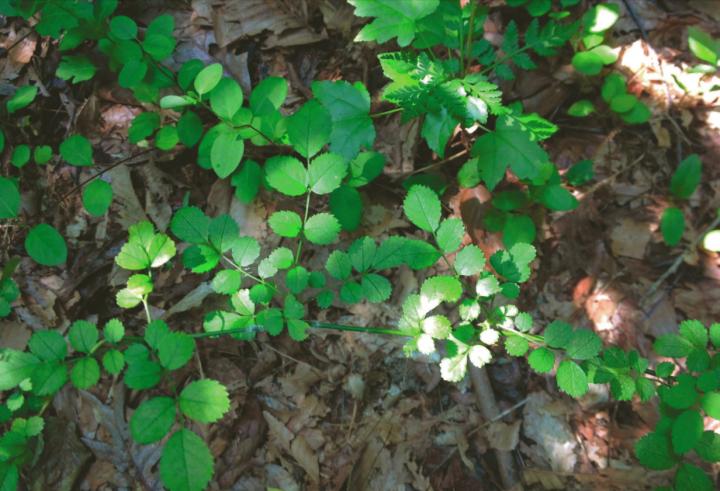
IMAGE

Credit: Eva Kinnebrew

A new research study published in the journal Invasive Plant Science and Management tackles an important, unresolved question in the biology of invasive plants. Which is most important to the establishment of new invasive communities – proximity to seed sources, canopy disturbance, or soil disturbance?

A research team from Miami University decided to compare those three factors in a mature Maryland forest where the invasive species wine raspberry, Japanese barberry, multiflora rose and Japanese stiltgrass are found.

Twice over a three-year interval, scientists conducted a complete census of invasive plants growing in a nine-hectare plot. Any invasives they found were mapped relative to the forest canopy, soil disturbances and an index of 'seed rain' that was based on proximity to reproducing plants and the distances seeds disperse.

The team found that seed rain was a significant predictor of where new plants of wine raspberry, Japanese barberry and Japanese stiltgrass established. Not enough seed sources were found to assess the impact of seed rain on multiflora rose.

Gaps in the forest canopy were found to contribute to the establishment of multiflora rose and Japanese stiltgrass. Canopy gaps also promoted fruit production by Japanese barberry and wine raspberry – interacting with seed rain to increase the number of plants establishing in and near these areas.

Soil disturbances predicted the establishment of Japanese barberry, but not the other three invasive plants.

"These findings are especially useful for land managers with limited resources," says David Gorchov, Ph.D., a professor at Miami University. "If the invasive plants you are battling have seed production or seedling growth strongly associated with new canopy gaps, you can target your control efforts in those areas with a high likelihood of success."

###

Full text of the article "Seed Rain and Disturbance Impact Recruitment of Invasive Plants in Upland Forest" is available in Volume 11, Issue 2 of the journal Invasive Plant Science and Management.

About Invasive Plant Science and Management

Invasive Plant Science and Management is a journal of the Weed Science Society of America, a nonprofit scientific society focused on weeds and their impact on the environment. The publication focuses on invasive plant species. To learn more, visit http://www.wssa.net.

Media Contact

Natalie Warrender
[email protected]

http://www.cambridge.org/

Original Source

http://blog.journals.cambridge.org/2018/07/06/research-focuses-on-factors-that-fuel-new-plant-invasions/ http://dx.doi.org/10.1017/inp.2018.14


Share12Tweet8Share2ShareShareShare2

Related Posts

UCLA Scientists Innovate Technique to Engineer Custom Miniature Artificial Organs Within Cells

April 29, 2026
Gene Expression Shifts at Different Stages Uncover Early Signals of Cellular Aging — Biology

Gene Expression Shifts at Different Stages Uncover Early Signals of Cellular Aging

April 29, 2026

New Online Game Uncovers the Science Behind Animal Camouflage

April 29, 2026

Environmental DNA from NYC’s East River Uncovers Insights into Local Human and Wildlife Populations

April 29, 2026
Please login to join discussion

POPULAR NEWS

  • Research Indicates Potential Connection Between Prenatal Medication Exposure and Elevated Autism Risk

    829 shares
    Share 332 Tweet 207
  • New Study Reveals Plants Can Detect the Sound of Rain

    709 shares
    Share 283 Tweet 177
  • Scientists Investigate Possible Connection Between COVID-19 and Increased Lung Cancer Risk

    67 shares
    Share 27 Tweet 17
  • Salmonella Haem Blocks Macrophages, Boosts Infection

    60 shares
    Share 24 Tweet 15

About

We bring you the latest biotechnology news from best research centers and universities around the world. Check our website.

Follow us

Recent News

Rising Spread of Severe Fever with Thrombocytopenia

Unraveling Mid-Latitude Winter Precipitation Uncertainties

Unraveling Vineyard Pesticide Risks with Structural Modeling

Subscribe to Blog via Email

Success! An email was just sent to confirm your subscription. Please find the email now and click 'Confirm' to start subscribing.

Join 82 other subscribers
  • Contact Us

Bioengineer.org © Copyright 2023 All Rights Reserved.

Welcome Back!

Login to your account below

Forgotten Password?

Retrieve your password

Please enter your username or email address to reset your password.

Log In
No Result
View All Result
  • Homepages
    • Home Page 1
    • Home Page 2
  • News
  • National
  • Business
  • Health
  • Lifestyle
  • Science

Bioengineer.org © Copyright 2023 All Rights Reserved.