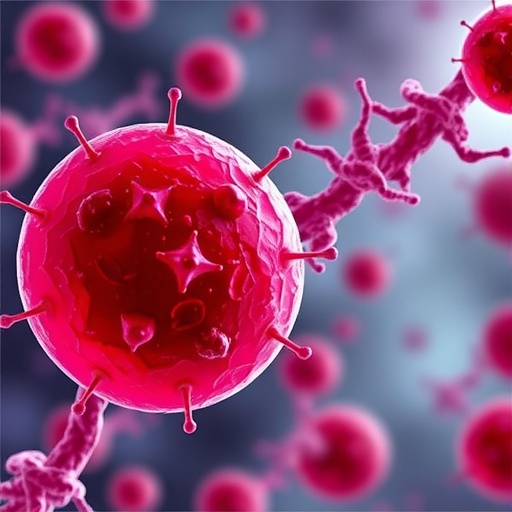
In a groundbreaking study published in the prestigious journal Science, researchers at the University of Maryland School of Medicine (UMSOM) have unveiled a previously unrecognized mechanism by which maturing red blood cells (erythroblasts) acquire the essential iron-containing molecule heme during their final stages of differentiation. This discovery challenges longstanding dogma in hematology and opens new avenues for treatment in genetic anemias such as β-thalassemia, potentially revolutionizing how scientists and clinicians approach blood disorders associated with hemoglobin synthesis.
Red blood cells are the primary mediators of oxygen transport in humans, a myriad function chiefly accomplished through hemoglobin, the heme-containing oxygen-binding protein. During their development, erythroid precursors undergo profound morphological and biochemical changes, notably the loss of mitochondria and other organelles crucial for endogenous heme biosynthesis. This apparent paradox—how erythroblasts maintain sufficient hemoglobin production after shedding their mitochondrial heme factories—posed an unresolved question within hematopoiesis research for decades.
The team, led by Dr. Iqbal Hamza, employed cutting-edge single-cell RNA sequencing techniques to analyze immature red blood cells in murine models. Their work identified a marked expression increase in the gene encoding Heme Responsive Gene 1 (HRG1), a transporter protein previously characterized in invertebrate species. They discovered that HRG1 functions to import extracellular heme into erythroblasts, thereby supplementing their diminished endogenous synthesis capacity. This novel cell-nonautonomous pathway enables developing red blood cells to uptake heme from surrounding cells during periods of heightened physiological demand, such as hypoxia or acute blood loss.
Functional validation of HRG1’s pivotal role was achieved through the creation of genetically engineered mice lacking the HRG1 gene. These knockout models exhibited impaired erythropoiesis, characterized by reduced hemoglobinization of erythroblasts and increased susceptibility to anemia under stressful conditions that require accelerated red blood cell production. The findings illustrate that HRG1-mediated heme import is essential for red cell maturation and ensures the maintenance of systemic oxygen transport capabilities during hematopoietic stress.
Beyond exploring normal physiology, the researchers extended their analyses to a murine model of β-thalassemia, a prevalent inherited hemoglobinopathy characterized by imbalanced globin chain production and toxic free heme accumulation. Strikingly, heterozygous deletion of HRG1 in this model ameliorated symptoms by decreasing heme overload, leading to improved red blood cell production and attenuated anemia. This suggests that modulating HRG1 activity could be a promising therapeutic strategy to mitigate the deleterious effects of excess free heme in β-thalassemia patients.
Dr. Hamza’s findings reverberate beyond thalassemia, holding implications for a spectrum of hemoglobin disorders, including sickle cell disease, in which aberrant heme metabolism contributes to oxidative stress and tissue damage. By identifying HRG1 as a crucial regulator of intercellular heme traffic, this research establishes a foundational framework for developing drugs aimed at fine-tuning heme homeostasis, potentially reducing inflammation and improving outcomes in multiple hematological diseases.
Mechanistically, HRG1 localizes on the plasma membranes of maturing erythroblasts, where it functions as a transporter to shuttle heme molecules from the extracellular milieu into the cytosol. This imported heme is subsequently incorporated into globin chains to assemble functional hemoglobin molecules. The researchers emphasize that the interplay between mitochondrial heme biosynthesis and HRG1-mediated heme import requires further elucidation to fully understand the quantitative contributions of each source during various physiological and pathological states.
The study also highlights the technical innovation required to “visualize” heme dynamics at the subcellular level. Advanced imaging modalities and heme-sensitive probes are now being developed by Dr. Hamza’s lab to directly observe heme trafficking within individual erythroid cells, a challenging feat given the molecule’s chemical properties and the dynamic cellular environment. These methodological advances promise to deepen insight into cellular heme metabolism and pave the way for precision targeting of heme-related pathways.
The translational potential of this research extends to the global burden of iron-deficiency anemia, the most common nutritional disorder worldwide. Current interventions primarily focus on iron supplementation, yet these strategies often fail to address defective heme incorporation in erythroblasts. Targeting HRG1 to optimize heme delivery offers a novel therapeutic avenue that could improve hemoglobin production efficiency and reduce the morbidity and mortality associated with anemia on a population level.
Dr. Hamza’s multidisciplinary team, incorporating molecular biology, animal modeling, and clinical expertise, underscores the importance of collaborative research in tackling complex physiological questions. Their efforts were supported by funding from the National Institutes of Health, and their findings symbolize a significant leap forward in our understanding of erythropoiesis and heme biology.
Looking forward, the exploration of HRG1 agonists or antagonists might emerge as a promising frontier in drug discovery, enabling clinicians to modulate red blood cell production and hemoglobinization with unprecedented specificity. This approach could be particularly transformative in scenarios of hematopoietic stress and chronic blood disorders, offering a complement or alternative to existing therapies like transfusions or gene therapy.
In sum, the discovery of HRG1-mediated heme import revolutionizes the conventional view of red blood cell maturation by revealing an unexpected mode of intercellular heme acquisition. This finding reshapes our fundamental understanding of hemoglobin biosynthesis and sets the stage for innovative interventions aimed at a wide array of blood disorders, heralding a new era in hematology research.
Subject of Research: Animals
Article Title: A cell-nonautonomous heme acquisition pathway enables erythroid hemoglobinization under stress
News Publication Date: 23-Apr-2026
Web References: http://dx.doi.org/10.1126/science.aea0552
Image Credits: University of Maryland School of Medicine
Keywords: Hemoglobin disorders, Anemia, Thalassemia, Blood cells, Hemoglobin
Tags: erythroblast hemoglobin synthesis mechanismextracellular heme uptake in erythroblastsgenetic anemia treatment advancesheme acquisition in erythroid precursorsheme biosynthesis during erythropoiesisHRG1 heme transporter functionmitochondrial loss impact on red blood cellsnovel mechanisms in red blood cell differentiationnovel red blood cell heme production pathwaysingle-cell RNA sequencing in hematologyUniversity of Maryland hematology researchβ-thalassemia hemoglobin synthesis