• HOME
  • NEWS
  • EXPLORE
    • CAREER
      • Companies
      • Jobs
    • EVENTS
    • iGEM
      • News
      • Team
    • PHOTOS
    • VIDEO
    • WIKI
  • BLOG
  • COMMUNITY
    • FACEBOOK
    • INSTAGRAM
    • TWITTER
Thursday, June 25, 2026
BIOENGINEER.ORG
No Result
View All Result
  • Login
  • HOME
  • NEWS
  • EXPLORE
    • CAREER
      • Companies
      • Jobs
        • Lecturer
        • PhD Studentship
        • Postdoc
        • Research Assistant
    • EVENTS
    • iGEM
      • News
      • Team
    • PHOTOS
    • VIDEO
    • WIKI
  • BLOG
  • COMMUNITY
    • FACEBOOK
    • INSTAGRAM
    • TWITTER
  • HOME
  • NEWS
  • EXPLORE
    • CAREER
      • Companies
      • Jobs
        • Lecturer
        • PhD Studentship
        • Postdoc
        • Research Assistant
    • EVENTS
    • iGEM
      • News
      • Team
    • PHOTOS
    • VIDEO
    • WIKI
  • BLOG
  • COMMUNITY
    • FACEBOOK
    • INSTAGRAM
    • TWITTER
No Result
View All Result
Bioengineer.org
No Result
View All Result
Home NEWS Science News Chemistry

Scientists discover new antibiotic in tropical forest

Bioengineer by Bioengineer
October 8, 2019
in Chemistry
Reading Time: 2 mins read
0
IMAGE
Share on FacebookShare on TwitterShare on LinkedinShare on RedditShare on Telegram

Findings may lead to ‘plant probiotic’ and new antibiotics
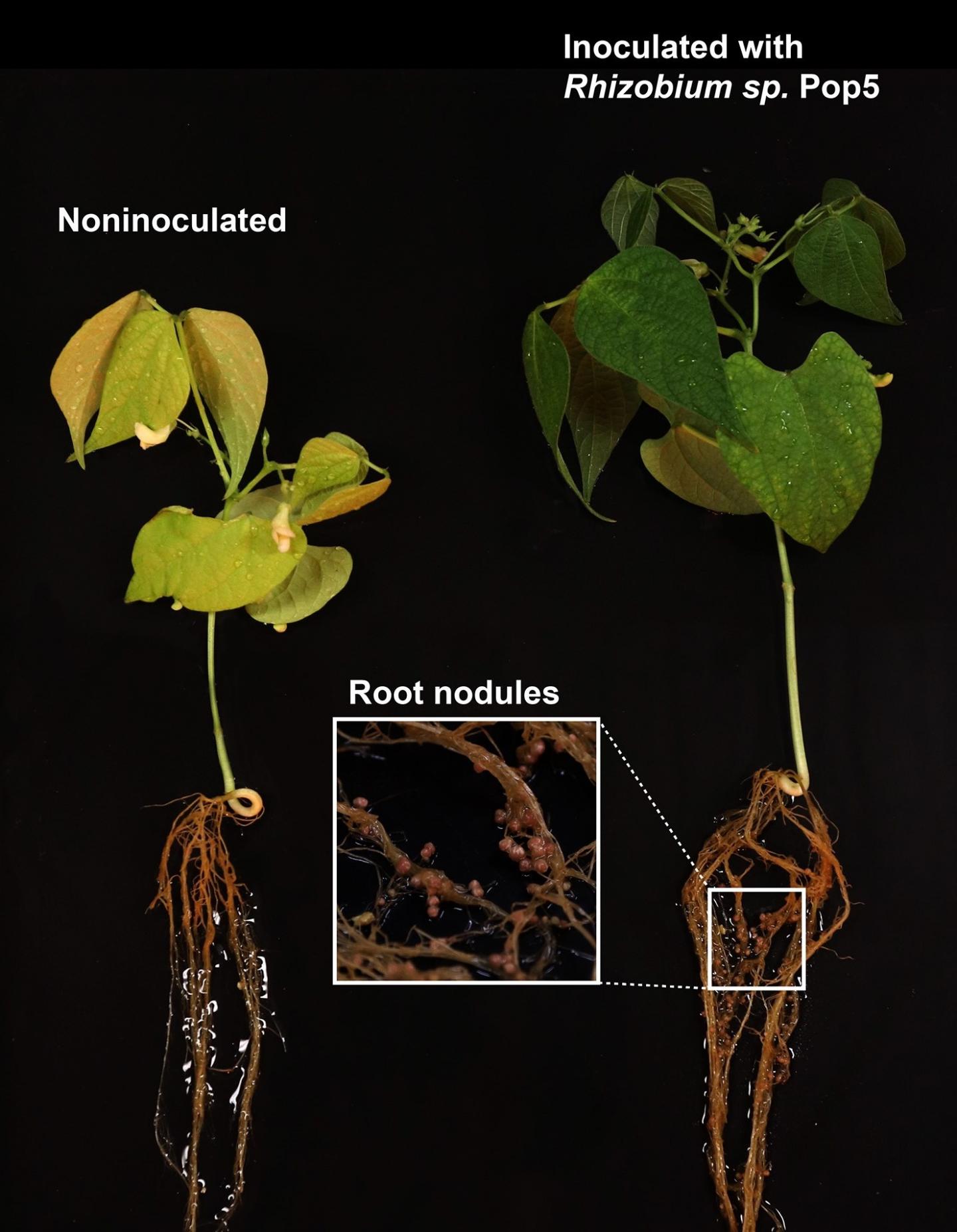
IMAGE

Credit: Dmitrii Y. Travin


Scientists from Rutgers University and around the world have discovered an antibiotic produced by a soil bacterium from a Mexican tropical forest that may help lead to a “plant probiotic,” more robust plants and other antibiotics.

Probiotics, which provide friendlier bacteria and health benefits for humans, can also be beneficial to plants, keeping them healthy and more robust. The new antibiotic, known as phazolicin, prevents harmful bacteria from getting into the root systems of bean plants, according to a Rutgers co-authored study in the journal Nature Communications.

“We hope to show the bacterium can be used as a ‘plant probiotic’ because phazolicin will prevent other, potentially harmful bacteria from growing in the root system of agriculturally important plants,” said senior author Konstantin Severinov, a principal investigator at the Waksman Institute of Microbiology and a professor of molecular biology and biochemistry in the School of Arts and Sciences at Rutgers University-New Brunswick. “Antibiotic resistance is a huge problem in both medicine and agriculture, and continuing searches for new antibiotics are very important as they may provide leads for future anti-bacterial agents.”

The bacterium that produces phazolicin, is an unidentified species of Rhizobium. It was found in a tropical forest in Los Tuxtlas, Mexico, in the soil and roots of wild beans called Phaseolus vulgaris, hence the antibiotic’s name: phazolicin. Like other Rhizobia, the phazolicin-producing microbe forms nodules on bean plant roots and provides plants with nitrogen, making them grow more robustly than others. Unlike other Rhizobia, it also defends plants from harmful bacteria sensitive to phazolicin. The phenomenon could eventually be exploited in beans, peas, chickpeas, lentils, peanuts, soybeans and other legumes.

Using computer and bioinformatic analysis, the scientists predicted the existence of phazolicin and then confirmed its existence in the lab. They revealed the atomic structure of the antibiotic and showed it is bound to and targets the ribosome, a protein production factory in bacterial cells.

The scientists found they can modify and control sensitivity, or susceptibility, to the antibiotic by introducing mutations in ribosomes.

###

Scientists from the Skolkovo Institute of Science and Technology in Russia; Russian Academy of Science; University of California, Berkeley; Lomonosov Moscow
State University in Russia; University of Illinois at Chicago; and University Paris-Sud and University Paris-Saclay in France contributed to the study.

Media Contact
Todd Bates
[email protected]
848-932-0550

Original Source

https://news.rutgers.edu/scientists-discover-new-antibiotic-tropical-forest/20191003#.XZdJK0ZKi71

Related Journal Article

http://dx.doi.org/10.1038/s41467-019-12589-5

Tags: Agricultural Production/EconomicsBacteriologyBiologyFood/Food ScienceInfectious/Emerging DiseasesNutrition/NutrientsPharmaceutical SciencePlant SciencesPublic Health
Share12Tweet8Share2ShareShareShare2

Related Posts

AI and Physics Collaborate to Design Advanced Hydrogen Storage Materials

June 25, 2026

International Team Including Dresden Scientists Develops Novel Designer Proteins for Advanced Study of Living Tissue

June 25, 2026

New Study Uncovers Key Factors Driving Water Chemistry in Nanoscale Environments

June 25, 2026

Plasma Technology Extends Catalyst Lifespan in Hydrogen Production

June 24, 2026
Please login to join discussion

POPULAR NEWS

  • Saying Goodbye to PGY-6: Pediatric Fellowship Realities

    103 shares
    Share 41 Tweet 26
  • Multi-Hospital Study Reveals Long Covid Burden Is Twice as High as Current Estimates

    92 shares
    Share 36 Tweet 23
  • Detection of EDCs in Breast Milk and Infant Urine Up to Six Months Highlights Early Exposure Risks

    77 shares
    Share 31 Tweet 19
  • New Drug Candidate Developed at McMaster Shows Potential for Treating Brain Cancer

    58 shares
    Share 23 Tweet 15

About

We bring you the latest biotechnology news from best research centers and universities around the world. Check our website.

Follow us

Recent News

Tracking Lanthanide-Labeled Microplastics in Plants

POSTECH Researchers Slash Cost of Reconstituted Cell-Free Systems by 95%

AI and Physics Collaborate to Design Advanced Hydrogen Storage Materials

Subscribe to Blog via Email

Enter your email address to subscribe to this blog and receive notifications of new posts by email.

Join 82 other subscribers
  • Contact Us

Bioengineer.org © Copyright 2023 All Rights Reserved.

Welcome Back!

Login to your account below

Forgotten Password?

Retrieve your password

Please enter your username or email address to reset your password.

Log In
No Result
View All Result
  • Homepages
    • Home Page 1
    • Home Page 2
  • News
  • National
  • Business
  • Health
  • Lifestyle
  • Science

Bioengineer.org © Copyright 2023 All Rights Reserved.