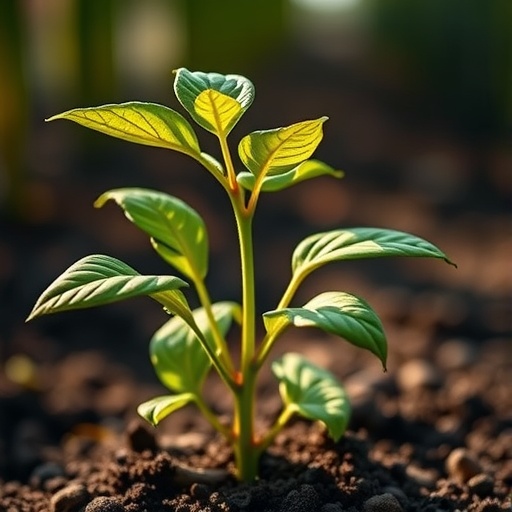
New York University researchers have identified a molecular switch that tells plants when they have absorbed enough nitrogen, a discovery that could eventually help crops use fertilizer more efficiently and reduce one of agriculture’s most damaging environmental footprints. The regulator, a protein called HHO5, appears to coordinate a plant’s response to nitrogen sufficiency by simultaneously encouraging the use of organic nitrogen while suppressing the uptake of additional inorganic nitrogen from the soil.
Nitrogen is essential for plant growth. It is required to build amino acids, proteins, nucleic acids, chlorophyll, and many other molecules that sustain photosynthesis and development. Modern agriculture has dramatically increased crop yields through the widespread use of nitrogen fertilizers, but plants typically absorb only about half of the nitrogen applied to fields. The remainder can leach into rivers and groundwater, fuel harmful algal blooms, and contribute to emissions of nitrous oxide, a greenhouse gas far more powerful than carbon dioxide over a century-long period.
The economic and geopolitical costs of fertilizer have also intensified interest in improving nitrogen-use efficiency. Manufacturing and transporting fertilizer requires substantial energy, while the storage and movement of nitrogen-based products can pose safety risks. Developing crops that capture and assimilate more nitrogen from the soil could allow farmers to maintain productivity while applying less fertilizer, potentially reducing costs and limiting pollution.
The NYU-led study focused on how plants interpret different nitrogen concentrations and forms. Plants absorb inorganic nitrogen, primarily nitrate and ammonium, from the soil and convert it into organic nitrogen compounds such as amino acids. These organic molecules can then be transported through the plant, stored, or used to build the cellular components needed for growth. Because nitrogen uptake and assimilation require considerable energy, plants need a feedback system that prevents them from continuing to acquire nitrogen after their internal supplies are sufficient.
Using Arabidopsis thaliana, a small flowering plant widely used as a model organism, the researchers examined gene activity across different nitrogen doses. This approach allowed them to distinguish genes responding simply to nitrogen exposure from those responding to specific levels or forms of nitrogen. The analysis led the team to HHO5, a transcription factor—a regulatory protein that binds to DNA and influences the activity of other genes. HHO5 emerged as a central component of the plant’s nitrogen-satiety response.
The researchers found that HHO5 expression increased when plants accumulated sufficient organic nitrogen. Once activated, the protein performed two complementary functions. It stimulated genes involved in organic nitrogen signaling and amino acid metabolism, helping the plant process and use the nitrogen already available. At the same time, it reduced the expression of genes responsible for absorbing more inorganic nitrogen from the soil. In effect, HHO5 acts as a molecular message that tells the plant, “The nitrogen supply is sufficient; stop bringing in more.”
The protein’s behavior depended partly on its interaction with another transcription factor, WRKY21. When HHO5 acted alone, it repressed genes associated with inorganic nitrogen uptake. When it partnered with WRKY21, however, the regulatory complex activated genes involved in organic nitrogen responses and plant defense. This switch-like behavior helps explain how the same protein can coordinate apparently opposite outcomes: limiting further nitrogen acquisition while increasing the plant’s ability to metabolize and respond to nitrogen already inside its tissues.
To investigate this mechanism, the scientists used a genomics method called DoubleTARGET. The technique links two regulatory proteins of interest to different fluorescent markers, enabling researchers to isolate plant cells containing high levels of both proteins. RNA sequencing can then reveal which genes respond specifically to the protein pair. Cells enriched in both HHO5 and WRKY21 showed increased activity in genes associated with organic nitrogen signaling and defense responses, supporting the idea that the two factors operate together as a functional regulatory module.
The strongest evidence came from plants lacking HHO5. Under particular nitrogen conditions, these mutant Arabidopsis plants absorbed nearly three times more nitrogen than plants with normal HHO5 activity. The result indicates that removing or weakening the regulator can release the molecular brake on inorganic nitrogen uptake. Although the finding does not yet demonstrate improved agricultural performance in food crops, it suggests that manipulating the HHO5 pathway could be a route toward plants that continue absorbing available nitrogen for longer or assimilate it more effectively.
The researchers caution that nitrogen metabolism is tightly connected to plant growth, energy use, stress responses, and environmental conditions. Simply increasing nitrogen uptake may not be beneficial if a plant cannot convert that nitrogen into biomass or if excessive accumulation causes physiological problems. Future work will need to determine whether modifying HHO5 can improve nitrogen-use efficiency in crops such as wheat, maize, rice, or vegetables without reducing yield, nutritional quality, or resilience.
The study, led by Gloria Coruzzi at NYU and Mariana Obertello of Argentina’s Instituto de Investigaciones en Ingeniería Genética y Biología Molecular, provides a detailed model of how plants establish nitrogen satiety. By revealing how HHO5 changes from a repressor of inorganic nitrogen uptake into an activator of organic nitrogen signaling when paired with WRKY21, the research identifies a promising target for crop engineering. NYU has filed a patent application covering the findings, which could support future efforts to develop “gluttonous” crops capable of capturing more nitrogen while helping farmers reduce fertilizer use and its environmental consequences.
Subject of Research: Plant nitrogen sensing, nitrogen-use efficiency, gene regulation, Arabidopsis thaliana
Article Title: HHO5 orchestrates dose-dependent feedback regulation of organic versus inorganic nitrogen signaling in Arabidopsis
News Publication Date: 30-Jul-2026
Web References: https://doi.org/10.1093/plcell/koag201 ; https://as.nyu.edu/faculty/gloria-coruzzi.html?challenge=d06e90d7-4d8f-4b88-9d8c-10b73beb60f1
References: The Plant Cell, DOI: 10.1093/plcell/koag201
Image Credits: Will Hinckley, NYU
Keywords: HHO5, WRKY21, nitrogen uptake, nitrogen-use efficiency, plant biology, Arabidopsis thaliana, plant genetics, gene expression, fertilizers, crop science, sustainable agriculture
Tags: environmental impact of nitrogen fertilizerHHO5 protein in plant nitrogen uptakeimproving crop nitrogen use efficiencymolecular mechanisms of plant nutrient sensingnitrogen absorption in plantsnitrogen regulation in plantsnitrogen use in crop growthplant nutrient managementplant nutrient sensingplant response to nitrogen sufficiencyreducing fertilizer runoff and pollutionsustainable agriculture and fertilizer efficiency