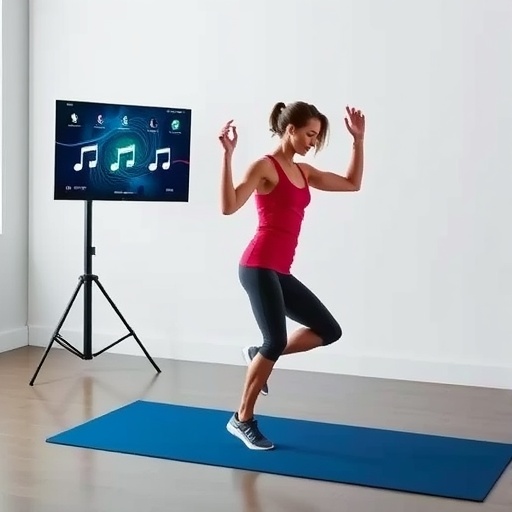
In recent years, the integration of music and exercise has evolved beyond simple background soundtracks to dynamic, personalized experiences that adapt in real-time to the physical movements of users. Researchers at the University of Jyväskylä have pioneered an exploration into Personalized Interactive Music Systems (PIMSs), innovative technologies that intricately synchronize musical rhythm, tempo, and style with the user’s exercise pace. This cutting-edge approach not only makes workouts more enjoyable but also holds the potential to significantly amplify motivation and workout duration, thus addressing a critical obstacle in maintaining consistent physical activity.
The core functionality of PIMSs lies in their ability to harness continuous real-time data harvested from wearable devices and smartphones. These systems analyze patterns related to a user’s movement—whether walking, cycling, or weightlifting—and dynamically adjust musical elements to create an immersive, adaptive soundscape. For instance, if a cyclist accelerates, the system responds by elevating the tempo and intensifying rhythmic beats, effectively mirroring the heightened energy and sustaining motivational momentum. This precise alignment between auditory stimuli and kinetic activity fosters a seamless feedback loop that enhances the exercise experience, making physical activity feel less strenuous and more intrinsically rewarding.
This breakthrough is elucidated in a systematic review and meta-analysis led by Dr. Andrew Danso, a neuroscientist specializing in the interplay between music, mind, and body. The study synthesizes findings from 18 empirical investigations conducted across diverse geographic regions including Europe, Asia, and North America, providing a robust, cross-cultural validation of PIMS efficacy. As the first comprehensive review of its kind, the research delineates how adaptive music systems significantly impact both the psychological and physiological dimensions of exercise engagement.
One of the most compelling outcomes of the review is the reported increase in positive emotional responses among participants using adaptive music during their workouts. Unlike static playlists or non-interactive soundtracks, PIMSs seem to amplify feelings of enjoyment and motivation, crucial factors that strongly influence exercise adherence. Psychological theories of intrinsic motivation suggest that such enhancements in affective experience can reduce perceived exertion and delay fatigue onset, thereby prolonging workout sessions and improving overall cardiovascular and muscular endurance.
The mechanistic principles underpinning PIMS draw from fluid sensorimotor synchronization research, where human movement and rhythmic stimuli coalesce. Faster music tempos were consistently correlated with more significant exercise benefits in the analyzed studies, indicating that tempo modulation aligned to movement speed can optimize performance. This tempo congruency likely facilitates a state of rhythmic entrainment where motor systems synchronize with auditory cues, enhancing coordination, efficiency, and effort sustainability.
Technologically, the implementation of PIMS requires sophisticated algorithms capable of instantaneous tempo and beat detection adjustments. These algorithms ingest accelerometer, gyroscope, and heart rate data to estimate exertion levels and modify musical parameters without perceptible latency. Integrating machine learning models, some systems even personalize musical preferences over time, refining the adaptive process based on an individual’s unique physiological feedback and musical taste, thereby maximizing user engagement and long-term adherence.
From a broader health perspective, the implications of these findings resonate with global public health priorities. Physical inactivity remains a leading risk factor for chronic diseases such as obesity, cardiovascular conditions, and diabetes. By embedding personalized interactive music into exercise regimes, PIMS introduce an innovative behavioral intervention that could mitigate these risks by making physical activity intrinsically appealing, thus lowering barriers to consistent engagement.
Moreover, the potential applications of PIMS extend beyond recreational exercise into clinical rehabilitation and elder care, where motivation deficits often hinder therapy compliance. The adaptability of such music systems provides tailored auditory environments conducive to gradual physical improvement, pain management, and psychological well-being, opening new interdisciplinary frontiers in health technology and music therapy.
Despite these promising advances, challenges remain in scaling PIMS for widespread use. Issues related to device compatibility, algorithmic transparency, privacy concerns linked to biometric data, and the need for precise calibration across varied exercise modalities require ongoing refinement. Future research must also explore diverse demographic impacts, ensuring equitable access and efficacy across age, cultural backgrounds, and fitness levels.
In conclusion, the pioneering study by University of Jyväskylä researchers notably shifts the paradigm of exercise motivation through the integration of real-time, personalized music adaptation. By attuning soundscapes to human movement, PIMS bridges the cognitive-emotional nexus with physical performance, offering a scientifically validated tool to enrich exercise experiences worldwide. As these technologies evolve, they may well redefine our relationship with physical activity, transforming it from a chore into an engaging, dynamic journey powered by personalized rhythm.
Subject of Research: People
Article Title: Personalized Interactive Music Systems for Physical Activity and Exercise: Exploratory Systematic Review and MetaAnalysis
News Publication Date: 8-Sep-2025
Web References:
10.2196/70372
Image Credits: Petteri Kivimäki (University of Jyväskylä)
Keywords: Personalized Interactive Music Systems, exercise motivation, adaptive music technology, rhythmic entrainment, wearable sensors, real-time tempo adjustment, physical activity adherence, music and exercise performance, health technology, behavioral intervention
Tags: adaptive music technologiesboosting exercise enjoymentdynamic workout soundtracksexercise engagement enhancementimmersive workout experiencesimpact of music on exercisemotivation in physical activitymusic rhythm synchronizationpersonalized interactive music systemsreal-time music adaptationUniversity of Jyväskylä researchwearable device integration