Credit: Alvaro Mata
Researchers at Queen Mary University of London have developed a new way to grow mineralised materials which could regenerate hard tissues such as dental enamel and bone.
Enamel, located on the outer part of our teeth, is the hardest tissue in the body and enables our teeth to function for a large part of our lifetime despite biting forces, exposure to acidic foods and drinks and extreme temperatures. This remarkable performance results from its highly organised structure.
However, unlike other tissues of the body, enamel cannot regenerate once it is lost, which can lead to pain and tooth loss. These problems affect more than 50 per cent of the world's population and so finding ways to recreate enamel has long been a major need in dentistry.
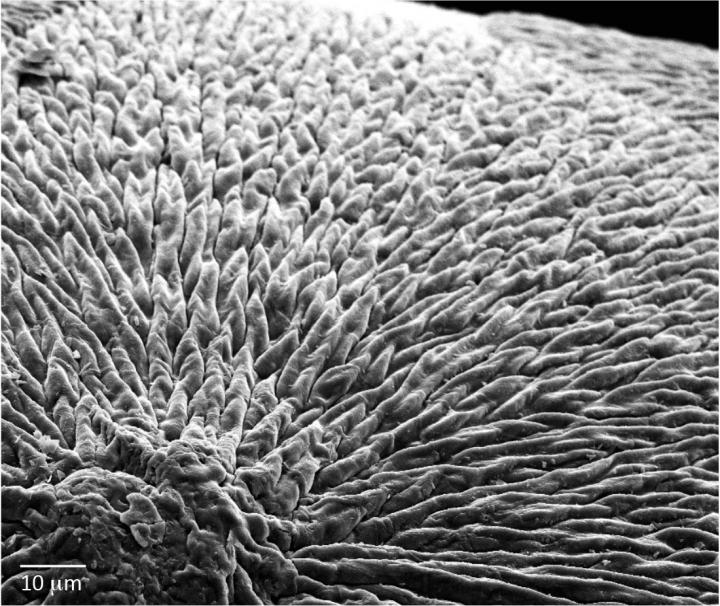
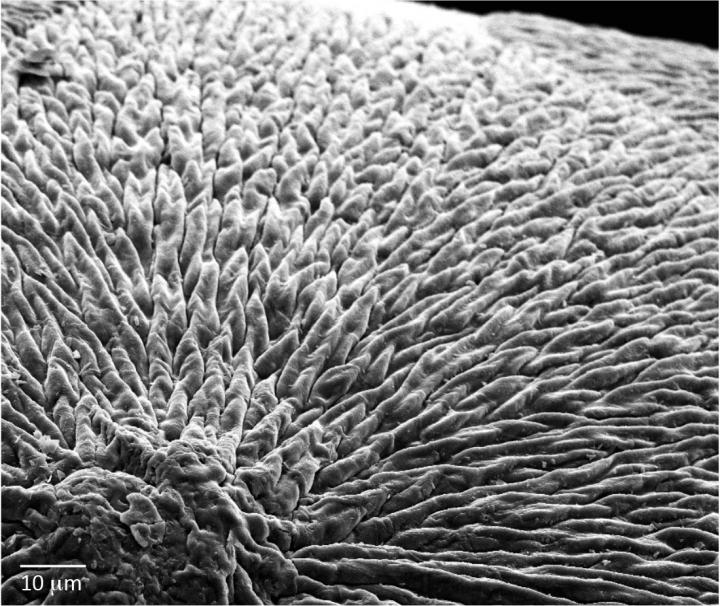
The study, published in Nature Communications, shows that this new approach can create materials with remarkable precision and order that look and behave like dental enamel.
The materials could be used for a wide variety of dental complications such as the prevention and treatment of tooth decay or tooth sensitivity – also known as dentin hypersensitivity.
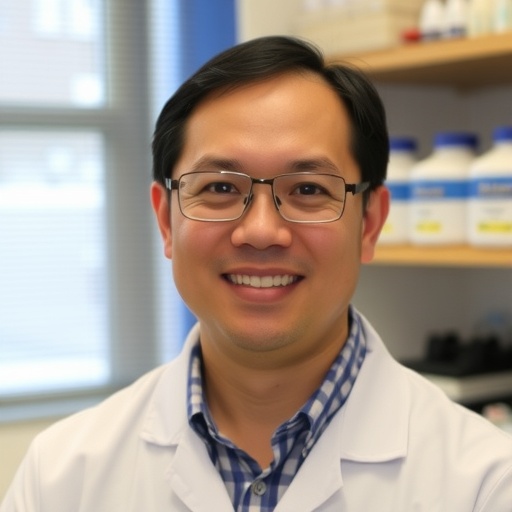
Dr Sherif Elsharkawy, a dentist and first author of the study from Queen Mary's School of Engineering and Materials Science, said: "This is exciting because the simplicity and versatility of the mineralisation platform opens up opportunities to treat and regenerate dental tissues. For example, we could develop acid resistant bandages that can infiltrate, mineralise, and shield exposed dentinal tubules of human teeth for the treatment of dentin hypersensitivity."
The mechanism that has been developed is based on a specific protein material that is able to trigger and guide the growth of apatite nanocrystals at multiple scales – similarly to how these crystals grow when dental enamel develops in our body. This structural organisation is critical for the outstanding physical properties exhibited by natural dental enamel.
Lead author Professor Alvaro Mata, from Queen Mary's School of Engineering and Materials Science, said: "A major goal in materials science is to learn from nature to develop useful materials based on the precise control of molecular building-blocks. The key discovery has been the possibility to exploit disordered proteins to control and guide the process of mineralisation at multiple scales. Through this, we have developed a technique to easily grow synthetic materials that emulate such hierarchically organised architecture over large areas and with the capacity to tune their properties."
Enabling control of the mineralisation process opens the possibility to create materials with properties that mimic different hard tissues beyond enamel such as bone and dentin. As such, the work has the potential to be used in a variety of applications in regenerative medicine. In addition, the study also provides insights into the role of protein disorder in human physiology and pathology.
###
The research was funded by the European Research Council (ERC) Starting Grant (STROFUNSCAFF) and the Marie Curie Integration Grant (BIOMORPH).
Media Contact
Rupert Marquand
[email protected]
44-020-788-23004
@QMUL
http://www.qmul.ac.uk
Related Journal Article
http://dx.doi.org/10.1038/10.1038/s41467-018-04319-0