• HOME
  • NEWS
  • EXPLORE
    • CAREER
      • Companies
      • Jobs
    • EVENTS
    • iGEM
      • News
      • Team
    • PHOTOS
    • VIDEO
    • WIKI
  • BLOG
  • COMMUNITY
    • FACEBOOK
    • INSTAGRAM
    • TWITTER
Saturday, February 7, 2026
BIOENGINEER.ORG
No Result
View All Result
  • Login
  • HOME
  • NEWS
  • EXPLORE
    • CAREER
      • Companies
      • Jobs
        • Lecturer
        • PhD Studentship
        • Postdoc
        • Research Assistant
    • EVENTS
    • iGEM
      • News
      • Team
    • PHOTOS
    • VIDEO
    • WIKI
  • BLOG
  • COMMUNITY
    • FACEBOOK
    • INSTAGRAM
    • TWITTER
  • HOME
  • NEWS
  • EXPLORE
    • CAREER
      • Companies
      • Jobs
        • Lecturer
        • PhD Studentship
        • Postdoc
        • Research Assistant
    • EVENTS
    • iGEM
      • News
      • Team
    • PHOTOS
    • VIDEO
    • WIKI
  • BLOG
  • COMMUNITY
    • FACEBOOK
    • INSTAGRAM
    • TWITTER
No Result
View All Result
Bioengineer.org
No Result
View All Result
Home NEWS Science News

Scientists determine how much damage memory devices can take in mass transit accidents

Bioengineer by Bioengineer
December 8, 2016
in Science News
Reading Time: 2 mins read
0
Share on FacebookShare on TwitterShare on LinkedinShare on RedditShare on Telegram
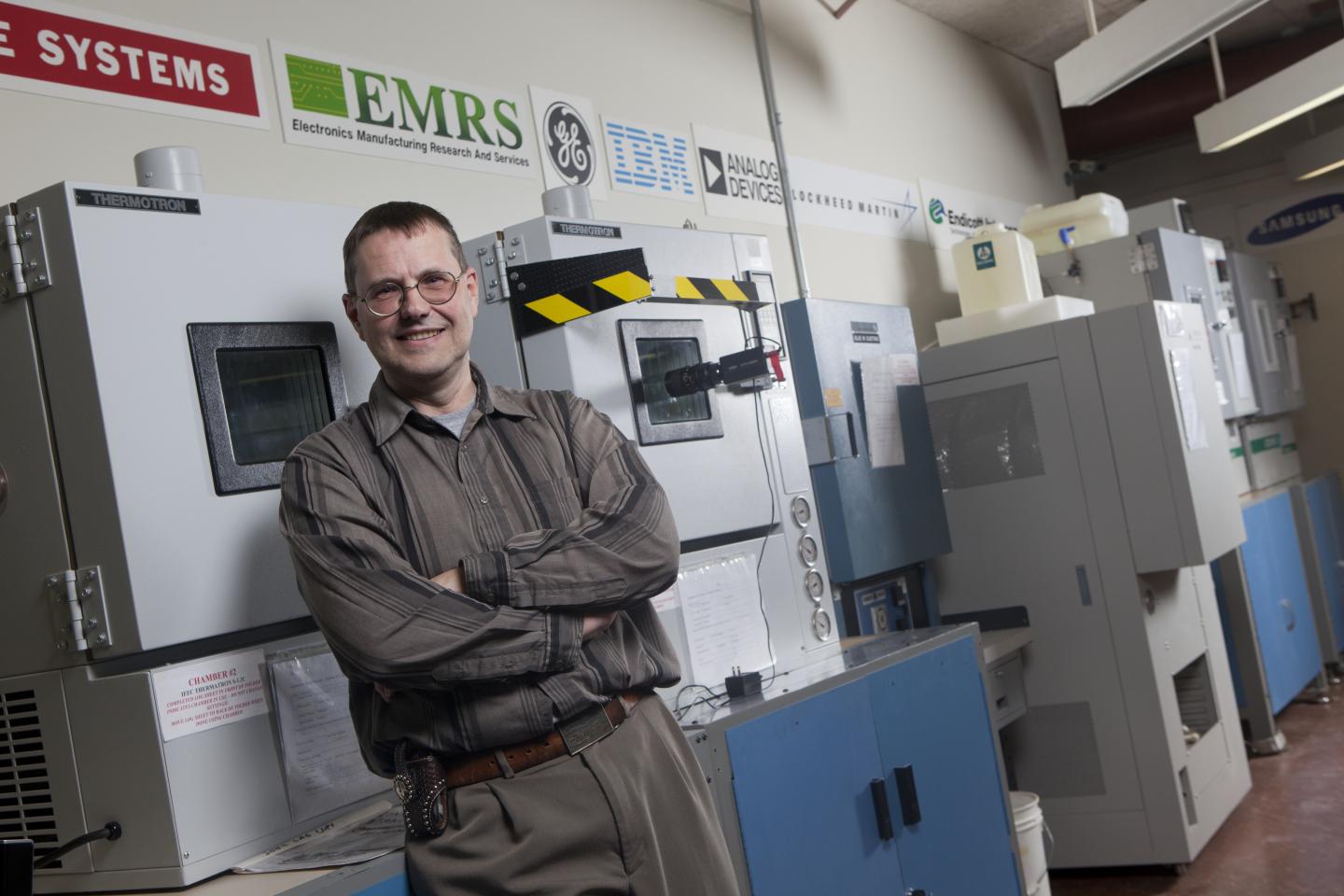
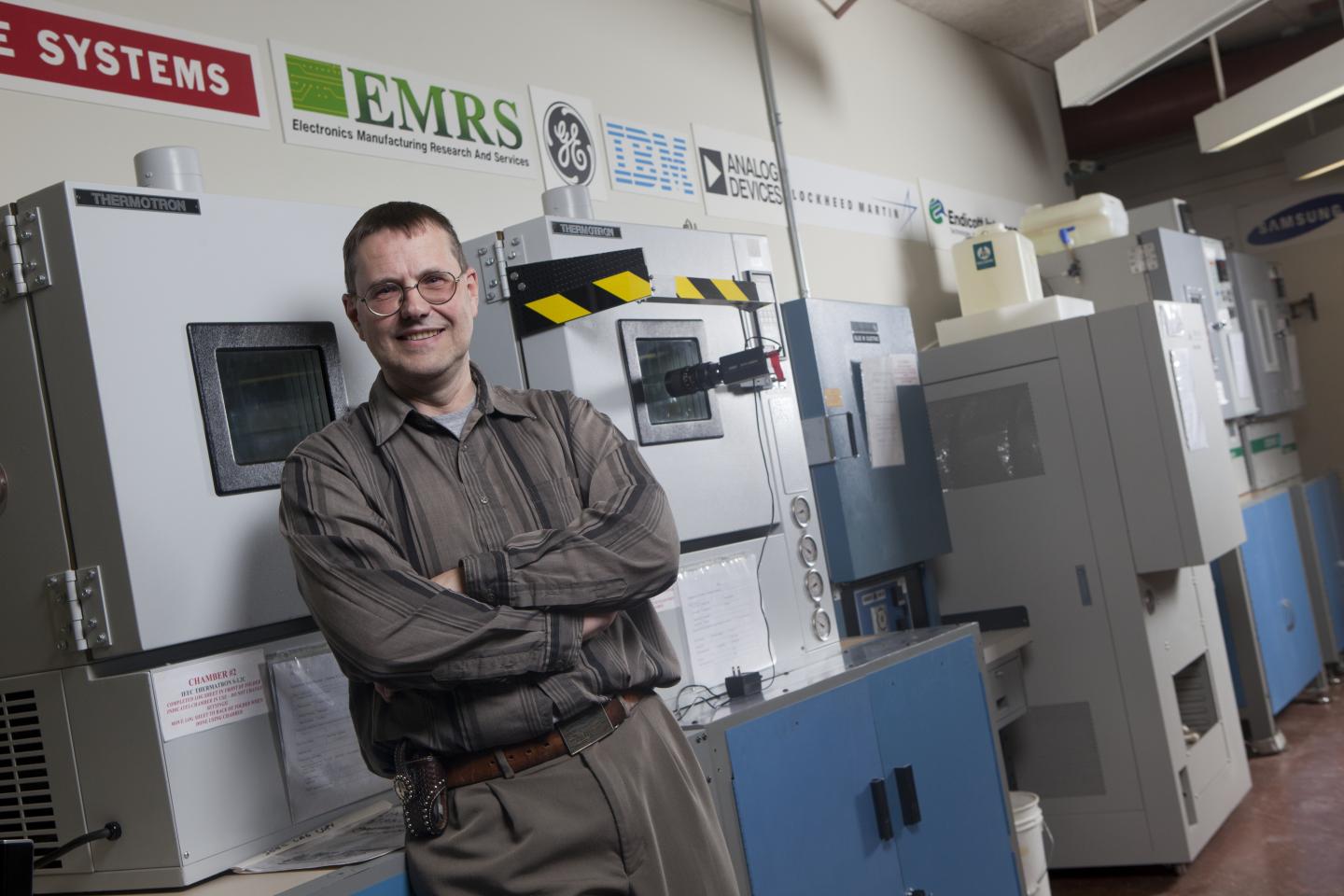
IMAGE

Credit: Jonathan Cohen/Binghamton University

BINGHAMTON, NY – While investigating mass transit accidents, especially in air travel, National Transportation Safety Board (NTSB) officials often rely on digital clues left behind in flash memories of any and all electronic devices — both personal and professional — at a crash site. With the physical forces and high-temperature fires associated with many crashes, memory units are often damaged and sometimes unreadable.

Researchers at Binghamton University, State University of New York have figured out how much damage memory units can sustain before becoming unreadable and new repair techniques to retrieve clues off of damaged units, which might help prevent future tragedies.

"The biggest surprise was how much punishment these devices can take before ceasing to function," said Steve Cain, who is the project manager and a senior research support specialist in the Integrated Electronics Engineering Center (IEEC) at Binghamton University. "As part of their post-crash investigations, the NTSB collects anything and everything at the scene, including personal electronic devices. If the device was active during or just before the crash, it is possible that the data stored in the memory can provide clues as to the cause of the crash. Most of the time the device is ruined, but sometimes it is intact."

The interdisciplinary Binghamton group of Cain, Preeth Sivakumar, Jack Lombardi, and Mark Poliks along with James Cash, Joseph Gregor, and Michael Budinski from the NTSB, presented "Fire Damage and Repair Techniques for Flash Memory Modules: Implication for Post-Crash Investigations" at the Fall 2016 International Symposium of Microelectronics.

Scientists found plastic coverings started to break down after three hours of exposure to temperatures of 300 degrees Celsius, or about 572 degrees Fahrenheit or more, but memory chips were still readable.

Researchers pointed out that even with the pressures and forces in play during past crashes, temperatures typically only reach those levels for short periods of time.

"Data integrity was maintained even in a plasma discharge," Cain said. "Basically, if the device doesn't burn up, there is a reasonable chance of the data being retained in the chip. The only problem is that the connections to the memory chips may be broken, so that the data cannot be read."

For the second part of the study, researchers addressed the readability issue. The team purposely damaged memory units and then extracted memory chips using acid, lasers, plasma, or mechanical polishing.

Lasers were the most effective extraction method and mechanical extractions was the simplest, but each method still damaged the wire bonds within memory chips and made many unreadable. A specialized metallic ink from a precision printer was used to restore functionality.

"These results expand the investigative scope for aviation accidents, where the data rather than the device is of paramount importance," the team concluded. "It is possible to repair the interconnections of flash memory modules, provided the chip is intact."

###

Media Contact

Steve Cain
[email protected]
607-777-5467
@binghamtonu

http://www.binghamton.edu

############

Story Source: Materials provided by Scienmag

Share12Tweet8Share2ShareShareShare2

Related Posts

Neg-Entropy: The Key Therapeutic Target for Chronic Diseases

February 7, 2026

Multidisciplinary Evidence-Based Guidelines for Therapeutic Drug Monitoring of Biologics in Inflammatory Bowel Disease

February 7, 2026

Early Tuberculosis Treatment Lowers Sepsis Mortality in People with HIV

February 7, 2026

Deep Learning Uncovers Tetrahydrocarbazoles as Potent Broad-Spectrum Antitumor Agents with Click-Activated Targeted Cancer Therapy Approach

February 7, 2026
Please login to join discussion

POPULAR NEWS

  • Robotic Ureteral Reconstruction: A Novel Approach

    Robotic Ureteral Reconstruction: A Novel Approach

    82 shares
    Share 33 Tweet 21
  • Digital Privacy: Health Data Control in Incarceration

    63 shares
    Share 25 Tweet 16
  • Study Reveals Lipid Accumulation in ME/CFS Cells

    57 shares
    Share 23 Tweet 14
  • Breakthrough in RNA Research Accelerates Medical Innovations Timeline

    53 shares
    Share 21 Tweet 13

About

We bring you the latest biotechnology news from best research centers and universities around the world. Check our website.

Follow us

Recent News

Neg-Entropy: The Key Therapeutic Target for Chronic Diseases

Multidisciplinary Evidence-Based Guidelines for Therapeutic Drug Monitoring of Biologics in Inflammatory Bowel Disease

Early Tuberculosis Treatment Lowers Sepsis Mortality in People with HIV

Subscribe to Blog via Email

Enter your email address to subscribe to this blog and receive notifications of new posts by email.

Join 73 other subscribers
  • Contact Us

Bioengineer.org © Copyright 2023 All Rights Reserved.

Welcome Back!

Login to your account below

Forgotten Password?

Retrieve your password

Please enter your username or email address to reset your password.

Log In
No Result
View All Result
  • Homepages
    • Home Page 1
    • Home Page 2
  • News
  • National
  • Business
  • Health
  • Lifestyle
  • Science

Bioengineer.org © Copyright 2023 All Rights Reserved.