• HOME
  • NEWS
  • EXPLORE
    • CAREER
      • Companies
      • Jobs
    • EVENTS
    • iGEM
      • News
      • Team
    • PHOTOS
    • VIDEO
    • WIKI
  • BLOG
  • COMMUNITY
    • FACEBOOK
    • INSTAGRAM
    • TWITTER
Tuesday, April 14, 2026
BIOENGINEER.ORG
No Result
View All Result
  • Login
  • HOME
  • NEWS
  • EXPLORE
    • CAREER
      • Companies
      • Jobs
        • Lecturer
        • PhD Studentship
        • Postdoc
        • Research Assistant
    • EVENTS
    • iGEM
      • News
      • Team
    • PHOTOS
    • VIDEO
    • WIKI
  • BLOG
  • COMMUNITY
    • FACEBOOK
    • INSTAGRAM
    • TWITTER
  • HOME
  • NEWS
  • EXPLORE
    • CAREER
      • Companies
      • Jobs
        • Lecturer
        • PhD Studentship
        • Postdoc
        • Research Assistant
    • EVENTS
    • iGEM
      • News
      • Team
    • PHOTOS
    • VIDEO
    • WIKI
  • BLOG
  • COMMUNITY
    • FACEBOOK
    • INSTAGRAM
    • TWITTER
No Result
View All Result
Bioengineer.org
No Result
View All Result
Home NEWS Science News Chemistry

Scientists designed new enzyme using Antarctic bacteria and computer calculations

Bioengineer by Bioengineer
June 30, 2023
in Chemistry
Reading Time: 2 mins read
0
Temperature optimum
Share on FacebookShare on TwitterShare on LinkedinShare on RedditShare on Telegram

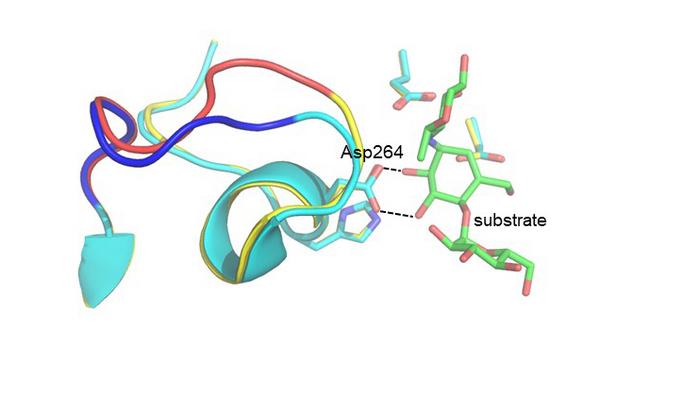
For the first time, researchers have succeeded in predicting how to change the optimum temperature of an enzyme using large computer calculations. A cold-adapted enzyme from an Antarctic bacterium was used as a basis. The study is to be published in the journal Science Advances and is a collaboration between researchers at Uppsala University and the University of Tromsø.
Temperature optimum

Credit: Johan Åqvist

For the first time, researchers have succeeded in predicting how to change the optimum temperature of an enzyme using large computer calculations. A cold-adapted enzyme from an Antarctic bacterium was used as a basis. The study is to be published in the journal Science Advances and is a collaboration between researchers at Uppsala University and the University of Tromsø.

The type of cold-adapted enzymes used by the researchers for their study can be found in bacteria and fish that live in icy water, for example. Evolution has shaped them to be able to function even at very low temperatures at which other enzymes are normally stone dead. These enzymes also always have a lower optimum temperature and melting point than enzymes from warm-blooded animals and organisms that live at higher temperatures.

The researchers wondered whether computer simulations of the catalysed chemical reaction could predict a small number of mutations in the Antarctic enzyme that could result in an increase in its optimum temperature. The results of the calculation showed that this would be possible if 16 mutations were inserted from the corresponding pig enzyme into the bacterial variant.

The researchers then produced this hybrid enzyme and measured its catalytic activity as a function of temperature, and it was indeed found that the new variant had a 6 °C higher optimum than the original variant and was faster than both the Antarctic and pig enzymes at 50 °C. They also solved the three-dimensional structure of the hybrid enzyme by X-ray crystallography and showed that the necessary structural changes predicted by the computer calculations had indeed taken place.

Computer-based enzyme design has become a major and hotly pursued research area in recent years. The goal is to create enzymes with new properties and to do so with the help of computer calculations instead of labour-intensive experiments.

“For example, this may involve creating new enzymes that catalyse chemical reactions not found in nature or changing their properties so that they can better cope with heat, cold, high pressure, increased salinity and so on. This area is therefore the subject of great biotechnological interest,” notes Johan Åqvist, Professor of Theoretical Chemistry at Uppsala University.


Journal

Science Advances

DOI

10.1126/sciadv.adi0963

Article Title

Computational design of the temperature optimum of an enzyme reaction

Article Publication Date

28-Jun-2023

Share12Tweet8Share2ShareShareShare2

Related Posts

Hydrophobic Tuning of Copper Metalloenzyme via Non-Canonical Amino Acids

Hydrophobic Tuning of Copper Metalloenzyme via Non-Canonical Amino Acids

April 13, 2026
Breakthrough Rice Study Unravels Decades-Old Mystery in Organic Light-Emitting Crystals

Breakthrough Rice Study Unravels Decades-Old Mystery in Organic Light-Emitting Crystals

April 13, 2026

Could Self-Interacting Dark Matter Unlock Three Cosmic Mysteries?

April 13, 2026

Quantum Fluctuations Unveil a Novel Topological Semimetal

April 13, 2026

POPULAR NEWS

  • Scientists Investigate Possible Connection Between COVID-19 and Increased Lung Cancer Risk

    60 shares
    Share 24 Tweet 15
  • Boosting Breast Cancer Risk Prediction with Genetics

    47 shares
    Share 19 Tweet 12
  • Popular Anti-Aging Compound Linked to Damage in Corpus Callosum, Study Finds

    45 shares
    Share 18 Tweet 11
  • Revolutionary Theory Transforms Quantum Perspective on the Big Bang

    41 shares
    Share 16 Tweet 10

About

We bring you the latest biotechnology news from best research centers and universities around the world. Check our website.

Follow us

Recent News

Potent Acridone Targets All Malaria Parasite Stages

KIST Develops High-Efficiency Carbon Catalyst to Create Eco-Friendly Disinfectants from Waste Wood

New Questionnaire Assesses Sarcopenia in Older Adults

Subscribe to Blog via Email

Enter your email address to subscribe to this blog and receive notifications of new posts by email.

Join 79 other subscribers
  • Contact Us

Bioengineer.org © Copyright 2023 All Rights Reserved.

Welcome Back!

Login to your account below

Forgotten Password?

Retrieve your password

Please enter your username or email address to reset your password.

Log In
No Result
View All Result
  • Homepages
    • Home Page 1
    • Home Page 2
  • News
  • National
  • Business
  • Health
  • Lifestyle
  • Science

Bioengineer.org © Copyright 2023 All Rights Reserved.