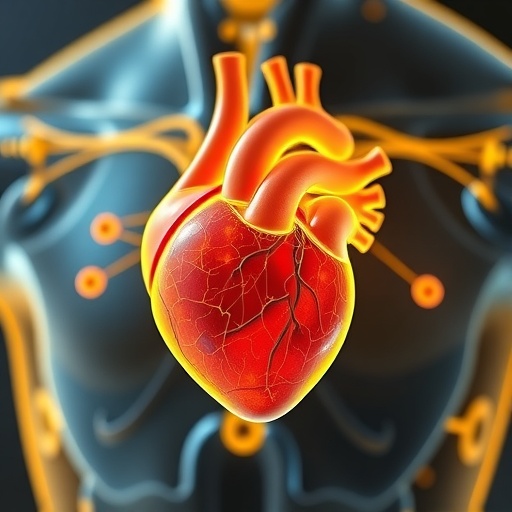
In a groundbreaking advancement at the intersection of organic electronics and biomedical engineering, researchers at Linköping University have successfully replicated the ion signaling mechanism of heart muscle cells using conductive plastics. This achievement marks the first-ever artificial mimicry of cardiac ion transport—a complex biological process responsible for the heart’s relentless rhythm—and ushers in new possibilities for bio-integrated devices such as advanced prostheses, cardiac implants, and sensitive physiological sensors. Published in the revered journal Nature Communications, this pioneering work could redefine how we interface synthetic devices with living tissues.
The human heart’s ceaseless beating—approximately 2.6 billion cycles over an average lifespan—is orchestrated by a delicate dance of ions, including potassium, sodium, and calcium, across cellular membranes. This ion exchange generates the electrical impulses known as action potentials, which trigger myocardial contractions critical for blood circulation. Despite decades of research in bioelectronic interfaces, replicating the nuanced ion channel dynamics of cardiac cells, especially the comparatively slow calcium channels, has remained a formidable challenge for conventional electronics.
Traditional inorganic electronics excel in rapid signal processing but fail to emulate the intrinsic slowness of cardiac calcium ion channels. As Professor Simone Fabiano from Linköping University elucidates, the unique temporal properties of cardiac ion channels are crucial for effective heart function. “Nature has evolved these precise electrophysiological characteristics for good reason,” Fabiano notes. Recognizing this, the team turned to organic electronics, particularly conductive polymers, which naturally facilitate both ion and electron transport and can thus communicate analogously to biological cells.
At the heart of this research is an artificial cardiomyocyte device fabricated entirely from conductive plastic materials that recapitulate the cardiac action potential waveform. This synthetic cell mimics key electrical behaviors of native heart muscle cells by precisely controlling ion fluxes, thereby overcoming the temporal bottlenecks inherent in faster inorganic systems. Postdoctoral researcher Dace Gao explains that this dual ionic and electronic conductivity enables the sophisticated signal transduction necessary for genuine bioelectronic emulation.
Notably, this development builds upon the research group’s prior successes in engineering artificial neurons with organic electronic components. Transitioning from nerve cells to heart muscle cells represented a logical extension, confronting a higher degree of complexity due to the heart’s distinctive calcium channel kinetics. Developing hardware capable of duplicating these slow ion signaling dynamics filled a critical void in synthetic biointerfaces.
The implications of these findings transcend foundational science. According to Fabiano, such organic artificial cardiomyocytes could serve as powerful experimental models to investigate how physiological variables—like ion concentration fluctuations or pH changes—affect cardiac electrical signaling in a precisely controlled environment. “Hardware-based systems allow systematic study that would be challenging or impossible in vivo,” Fabiano remarks, emphasizing the intersection of materials science with electrophysiology.
Looking ahead, the research team aspires to integrate these artificial cardiac cells with living cardiac tissue, forging hybrid platforms that combine biological and synthetic components. This integration would be a transformative leap toward biohybrid implants capable of repairing or augmenting damaged heart tissue. Gao underlines the necessity for artificial cells not only to generate signals but to sense and relay impulses to and from biological cells, effectively functioning as bioelectronic conduits.
Potential applications envisioned by the team include minimally invasive “natural” pacemakers fabricated from flexible, biocompatible conductive polymers that synchronize seamlessly with the heart’s intrinsic rhythms. Furthermore, implants designed to activate specific muscle groups could revolutionize treatments for muscular dystrophies or nerve injuries. Sensitive biosensors derived from this technology might detect early electrophysiological disturbances, enabling preemptive clinical interventions for cardiac diseases.
The materials employed—organic conductive plastics—provide unique advantages over traditional silicon-based electronics. Their inherent compatibility with ionic signaling and their mechanical flexibility allow for intimate interfacing with soft biological tissues, reducing immune response and improving the longevity of implants. These properties position organic electronics as a promising frontier in the design of next-generation medical devices that bridge the gap between organism and machine.
Despite these promising advances, key challenges remain. Integrating artificial cells into the body’s existing complex electrical network requires precise synchronization and reliable signal transmission. The research community must also address long-term stability, biocompatibility, and potential immune reactions to organic materials. Nevertheless, the current breakthrough lays the foundational framework upon which such hurdles may be overcome.
By pioneering an organic artificial cardiomyocyte capable of emulating the nuanced ion transport and action potentials of heart muscle cells, the Linköping University team has opened new vistas in bioelectronic medicine. This fusion of organic materials science and cardiac electrophysiology not only deepens our understanding of living systems but also provides tangible pathways toward innovative therapies and diagnostic tools that harmonize human biology with technology.
As this work progresses, it promises to ignite profound transformations in cardiac healthcare, embodying the promise of truly integrative bioelectronics that respect and replicate the sophistication of the human heart.
Subject of Research: Artificial mimicry of ion signaling in heart muscle cells using organic electronics.
Article Title: An organic artificial cardiomyocyte
News Publication Date: 6-May-2026
Web References: DOI: 10.1038/s41467-026-72584-5
Image Credits: Thor Balkhed
Keywords
Organic electronics, conductive plastics, cardiac muscle cells, ion signaling, artificial cardiomyocyte, bioelectronic interfaces, action potential, calcium ion channels, electrophysiology, biohybrid implants, pacemakers, biomedical devices
Tags: advanced prostheses with bioelectronicsartificial cardiac ion transportbio-integrated cardiac devicesbioelectronic interfaces for heartcalcium ion channel replicationcardiac implant technologyconductive plastic for heart cellsion signaling in heart musclemyocardial electrical impulse simulationorganic electronics in biomedicinephysiological sensors for cardiac healthsynthetic heart muscle mimicry