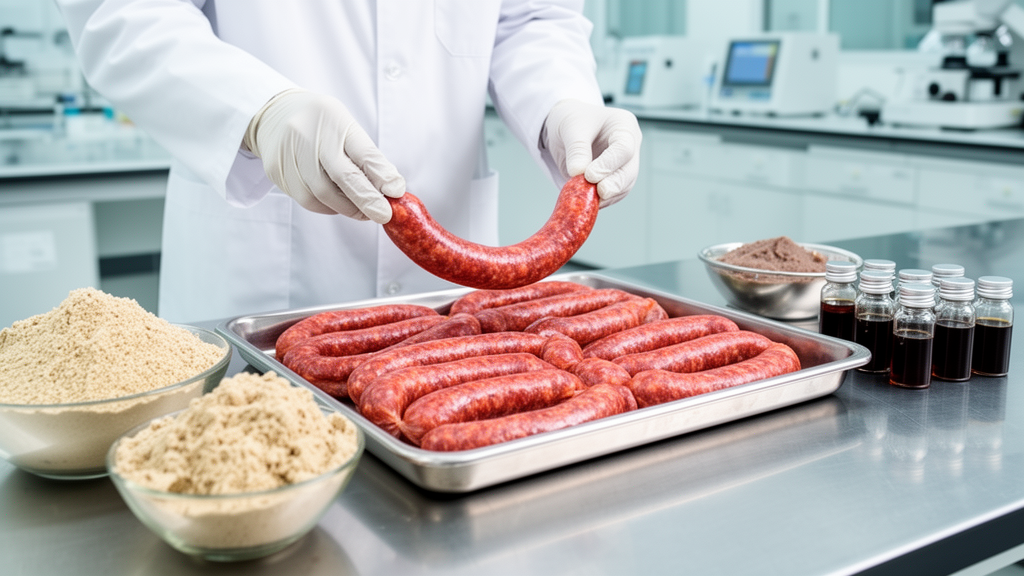
Researchers in Cameroon have developed two alternative sausage products—one from lizardfish and one from soybean curds—designed to offer alternatives to red and processed meats, which have been associated with elevated risks of cardiovascular disease, gout and certain cancers. The study, published in the journal Discover Food, describes the formulation of nine fish-based and nine plant-based sausage recipes, each tested with three different binders at varying proportions.
The team, led by Desdemona Njabi Nji and colleagues, used lizardfish (Saurida tumbil) as the animal protein source and soybeans (Glycine max TGX1835 10E) for the plant-based version. Xanthan gum, eggs and wheat flour served as the binding agents, each incorporated at different ratios across the nine formulations of each sausage type. The fish sausages were boiled for 20 minutes, while the soy protein sausages required a much longer cooking time of seven hours.
Sensory evaluation played a central role in identifying the most promising recipes. Panelists detected clear variation in the organoleptic characteristics across both sausage families. Among the fish sausages, samples FF8, XF1 and EF6 earned the highest acceptability scores. For the soybean curd sausages, the top performers were ES4, XS1 and FS7. These six samples were then carried forward for detailed physicochemical and phytochemical analysis.
Proximate analysis, reported on a dry matter basis, revealed strikingly high protein concentrations in both products. The fish sausages contained between 69.07 and 73.78 percent protein, while the soybean versions ranged from 76.09 to 79.23 percent. Carbohydrate levels were low in both, measuring 1.34 to 1.40 percent for the fish sausages and 3.23 to 3.34 percent for the soybean sausages. Fat content differed more noticeably, with the fish products at 10.89 to 12.43 percent and the soybean products at 33.58 to 35.36 percent.
Beyond macronutrients, the sausages recorded high values of vitamin A. Phytochemical screening also uncovered notable concentrations of bioactive plant compounds. Total polyphenolic content ranged from 166.21 to 308.51 milligrams of gallic acid equivalents per gram, and flavonoid levels spanned 25.36 to 60.85 milligrams of quercetin equivalents per gram. These figures suggest the products carry antioxidant-relevant compounds alongside their protein payload, though the study reports composition rather than any health outcomes from consumption.
Physicochemical testing included cooking loss, a measure of how much weight a sausage loses during heat processing. The soy protein sausages lost more weight during cooking than the fish sausages overall, with the maximum loss recorded in sample ES4 at 4.41 percent. Lower cooking loss generally indicates better water-holding capacity, a property that influences both texture and yield in manufactured meat products.
The authors conclude that the formulated fish and soy curd sausages demonstrated good sensory, nutritional, phytochemical and physicochemical properties that could make them suitable for human consumption.
Subject of Research: Formulation and shelf-life evaluation of fish sausage from lizardfish and plant-based sausage from soybean curds
Article Title: Formulation and shelf-life study of fish sausage from lizardfish (Saurida tumbil) and plant-based sausage from soybeans curds (Glycine max TGX1835 10E)
Article References: Nji, D. N., Peace, B., Ufuan, A. A., Ebob Ashu, A. O., Eurydice Flore, D. T. N., & Bernard, T. (2026). Formulation and shelf-life study of fish sausage from lizardfish (Saurida tumbil) and plant-based sausage from soybeans curds (Glycine max TGX1835 10E). Discover Food. https://doi.org/10.1007/s44187-026-01140-3
Image Credits: AI Generated
DOI: 10.1007/s44187-026-01140-3
Keywords: fish sausage, soybean curd, lizardfish, Saurida tumbil, Glycine max, protein content, polyphenols, flavonoids, cooking loss, sensory evaluation, binders, food formulation
News Source: Alan Morgan. (October 28, 2026). Scientists Craft Fish and Soy Sausages Packed with Protein and Polyphenols. Scienmag.