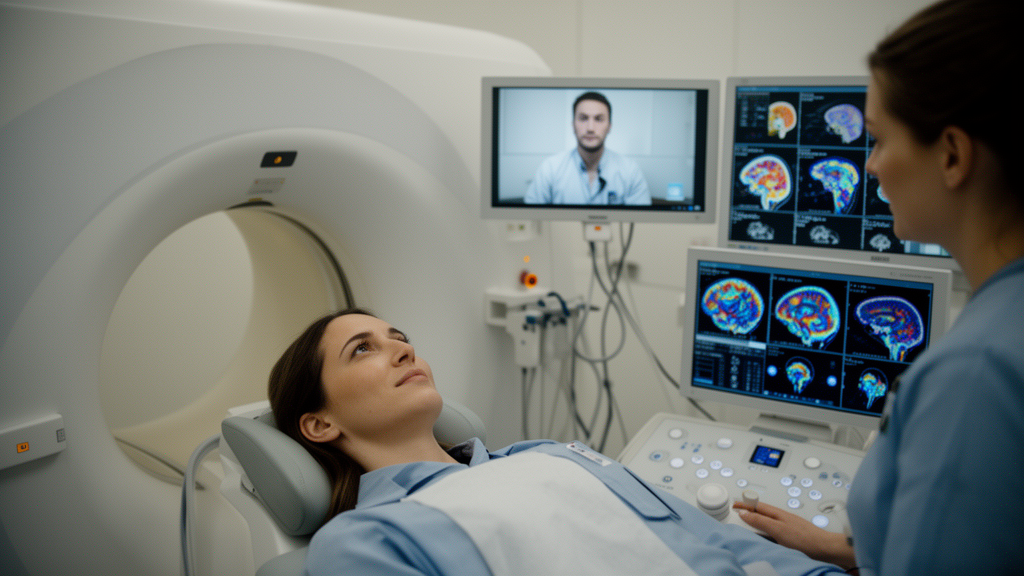
Trust is the invisible glue that holds teams together, and when the teammate is an autonomous system, it can mean the difference between mission success and catastrophe. Now, researchers at the University of California, Davis and the University of Colorado-Boulder have built a model that reads trust directly from the human brain as it rises, falls, and drifts during a space-relevant supervisory task. The work, published in Frontiers in Neuroergonomics, demonstrates that trust is not a fixed attitude but a dynamic cognitive state that can be tracked continuously from electroencephalogram (EEG) signals, opening the door to autonomous systems that sense and respond to human confidence in real time.
The research team, led by Yimin Qin of the Department of Mechanical and Aerospace Engineering at UC Davis, tackled a problem that has long frustrated human factors scientists. Trust in automation shapes how operators allocate attention, rely on system outputs, and decide when to intervene, and miscalibrated trust, whether excessive or insufficient, degrades team performance and safety. Yet trust is most often measured with retrospective questionnaires or post-task surveys, tools that offer limited temporal resolution and may be distorted by recall bias. Continuous self-report can capture temporal variation, but it reveals little about the underlying cognitive processes that support trust formation and adjustment.
To bridge this gap, the researchers turned to EEG, a non-invasive technique with millisecond-level temporal resolution that is sensitive to attentional engagement, cognitive control, workload, and decision-related neural activity. Ten participants performed an operationally motivated human-autonomy teaming task emulating satellite-based surveillance operations, in which the goal was to identify ground troop movement with the assistance of a simulated autonomous system. Participants monitored nine simulated satellites through a graphical interface, reviewed the system’s binary classifications of troop movement, assisted in guiding satellite image acquisition, and reported their momentary trust on a continuous slider every 30 seconds. Compensation was tied to the quantity and accuracy of reclassification decisions, introducing tangible risk and reward that kept participants genuinely engaged.
The experiment unfolded over five sessions: an initial training session followed by four testing sessions on separate days. During each testing session, participants interacted with one of four autonomous system variants that crossed two levels of reliability with two levels of explainability. The high-reliability systems classified troop movement with substantially higher accuracy than the low-reliability systems, which were correct approximately two-thirds of the time. Explainability was manipulated through the system’s explanatory style: low-explainability conditions offered terse, machine-like explanations, while high-explainability conditions used more naturalistic language. The four variants, named VEARS, BREES, SPEROS, and LEXAR, were randomly assigned across days, and participants were not informed of the specific characteristics of each system.
EEG data were recorded using a 62-channel g.tec active-electrode headset at a sampling rate of 500 Hz, synchronized with trust reports through the Lab Streaming Layer framework with sub-millisecond accuracy. After preprocessing with bandpass filtering, notch filtering, and independent component analysis, the researchers extracted spectral power features within six frequency bands: delta, theta, alpha, beta, low-gamma, and mid-gamma. Using a sliding-window approach over 2-second windows, spectral power was computed across all 62 channels and aggregated to match the temporal resolution of trust reporting, yielding a high-dimensional feature vector of 372 spectral features at each trust update.
The heart of the study lies in its modeling framework. The researchers proposed a non-linear dynamic model (NDM) that treats trust as a latent dynamic process evolving over time and indirectly reflected in EEG features. The model integrates a low-dimensional linear latent process, representing the temporal evolution of trust through a state-space structure with Kalman filtering and Rauch-Tung-Striebel smoothing, with a non-linear manifold that maps EEG spectral features to the latent state. The manifold is learned through multilayer perceptrons with tanh activation, and a supervised non-linear mapper predicts trust from the inferred manifold state. The NDM was trained jointly on multi-step EEG prediction and trust prediction objectives, with the dynamic and manifold latent dimensions fixed at two to force the model to explain high-dimensional EEG features through a compact state representation.
Two baseline models were implemented for comparison: a linear dynamic model (LDM) that retains the temporal state-space structure but assumes linear relationships between EEG features, latent state, and trust, and a linear static model (LSM) that ignores temporal dynamics entirely and treats trust inference as an instantaneous regression problem with LASSO regularization. All models were evaluated using Monte Carlo cross-validation, with one trial from each autonomous system condition randomly selected for testing and the remaining trials used for training, repeated twenty times. Crucially, the researchers corrected the unit of statistical inference to participant-level averages, conducting all paired tests on the ten independent subject-level averages to avoid pseudoreplication from repeated cross-validation folds.
The results were striking. The NDM achieved significantly higher correlation with self-reported trust than both the LDM (p = 0.0021) and the LSM (p < 0.0001), and significantly lower prediction error than the static model (p = 0.0020). The RMSE reduction relative to the linear dynamic model was numerically favorable but not statistically significant after participant-level aggregation. The advantage of the NDM became most evident when trust exhibited meaningful temporal structure: for participants whose trust oscillated rapidly between high and low values, the NDM closely followed the amplitude and timing of trust changes, while the baseline models produced overly smoothed trajectories that failed to capture fluctuations. For drifting trust patterns, the NDM more accurately reflected the rate of trust evolution and intermediate deviations, though all models generally captured the overall direction of change.
Model interpretation revealed that trust inference relied on distributed neural features rather than a single brain region. Delta and alpha band features exhibited spatially coherent importance patterns over frontal and fronto-central regions, particularly along midline electrodes such as FPz, Fz, and FCz, while gamma-band features displayed numerous high-importance values with greater spatial heterogeneity. When examined across representative trust dynamics, a shared frontal and prefrontal delta-band importance emerged across all three profiles, suggesting that slow frontal neural activity constitutes a core component of trust inference preserved across individuals. Beyond this shared low-frequency signature, distinct spatial-spectral distributions appeared: oscillatory trust dynamics extended more strongly into low- and mid-gamma activity over frontal and parietal regions, potentially reflecting high sensitivity to rapid changes in system behavior, while drifting trajectories showed broader distribution across alpha and low-gamma bands consistent with gradual trust updating and evidence accumulation.
Supervised Uniform Manifold Approximation and Projection (UMAP) applied to the smoothed latent state trajectories revealed that high- and low-trust states occupy distinct regions of the inferred latent space across all three trust dynamics. For oscillatory trust, high- and low-trust samples formed compact and well-separated clusters, suggesting rapid transitions between distinct latent regimes. For drifting trust, the latent embedding exhibited smoothly varying structures with samples distributed along continuous trajectories, consistent with gradual trust evolution. For stable trust, latent states remained within a constrained subspace with high- and low-trust samples separated by relatively short patterns. These findings indicate that the learned latent state captures both trust level and temporal structure, preserving differences in how trust evolves across individuals. The researchers acknowledge limitations, including the modest sample of ten participants in an intensive multi-session EEG design, the exploratory nature of feature-importance interpretations, and the focus on spectral power features rather than functional connectivity or cross-frequency interactions. Nevertheless, the work demonstrates that incorporating non-linear neural structure within a dynamic modeling framework improves EEG-based trust inference and supports the development of cognition-aware adaptive autonomy, pointing toward trust-aware autonomous systems capable of monitoring and responding to evolving human trust states in real time.
Subject of Research: An EEG-based non-linear state-space model continuously infers human trust in autonomous systems during a space-relevant supervisory task, achieving significantly higher correlation with self-reported trust than linear dynamic and static baseline models.
Article Title: An EEG-based non-linear state-space model for trust inference in a space-relevant human-autonomy teaming task
Article References: Qin, Y., Prugsanapan, P., Leary, S., Shih, K. Y., Kong, Z., Hayman, A., & Clark, T. (2026). An EEG-based non-linear state-space model for trust inference in a space-relevant human-autonomy teaming task. Frontiers in Neuroergonomics, 7, Article 1810115. https://doi.org/10.3389/fnrgo.2026.1810115
Image Credits: AI Generated
DOI: 10.3389/fnrgo.2026.1810115
Keywords: EEG, trust inference, human-autonomy teaming, state-space model, non-linear dynamics, neuroergonomics, adaptive autonomy, satellite surveillance, machine learning, latent dynamics, prefrontal cortex, gamma band
News Source: Cassandra Pierce. (October 16, 2026). Scientists Can Now Read Trust in the Human Brain as It Rises and Falls in Real Time. Scienmag.