

• HOME
  • NEWS
  • EXPLORE
    • CAREER
      • Companies
      • Jobs
    • EVENTS
    • iGEM
      • News
      • Team
    • PHOTOS
    • VIDEO
    • WIKI
  • BLOG
  • COMMUNITY
    • FACEBOOK
    • INSTAGRAM
    • TWITTER
Friday, January 2, 2026
BIOENGINEER.ORG
No Result
View All Result
  • Login
  • HOME
  • NEWS
  • EXPLORE
    • CAREER
      • Companies
      • Jobs
        • Lecturer
        • PhD Studentship
        • Postdoc
        • Research Assistant
    • EVENTS
    • iGEM
      • News
      • Team
    • PHOTOS
    • VIDEO
    • WIKI
  • BLOG
  • COMMUNITY
    • FACEBOOK
    • INSTAGRAM
    • TWITTER
  • HOME
  • NEWS
  • EXPLORE
    • CAREER
      • Companies
      • Jobs
        • Lecturer
        • PhD Studentship
        • Postdoc
        • Research Assistant
    • EVENTS
    • iGEM
      • News
      • Team
    • PHOTOS
    • VIDEO
    • WIKI
  • BLOG
  • COMMUNITY
    • FACEBOOK
    • INSTAGRAM
    • TWITTER
No Result
View All Result
Bioengineer.org
No Result
View All Result
Home NEWS Science News Cancer

Scientists awarded $1.3 million to optimize probes to test new approach to cancer treatment

Bioengineer by Bioengineer
June 8, 2016
in Cancer
Reading Time: 2 mins read
0
Share on FacebookShare on TwitterShare on LinkedinShare on RedditShare on Telegram
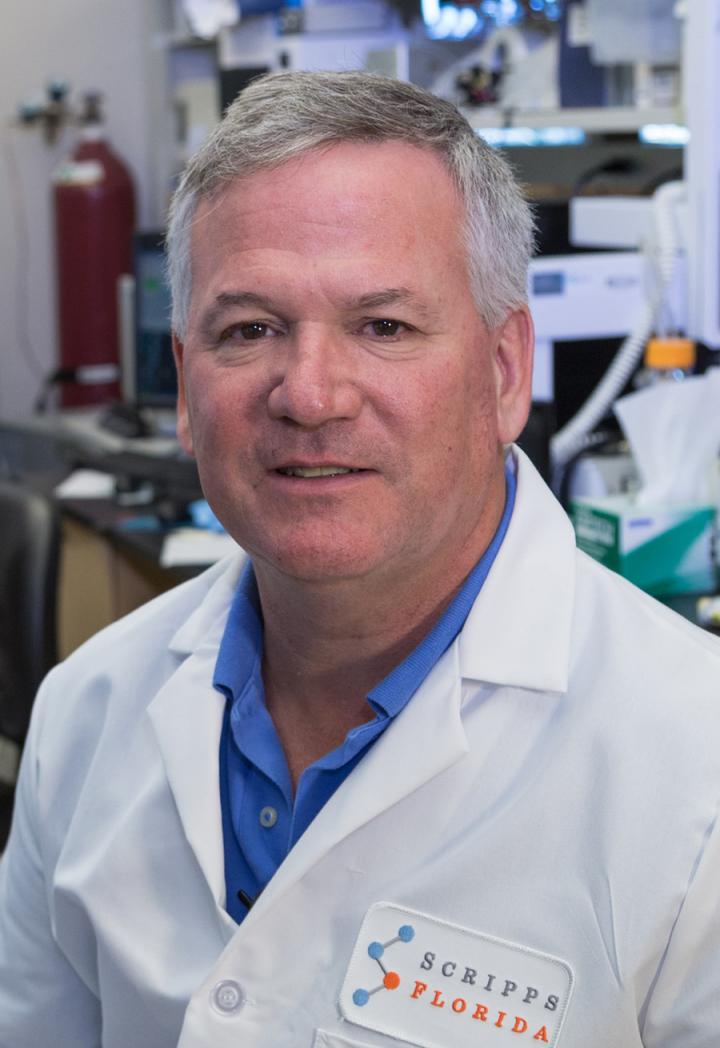
IMAGE

JUPITER, FL – June 7, 2016 – Scientists from the Florida campus of The Scripps Research Institute (TSRI) have been awarded $1.3 million by the National Cancer Institute of the National Institutes of Health to develop novel compounds to enhance the immune system of patients with cancer. Although not aimed specifically at creating drug candidates, these new chemical tools will be used to explore the role of a large family of proteins that has proven to be a rich source of therapeutic targets.

TSRI’s Professor Patrick R. Griffin and Associate Professor Theodore Kamenecka will be the principal investigators (PIs) of the new three-year collaborative multi-PI grant.

The new study will focus on a protein known as the retinoic acid receptor-related orphan receptors (ROR) gamma and molecules that bind to it (ligands) and activate the receptor (agonists).

“There has been significant interest in the ROR family of proteins because they play key roles in energy and fat metabolism as well as immunity,” Griffin said. “Many labs have developed compounds to repress the activity of ROR gamma for use in a range of autoimmune diseases. However, only a few labs, including ours, have described activators of this receptor. This research grant will help us optimize our current set of chemical compounds. These molecules will be used to help trigger immune cells so they will attack and kill tumor cells. The general idea is such compounds will help battle adaptive immune resistance encountered in cancer therapy.”

Mi Ra Chang, senior staff scientist in the Department of Molecular Therapeutics, will lead the development of cancer models for this program.

“Previously we had described a chemical probe that can activate immune cells. This research award will allow us to optimize the potency, selectivity and bioavailability of our ROR gamma agonists,” Kamenecka added. “Optimized probes that have good pharmaceutical properties can then be studied in models of cancer immunotherapy.”

Once that work is completed, the scientists expect to pursue pre-clinical development of the drug candidates.

The number of the grant is R01 CA206493.

###

Media Contact

Eric Sauter
[email protected]
267-337-3859
@scrippsresearch

http://www.scripps.edu

The post Scientists awarded $1.3 million to optimize probes to test new approach to cancer treatment appeared first on Scienmag.
Share35Tweet8Share2ShareShareShare2

Related Posts

Derazantinib Boosts Gemcitabine by Blocking MUC5AC

December 30, 2025

FOCUS Study Reveals Insights on Melphalan for Uveal Melanoma

December 29, 2025

Black Grape Anthocyanins Boost 5-FU Cancer Therapy

December 29, 2025

Girdin Silencing Boosts Mebendazole’s Ovarian Cancer Fight

December 29, 2025
Please login to join discussion

POPULAR NEWS

  • blank

    PTSD, Depression, Anxiety in Childhood Cancer Survivors, Parents

    112 shares
    Share 45 Tweet 28
  • NSF funds machine-learning research at UNO and UNL to study energy requirements of walking in older adults

    71 shares
    Share 28 Tweet 18
  • Exploring Audiology Accessibility in Johannesburg, South Africa

    52 shares
    Share 21 Tweet 13
  • SARS-CoV-2 Subvariants Affect Outcomes in Elderly Hip Fractures

    44 shares
    Share 18 Tweet 11

About

We bring you the latest biotechnology news from best research centers and universities around the world. Check our website.

Follow us

Recent News

Topological Edge Cavities Boost Quality and Spectral Range

TECPR1 Tubulates Lysosomes to Repair Energy Crisis

Ultrawideband Polymer Transducers Boost Hemispherical Optoacoustic Imaging

Subscribe to Blog via Email

Enter your email address to subscribe to this blog and receive notifications of new posts by email.

Join 71 other subscribers
  • Contact Us

Bioengineer.org © Copyright 2023 All Rights Reserved.

Welcome Back!

Login to your account below

Forgotten Password?

Retrieve your password

Please enter your username or email address to reset your password.

Log In
No Result
View All Result
  • Homepages
    • Home Page 1
    • Home Page 2
  • News
  • National
  • Business
  • Health
  • Lifestyle
  • Science

Bioengineer.org © Copyright 2023 All Rights Reserved.
