The breakthrough reveals new ways to combat drug-resistant bacteria and fight cancer
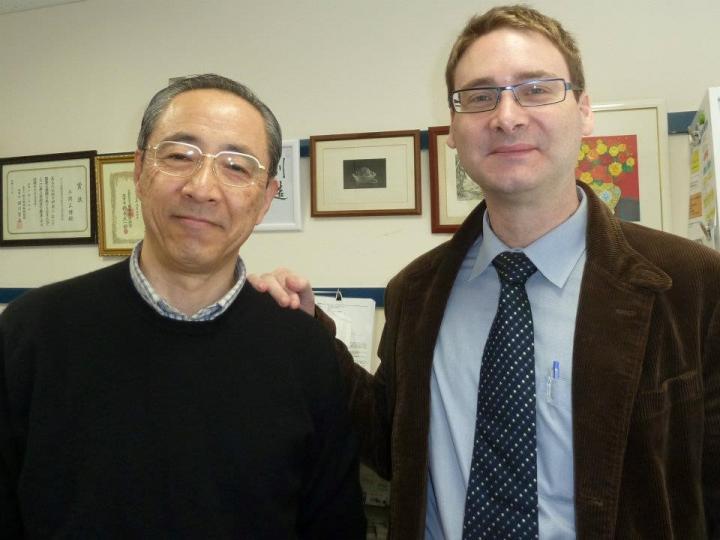
Credit: Dr Martin Lear, University of Lincoln
After 20 years of dedicated research, scientists have cracked the chemical code of an incredibly complex ‘anti-tumour antibiotic’ known to be highly effective against cancer cells as well as drug-resistant bacteria, and have reproduced it synthetically in the lab for the first time.
This major breakthrough and world-first could hail a new era in the design and production of new antibiotics and anticancer agents.
The ‘super substance’ – kedarcidin – was discovered in its natural form by a pharmaceutical company when they extracted it from a soil sample in India almost 30-years-ago. Soil is the natural source of all antibiotics developed since the 1940s but in order for them to be developed as potential drug treatments they must be produced via chemical synthesis.
Unlike many other antibiotics which focus solely on killing bacteria, kedarcidin is also capable of harming tumour cells and has potential as an effective cancer treatment.
Kedarcidin is incredible in its biological activity, as it works by causing DNA damage to its target, but also in its structural complexity. It has been the subject of extensive research by scientists around the world but because of its complex structure they have been unable to reproduce it in its most complete and accurate form, until now.
Dr Martin Lear at the University of Lincoln, UK, and Professor Masahiro Hirama, based at Tohoku University in Japan, have become the first scientists in the world to create a total synthesis of this highly unstable natural product. Their findings are published in The Journal of Antibiotics from Nature.
Dr Martin Lear, Reader in the School of Chemistry at the University of Lincoln, explained: “Following its discovery in soil it took 10 years to determine the molecular structure of kedarcidin. With a reactive core protected by a protein cloak, it resembles something like a scotch egg!
“In 1997, I began the long journey of making kedarcidin’s reactive core with Professor Hirama, who was recently awarded the highest honour for a scientist in Japan. We basically needed to piece together a molecular puzzle of remarkable difficulty and then develop new ways of making the jigsaw pieces. 20 years later we have finally solved the puzzle.
“This extraordinary journey has revealed new molecular insights and promising mechanisms for fighting cancer and combating drug-resistant bacteria, and it has challenged the frontiers of chemistry and biology. Now the new biological knowledge and chemical ability we have can be used to develop the next generation of antibiotics and anticancer agents.”
It has been predicted that by 2050 an additional 10 million people will succumb to drug resistant infections each year. The development of new antibiotics which can be used as a last resort when other drugs are ineffective is therefore a crucial area of study for healthcare researchers around the world. This new study represents an important step towards making this end goal a reality.
Kedarcidin’s anticancer properties also make it a fascinating subject for scientists exploring new ways of tackling aggressive cancerous tumours. Now it is possible to recreate the substance synthetically, researchers will be able to gain a greater insight into the mechanisms which make it so effective against leukaemia and melanoma cells for example.
###
The full paper, titled A convergent total synthesis of the kedarcidin chromophore: 20 years in the making, is available to read online: https:/
Media Contact
Sophie Belche r
[email protected]
Related Journal Article
http://dx.