A comprehensive scientific roadmap published in Frontiers in Cellular and Infection Microbiology establishes that understanding Blastocystis, a prevalent yet poorly resolved microbial eukaryote colonising the human gut, requires shifting decisively beyond presence and absence surveys toward subtype-resolved, function-centred microbiome science. Authored by Anastasios D. Tsaousis and an international team, the review confronts a key paradox: Blastocystis occurs widely across human populations, displays a broad host range spanning animals and insects, and frequently colonises individuals without gastrointestinal symptoms. Because conventional studies reduce the protist to a binary variable while relying on bacterial-focused ribosomal RNA profiling, they fail to illuminate its metabolic activity, strain variation, spatial niche, or interactions with co-resident microbes. The authors propose an integrated, staged framework treating emerging technologies as interdependent tools to determine the precise conditions under which Blastocystis functions as a harmful pathogen, a harmless commensal, or a beneficial member of the gut ecosystem.
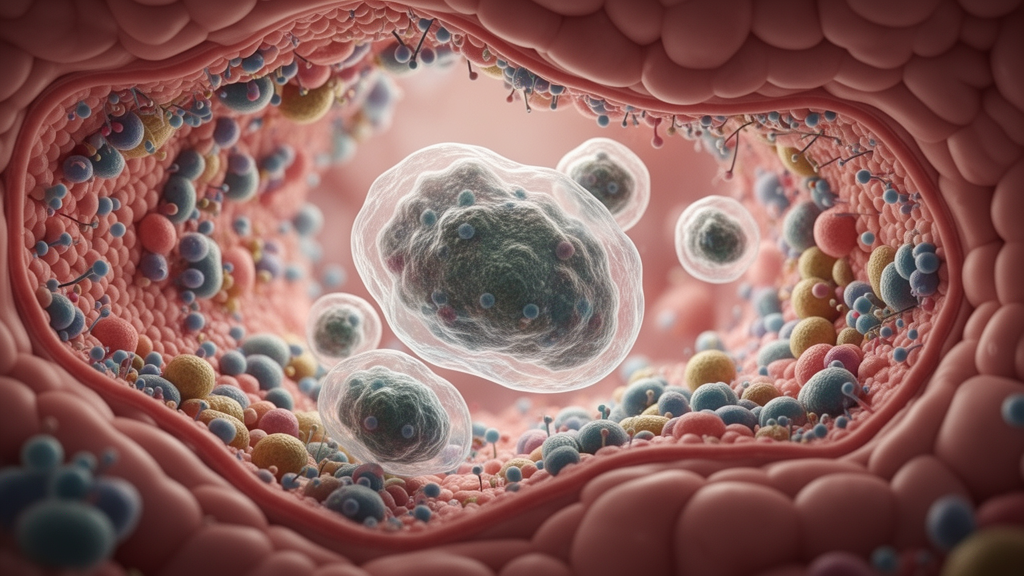
The organism’s fundamental biology reveals extensive morphological and genetic diversity that complicates epidemiological interpretation and challenges assumptions that intestinal protists are uniformly harmful agents. Belonging to the stramenopile lineage Opalinata, whose close evolutionary relatives are animal commensals, Blastocystis typically appears in culture as a non-motile, spherical cell dominated by a large central vacuole with peripheral cytoplasm. Across microscopy studies, vacuolar, granular, amoeboid, and cystic forms have been documented. Transmission occurs through the faecal-oral route via infective cysts that give rise to intestinal vacuolar forms, which multiply by binary fission and shed new cysts in faeces. Phylogenomic analyses indicate that Opalinata ancestors underwent extensive cellular reduction during adaptation to anaerobic gut environments. This evolutionary transition involved the complete loss of flagella and ciliary machinery alongside the conversion of ancestral mitochondria into specialised mitochondrion-related organelles supporting anaerobic survival. These structural reorganisations reflect a long evolutionary history of intimate association with animal digestive systems.
At the molecular level, Blastocystis exhibits substantial genetic divergence structured by an expanding ribosomal RNA classification framework. Subtypes are defined using small subunit ribosomal RNA gene sequences, where divergence of at least four percent designates a novel subtype. A standardised diagnostic polymerase chain reaction targeting an approximately 600-base-pair barcoding fragment is widely deployed, identifying more than 44 described subtypes across hosts. In human hosts, subtypes one through four dominate globally, with subtype three being the most frequent worldwide. Distinct geographic variations also occur, including an elevated frequency of subtype four in parts of Europe. For routine nomenclature and allele validation, researchers utilize the curated PubMLST typing resource, which provides subtype- and allele-aware matching. These geographic and demographic patterns suggest that environmental exposures, sanitation, diet, and lifestyle shape colonisation dynamics, demonstrating why crude presence or absence determinations obscure biologically meaningful variation.
Experimental investigations highlighted in the roadmap illustrate that the impact of Blastocystis on host physiology is highly conditional and subtype dependent rather than binary. In rodent colonisation experiments, different subtypes provoke sharply contrasting immunological outcomes. For example, mice infected with subtype seven produced indole-3-acetaldehyde, a tryptophan metabolite that reduces anti-inflammatory regulatory T cells while expanding pro-inflammatory Th17 cells. Conversely, controlled colonisation with subtype one ameliorated dextran sulfate sodium-induced colitis in mice, promoting anti-inflammatory tissue outcomes. Long-term colonisation with subtype three likewise accelerated recovery from dinitrobenzene sulfonic acid-induced colitis in rats, whereas short-term exposure failed to confer protection. Subtype four colonisation has also shown protective anti-inflammatory effects in murine colitis, inducing regulatory T-cell responses and stabilising resident bacteria. Furthermore, subtype-specific interactions modify bacterial communities directly: subtype seven selectively kills beneficial Bifidobacterium through reactive oxygen species, whereas subtype four preserves resident microbial stability.
However, the roadmap emphasizes that existing experimental rodent models possess critical methodological constraints that prevent direct extrapolation to naturally acquired human colonisation. Many published studies administered in vitro-propagated xenic cultures via oral gavage or caecal inoculation without documenting whether inocula contained vacuolar, granular, amoeboid, or cystic stages. Crucially, shedding of mature cysts was rarely verified, leaving uncertain whether parasites completed natural developmental life cycles. Model susceptibility also varies across host species; while oral infection with purified cysts established chronic subtype four infection in rats—inducing colonic hypersensitivity and altered microbiota—the identical protocol failed in mice. To resolve these inconsistencies, the authors propose a four-domain evidential framework to classify Blastocystis as harmful, neutral, or beneficial. This classification requires converging evidence across clinical intervention trials, consistent microbiological community shifts, defined immunological host-response signatures, and experimental validation in gnotobiotic animal or organoid model systems.
Evolutionary genomic analyses provide critical mechanistic insight into how Blastocystis adapted to the gut environment, driven by ancient and ongoing lateral gene transfer. Estimates indicate that approximately 2.5 percent of Blastocystis genes were acquired horizontally from co-resident intestinal bacteria. These transferred sequences encode functions vital for anaerobic metabolism, oxygen stress resistance, and nutrient scavenging within the gut lumen. Comparative genomics across Opalinata relatives demonstrates that many acquisitions occurred in their shared common ancestor, establishing a pre-adaptive genetic toolkit that Blastocystis subsequently expanded. Recent long-read assemblies have uncovered host-ecology-specific gene transfers, including the acquisition of plant carbohydrate-metabolising enzymes in tortoise-associated strains. These findings confirm that lateral gene transfer remains an active evolutionary process shaping metabolic capabilities according to host ecology. Nonetheless, functional validation remains limited by the scarcity of high-quality reference genomes and the historical inability to confirm homology-based functional inferences through experimental systems.
Overcoming these technical barriers requires deploying advanced genomic, multi-omic, and spatial analytical tools tailored specifically to microbial eukaryotes in complex intestinal environments. Short-read metagenomics frequently misclassifies eukaryotic sequences unless paired with dedicated classifiers such as EukDetect, Tiara, or EukRef, alongside curated subtype references. Long-read Nanopore and PacBio sequencing now allow near-complete genome assembly from xenic cultures, which can be augmented by Cas9-guided enrichment or adaptive sampling during active sequencing runs. For functional activity, metatranscriptomics requires dual-library preparation combining ribosomal RNA depletion with polyadenylated RNA capture to measure bacterial and eukaryotic transcripts simultaneously. Metaproteomics, supported by hyperLOPIT spatial proteomics to map proteins across organelles like the central vacuole and mitochondrion-related organelles, provides critical subcellular resolution. Meanwhile, single-cell ramanomics generates label-free vibrational fingerprints of metabolic states, and computational frameworks like MOFA+ and DIABLO systematically integrate multi-omic layers into coherent biological models.
To test causal mechanisms directly, the roadmap outlines controlled in vitro platforms, dynamic simulators, and ingestible gut sampling capsules. Developing standardized xenic cultures with defined bacterial consortia provides reproducible baselines for physiological testing, mirroring culturomics approaches that expanded the cultivated human gut archaeome. Human intestinal organoids and gut-on-chip systems allow researchers to separate direct epithelial effects from microbiome-mediated interactions, evaluating epithelial barrier integrity, cytokine production, and cellular morphology via high-content imaging assays like Cell Painting. Dynamic multi-compartment gut simulators, such as SHIME and mucosal M-SHIME systems, reproduce human digestive gradients over weeks, evaluating how subtypes persist, alter bacterial composition, and modulate short-chain fatty acids or bile acids without host constraints. Complementing these laboratory models, ingestible sampling capsules now permit targeted, non-invasive collection of luminal contents from the small intestine, caecum, and colon in human volunteers, overcoming the spatial limitations of stool-only sampling.
The authors organize these diverse scientific objectives into a structured ten-year Gantt roadmap supported by a tiered strategy for global research equity. The short-term phase spanning zero to three years prioritises reference-grade genomes for subtypes one through four and seven, validated eukaryotic detection pipelines, targeted long-read enrichment, and capsule sampling pilots. The medium-term horizon across three to five years focuses on multi-omics datasets, single-cell sequencing, organoid co-cultures, and biopsy spatial profiling. The long-term phase covering five to ten years targets stable transformation, CRISPR editing tools, synthetic communities, and predictive machine-learning models. Because Blastocystis prevalence peaks in low- and middle-income regions with limited infrastructure, the authors propose a three-tier implementation model: an essential tier (polymerase chain reaction, standardized metadata, stool sampling), an intermediate tier (metagenomics, culturomics, metabolomics), and an advanced tier (spatial omics, single-cell genomics, organoids), ensuring international partners actively co-lead scientific discovery.
Finally, unlocking the clinical significance of Blastocystis requires establishing rigorous epidemiological standards and unified data infrastructure to resolve long-standing confounding variables. A proposed minimum data framework mandates systematic recording of host demographics, Bristol Stool Chart scores, gastrointestinal disease history, dietary patterns, medication use, environmental sanitation, animal contact, and seasonality. Capturing detailed diet quality and fibre intake is critical, as healthy diets correlate with both Blastocystis carriage and elevated bacterial diversity, representing a major confounder in observational surveys. Integrating these standardized datasets conforming to STORMS and MIxS reporting guidelines into BlastoDB, the centralized repository developed under the Blastocystis under One Health COST Action, will create an open, interoperable resource linked to PubMLST. By establishing reference genomes, functional genetic tools, and standardized collaborative frameworks, the roadmap positions Blastocystis as an essential model organism for unravelling how microbial eukaryotes shape, and are shaped by, the gut ecosystem.
Subject of Research: Staged methodological roadmap for subtype-resolved, multi-kingdom Blastocystis microbiome research
Article Title: Beyond presence and absence: a roadmap for Blastocystis research
Article References: Tsaousis, A. D., Tunali, V., Shaw, D., Kolisko, M., Gentekaki, E., & Jirku, K. (2026). Beyond presence and absence: a roadmap for Blastocystis research. Frontiers in Cellular and Infection Microbiology, 16, Article 1938645. https://doi.org/10.3389/fcimb.2026.1938645
Image Credits: AI Generated
DOI: 10.3389/fcimb.2026.1938645
Keywords: Blastocystis, gut microbiome, microbial eukaryotes, protist subtyping, lateral gene transfer, mitochondrion-related organelles, metatranscriptomics, metaproteomics, single-cell ramanomics, BlastoDB, gnotobiotic models, intestinal organoids, SHIME gut simulators, ingestible sampling capsules, spatial meta-transcriptomics, PubMLST, indole-3-acetaldehyde, Opalinata
News Source: Morgan Morrow. (November 26, 2026). Scientific Roadmap Reframes Blastocystis Beyond Binary Colonisation in the Human Gut. Scienmag.