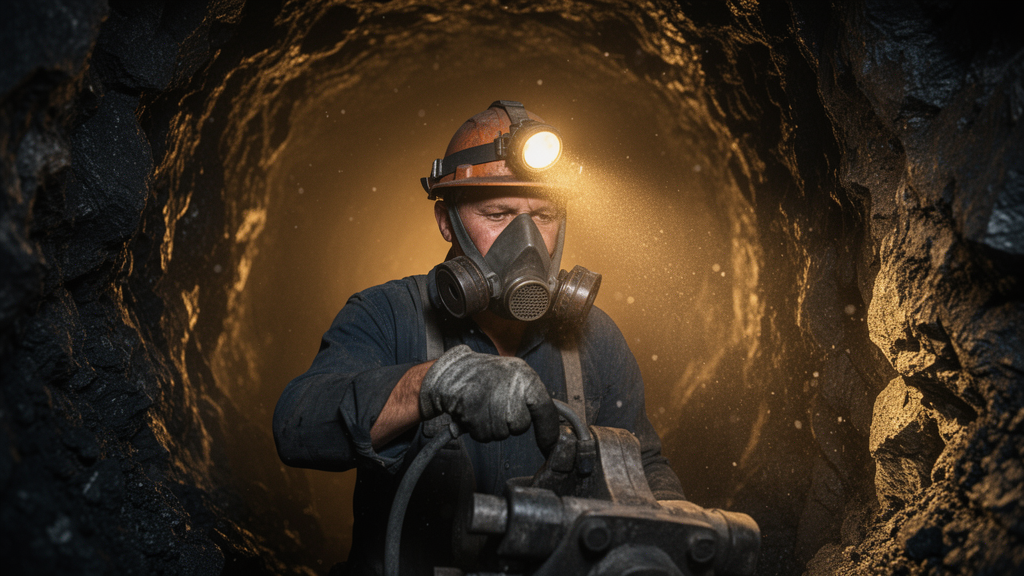
A cross-sectional observational investigation evaluating 2,479 permanent male coal mine workers in Eastern India found that 19.1 percent presented with abnormal spirometric patterns. Chronic exposure to respirable coal dust remains an established occupational hazard among mining personnel, known to trigger progressive pulmonary impairment alongside chronic respiratory disease. Researchers designed the investigation to assess pulmonary function systematically while identifying independent occupational determinants contributing to respiratory deficits across the workforce.
Conducted between June 2024 and December 2025, the research relied on standardized respiratory evaluations alongside detailed socio-demographic, occupational, and clinical assessments. Pulmonary function was measured through a daily-calibrated pneumotach sensor-based spirometer operated in accordance with joint American Thoracic Society and European Respiratory Society guidelines. Statistical calculations were executed using SPSS Version 26.0, deploying multiple linear regression models adjusted for physiological covariates including participant age, standing height, and body mass index.
Among the abnormal spirometric outcomes identified across the study population, airflow obstruction with preserved forced vital capacity emerged as the most prevalent condition, identified in 10.3 percent of the examined miners. In contrast, a ventilatory pattern suggestive of pulmonary restriction appeared in 6.9 percent of participants, while combined airflow obstruction with reduced forced vital capacity was detected in 1.8 percent of the workforce.
Direct spirometric volume measurements further highlighted measurable physiological deficits compared against standardized regional benchmarks. The observed mean forced expiratory volume in one second stood at 2.49 liters, and the mean forced vital capacity reached 3.15 liters. Both figures were statistically significantly lower than the corresponding Indian reference values of 2.59 liters and 3.27 liters, with significance confirmed at the p < 0.001 threshold for each metric.
Multivariate linear regression demonstrated that cumulative job duration had a statistically significant negative association across several vital pulmonary parameters after controlling for physiological factors. Specifically, longer tenure showed inverse associations with forced vital capacity, the ratio of forced expiratory volume to forced vital capacity, forced expiratory flow at 25 to 75 percent of vital capacity, and peak expiratory flow rate, with all relationships reaching statistical significance at p < 0.05.
Additional working conditions and personal habits demonstrated substantial independent associations with decrements in lung capacity. Underground mining operations, inadequate use of respiratory personal protective equipment, and tobacco smoking were each independently associated with poorer pulmonary function at the p < 0.01 level. These findings underscore how simultaneous environmental, behavioral, and physical operational factors correlate with measured respiratory function among workers operating in active coal extraction facilities.
To evaluate potential institutional variance across distinct workplaces, investigators carried out sensitivity analyses employing mine-clustered standard errors and random-intercept models, noting intra-class correlation coefficients ranging between 0.03 and 0.10. These sensitivity assessments demonstrated that most identified statistical relationships remained robust to mine-level clustering. However, the observed association between personal protective equipment use and pulmonary function was not robust under clustered model specifications.
The study authors concluded that coal mine workers bear a substantial burden of pulmonary function impairment, characterized predominantly by obstructive airflow limitations rather than restrictive deficits alone. Based on these cross-sectional findings, the researchers emphasized that regular spirometry-based surveillance, structured tobacco cessation programs, workplace dust control measures, and rigorous objective evaluations of personal protective equipment effectiveness are urgently warranted to safeguard respiratory health.
Subject of Research: Occupational determinants of pulmonary function among coal mine workers
Article Title: Occupational determinants of pulmonary function among coal mine workers in Eastern India: insights from a cross-sectional study
Article References: Dhatrak, S., Shah, R., Tank, N., Thakor, M., Sheth, A., Modi, B., & Viramgami, A. (2026). Occupational determinants of pulmonary function among coal mine workers in Eastern India: insights from a cross-sectional study. BMC Pulmonary Medicine. https://doi.org/10.1186/s12890-026-04960-2
Image Credits: AI Generated
DOI: 10.1186/s12890-026-04960-2
Keywords: coal mining, pulmonary function, spirometry, Eastern India, occupational health, respirable coal dust, airflow obstruction, forced vital capacity, FEV1, FEF25-75, peak expiratory flow rate, underground mining, personal protective equipment, tobacco smoking, cross-sectional study, occupational exposure
News Source: Ophelia Keating. (November 26, 2026). Coal Mining Duration and Underground Work Linked to Impaired Lung Function. Scienmag.