


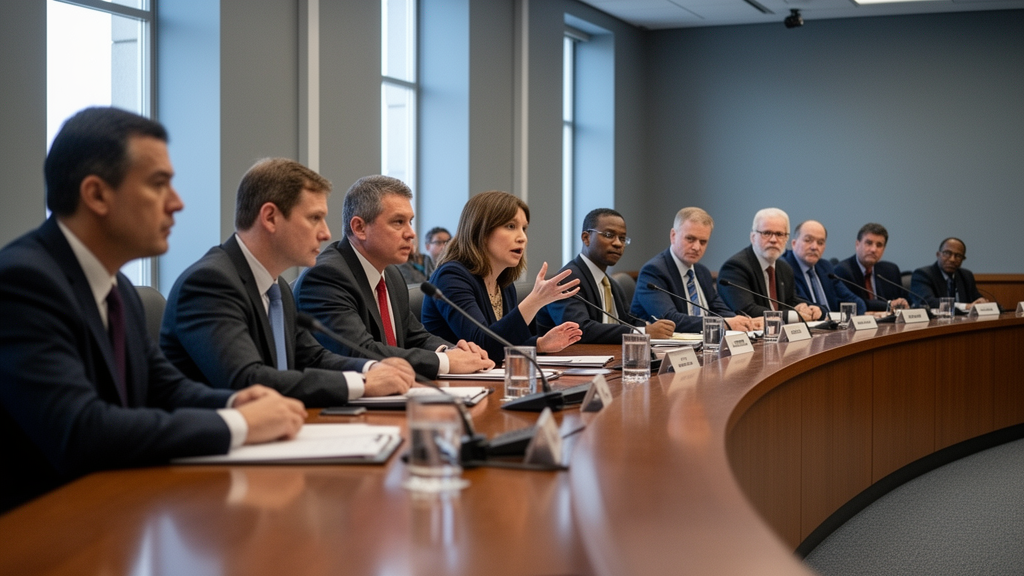
When governments declared they were “following the science” during the COVID-19 pandemic, the machinery behind that promise varied enormously from country to country, and much of it operated in ways the public never saw. A scoping review published in BMC Global and Public Health has now mapped how scientists and policymakers interacted during public health emergencies of international concern, drawing on 87 studies from across the globe. The review, led by Sophie Meyer of the University of Bern and colleagues, found that formal Scientific Advisory Committees, or SACs, dominated the documented landscape, while informal mechanisms such as committees without a formal remit and undisclosed practices played crucial but underexplored roles.
The research team followed the Johanna Briggs Institute protocol and searched seven databases, including Embase.com, Medline, the Cochrane Library, Web of Science Social Science Citation Index, ERIC, Global Health, and Google Scholar. The original search was conducted in April 2022 and updated in March 2026, with earlier updates in September 2023. After screening 8057 articles at title and abstract level, the team included 87 studies that described interactions between researchers and policymakers in public health emergency settings. Systematic reviews, articles on endemic diseases such as malaria and cholera, clinical and hospital contexts, and impact evaluations of research evidence were excluded. Data were analysed using qualitative content analysis with both inductive and deductive category building.
The concentration on COVID-19 was striking. Of the 87 included studies, 82, or 95 percent, focused on the COVID-19 pandemic, while only five addressed other outbreaks such as Ebola, Zika, or H1N1. The authors note that this dominance reflects both the recency and volume of research on the pandemic, and it shapes the empirical grounding of their findings. Interestingly, based on the included articles, they found no significant difference in SAC formation, facilitators, or perceived challenges between COVID-19 settings and other public health emergencies of international concern. Geographically, all six World Health Organization regions were represented, with 70 countries covered, of which 31 were high-income and 39 were low- and middle-income countries. Yet the corpus was disproportionately weighted toward the United Kingdom, with 19 studies, and Canada, with 15.
Formal advisory structures were the backbone of most documented interactions. In 40 cases, accounting for 45 percent of the studies and spanning 29 countries, formal systems had existed before the emergency struck. These included administration-related institutions such as national public health institutes that acted as scientific advisory bodies. Canada emerged as a peculiar case of a full-grown science advisory ecosystem, shaped by prior experience with SARS and H1N1, in which National Collaborating Centres for Public Health acted as evidence intermediaries. Governments were perceived as the main driving force in creating SACs, though in some cases researchers initiated the effort and were later adopted by governmental mandate, and in one case a not-for-profit organization took the lead. Many SACs were nonetheless established ad hoc during COVID-19 and the swine flu pandemic, despite repeated reminders from global health organizations to prepare in advance.
Beneath the formal surface, however, informal practices were deeply embedded. Committee members were frequently reported as directly chosen or hand-picked by policymakers, sometimes based on their political alignment. In Australia, the hand-picking of advisors by the federal government was reported to limit and withhold infectious disease modelling assumptions, hindering independent scrutiny. In Belgium, political parties interfered in membership selections, suggesting trusted insiders. SAGE members in the United Kingdom were at first undisclosed, and their selection criteria were unclear or opaque. Informal communication channels were also common: in British Columbia, researchers and health officials described unclear pathways through which information reached policymakers, and in Belgium, informal contacts between administration and experts led to informal new structures that considerably influenced policy decisions.
A small but notable set of committees was informal by design. Five articles described such bodies: an Austrian informal exchange platform, the independent SAGE in the UK, an informal group of epidemiologists in North Carolina, and the independent OCTA Research Group in the Philippines. The Austrian platform, according to König and Stampfer, provided space for policy innovation without political interference and maintained independence in contrast to formal bodies that struggled to separate facts from interests. Yet it too struggled due to policymakers’ reliance on informal, reactive communication channels. The North Carolina group was described as flexible and quick in producing perceived policy-relevant advice, though its authors acknowledged the necessity of a standing committee.
Across formal and informal settings alike, the review identified recurring challenges. Missing institutional mechanisms for exchange hampered quick and effective collaboration. Communication difficulties arose from governments’ limited understanding of science and scientific methods, particularly regarding scientific uncertainty, while researchers in turn lacked knowledge of political processes. Overly technical evidence could overwhelm decision-makers, leading to misinterpretation or disregard. Political filtering and selective uptake of advice were reported worldwide, with perceived ignorance of scientific advice documented in Latin America, the UK, the US, Sweden, and Canada. Occasionally, researchers went to the media when they felt policymakers were not considering their advice. Role ambiguity escalated into blurring of the science-policy boundary itself: in Italy, SAC members signed nondisclosure agreements prohibiting media contacts, while in Denmark, technical and political expertise blurred in public representation through press conferences.
Evidence was also invoked as justification for governmental actions already taken or contemplated on other grounds. In Turkey, the public reputation of doctors and scientists as trustworthy sustained the following-the-science narrative, which in turn reinforced low-level inclusion in decision-making and depoliticization of issues at stake. In Norway, governmental leaders held daily press conferences alongside expert leaders early in the pandemic, bolstering their own legitimacy while leaving little room for open disagreement. The review authors connect these patterns to a broader critique of naïve evidence-based policymaking, which ignores structural mismatches and power asymmetries at the science-policy interface. Under acute pressure, governments may rely on trusted individuals or epistemic communities with shared worldviews, reinforcing dominant perspectives while marginalizing others.
From the reported challenges, the authors distilled key requirements for future emergency advisory work. These include differentiating the roles and responsibilities of SACs and governments, improving communication loops, formalising and institutionalising relationships before the next crisis, and protecting the scientific independence of advisory bodies. Specific recommendations include electing SAC members based on disciplinary expertise rather than political alignment, institutionalising committees as part of routine pandemic planning with enabling policies that protect independence and ensure sustainable resources, delineating roles and standard operating procedures transparently, and broadening composition beyond the prevailing dominance of biomedical and natural sciences to include behavioural and social sciences, gender balance, and people with lived experience. The authors also propose a cross-country learning platform for SACs and greater attention to informal interactions, which remain less documented despite their relevance.
The review acknowledges important limitations. The authors did not assess the quality of included articles, and literature published during pandemics may involve premature evaluation without adequate peer review. The predominance of high-income country settings persisted despite a search without language or regional filters, suggesting the pattern reflects the available evidence base rather than the search scope alone. Relatively few studies examined science-policy interactions in low- and middle-income countries in depth, and the authors recommend further research there, noting that in settings with smaller and less institutionally separated research and policy communities, personal relationships may play a larger role than conventional framings assume. The role of media in science-policy interaction was beyond the study’s scope, and interactions that are not publicly reported may escape systematic searches entirely. The authors also encourage future studies to examine non-infectious public health emergencies, such as climate and environmental crises, which remain underrepresented in the literature and in frameworks like the PHEIC designation.
Subject of Research: How formal and informal science-policy interactions are organised during public health emergencies of international concern
Article Title: Formal and informal science-policy interaction during public health emergencies of international concern: a scoping review
Article References: Meyer, S., Liwanag, H. J., Schürch, K., Minder, B., von Groote, P., Schlaufer, C., & Frahsa, A. (2026). Formal and informal science-policy interaction during public health emergencies of international concern: a scoping review. BMC Global and Public Health, 4(1), Article 90. https://doi.org/10.1186/s44263-026-00325-3
Image Credits: AI Generated
DOI: 10.1186/s44263-026-00325-3
Keywords: science-policy interaction, public health emergencies, Scientific Advisory Committees, COVID-19, scoping review, PHEIC, evidence-based policymaking, informal advisory practices, global health governance, knowledge translation, pandemic preparedness, scientific independence
News Source: Ophelia Keating. (October 30, 2026). Scientific advisory committees dominate emergency science-policy advice, review finds. Scienmag.



