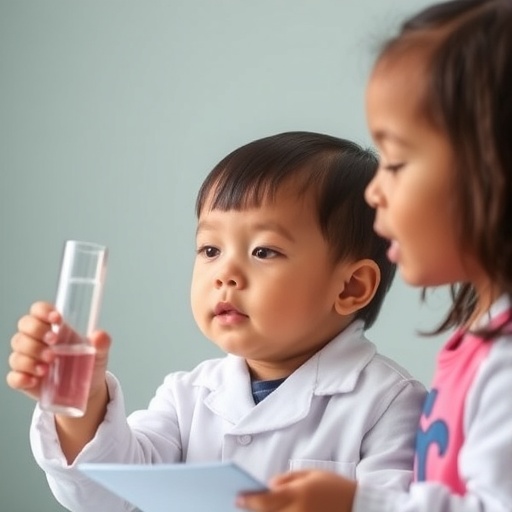
A new award presentation in Pediatric Research frames misinformation as a direct threat to child survival, arguing that scientific knowledge can save lives only when families, clinicians and communities are able to recognize, understand and trust it. In “Saving children’s lives through science and public health: winning the war against misinformation,” pediatrician Gabriel Flores links advances in biomedical research with the public-health systems needed to translate evidence into everyday protection for children. The presentation, delivered for the Society for Pediatric Research’s 2026 Douglas K. Richardson Award, treats misinformation not as a minor communication problem but as a rapidly evolving health hazard.
The central concern is the widening gap between what medical science knows and what the public is told online. Digital platforms allow inaccurate claims to travel across borders within seconds, often reaching millions before researchers or health authorities can respond. In pediatric medicine, that speed matters because children depend on decisions made by adults, including choices about vaccination, nutrition, infection prevention and emergency treatment. A misleading post can therefore influence an entire household, while repeated exposure to emotionally charged claims may make false information feel more credible than carefully qualified scientific guidance.
Technically, misinformation is difficult to counter because it exploits predictable features of human reasoning. People tend to give greater attention to information that is vivid, frightening or consistent with their existing beliefs. Algorithms can amplify such material by measuring engagement rather than accuracy, rewarding content that provokes anger or fear. Scientific evidence, by contrast, often includes uncertainty, statistical limitations and changing recommendations as new data become available. That complexity is essential to honest medicine, but it can be misrepresented online as proof that experts are confused or concealing the truth.
The presentation emphasizes that public health is not separate from clinical care. Vaccines, for example, protect children through immunological memory: exposure to a harmless form or component of a pathogen trains B cells and T cells to respond more rapidly during a later infection. When vaccination rates fall, community protection can weaken, allowing transmission chains to reach infants too young to be vaccinated and children who cannot mount adequate immune responses. False claims about vaccine ingredients, side effects or effectiveness can therefore create consequences beyond the individual who encounters them, increasing the vulnerability of entire communities.
Flores’s argument also places misinformation within the broader problem of health inequity. Access to reliable information is shaped by language, education, internet availability, trust in institutions and previous experiences with the health-care system. A technically correct message may fail if it ignores cultural context or arrives from a source that a community does not recognize as legitimate. Effective communication requires more than publishing facts; it requires listening to concerns, explaining how evidence was produced and acknowledging uncertainty without allowing uncertainty to be confused with ignorance.
For clinicians, this approach changes the nature of the consultation. A pediatric visit may involve correcting a viral video, explaining relative rather than absolute risk, or showing why a rare adverse event must be compared with the much larger danger posed by an infectious disease. Risk communication is most useful when it uses clear numbers and meaningful comparisons. Saying that a treatment is “95 percent effective,” for instance, describes relative performance but not necessarily the chance that a particular child will benefit. Presenting absolute risks, baseline rates and confidence intervals can help families make decisions based on scale rather than emotion.
The award presentation portrays scientists as participants in public communication, not observers standing outside it. Researchers generate evidence through controlled experiments, surveillance systems, epidemiological analyses and peer review, but those findings acquire public value only when they are translated accurately. Peer review can identify weaknesses in methodology, while replication and converging results increase confidence that an observed effect is real rather than a statistical accident. At the same time, no single study should be treated as definitive when the broader evidence points elsewhere. Explaining this process can help audiences understand why medical recommendations may be updated without concluding that previous science was fraudulent.
Combating misinformation also requires institutional preparation. Health agencies and hospitals need rapid-response communication systems capable of detecting emerging false narratives, assessing their likely impact and distributing corrections through trusted local voices. Corrections should avoid repeating sensational claims unnecessarily, because repetition can strengthen memory, and should instead lead with the accurate explanation. Partnerships among pediatricians, schools, journalists, community organizations and technology platforms may be particularly important during outbreaks, when the time between a false claim and its health consequences can be very short.
The message of Flores’s presentation is ultimately both scientific and civic: protecting children depends on protecting the information environment in which health decisions are made. Biomedical innovation can produce safer vaccines, better diagnostics and more effective therapies, but those tools cannot reach their full potential if families are persuaded to reject them or if trustworthy guidance is drowned out by coordinated distortion. Winning what the presentation describes as a war against misinformation will therefore require sustained investment in research, public-health infrastructure, media literacy and respectful communication. For pediatric medicine, the goal is not merely to win arguments online, but to ensure that accurate knowledge becomes a practical form of prevention.
Subject of Research: Misinformation, pediatric health, public health, science communication and strategies for protecting children through evidence-based medical guidance.
Article Title: Saving children’s lives through science and public health: winning the war against misinformation.
Article References: Flores, G. Saving children’s lives through science and public health: winning the war against misinformation. The Society for Pediatric Research’s 2026 Douglas K. Richardson Award presentation. Pediatr Res (2026). https://doi.org/10.1038/s41390-026-05348-y
Image Credits: AI Generated
DOI: https://doi.org/10.1038/s41390-026-05348-y
Keywords: pediatric health, public health, misinformation, science communication, vaccines, health equity, risk communication, medical evidence, children’s health, viral science news